Posted by Dina Fine MaronMar 17There may be 500,000 additional malaria deaths by 2050 according to peer-reviewed research published in 2026.Show 3 more findings ZoomClimate change could cause more than 500,000 malaria deaths – MAPMalaria Atlas Projecthttps://malariaatlas.org/news/climate-change-could-cause-more-than-500000-malria-deaths-in-africa-by-2050/
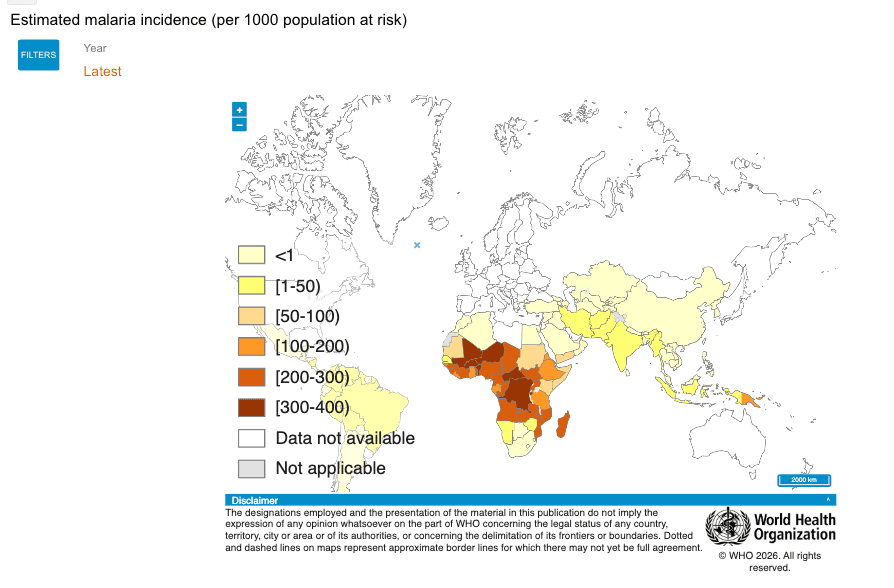
Posted by Dina Fine MaronMar 17See the geographic spread and incidence of malariaThis graphic shows the estimated global burden of malaria in 2025 as new cases per 1000 people at risk. ZoomWorld Health Organizationhttps://www.who.int/data/gho/data/indicators/indicator-details/GHO/malaria-incidence-%28per-1-000-population-at-risk%29
Posted by Dina Fine MaronJan 27Climate shifts are projected to cause more cases of food poisoningResearch published in 2024 suggests that with more severe heatwaves and natural disasters, scientists expect there to be a rise in foodborne disease, especially in Africa and Asia. Already, there are an estimated 600 million food poisoning cases and 420,000 deaths annually. Diarrhea is the most common cause of those deaths.https://news.mongabay.com/2024/08/climate-change-threatens-public-health-raising-the-spread-of-food-borne-diseases/
Posted by Dina Fine MaronMar 17Children under 5 account for 76% of all malaria deaths in AfricaThe main hypothesis for why the disease hits this age group the hardest is that children this young have still-developing immune systems. Pregnant women and people with HIV/AIDS are also at higher risk of severe infection.World Health Organizationhttps://www.who.int/news-room/fact-sheets/detail/malaria
Posted by Meher QazilbashJan 15, 2025More than 39 million people are expected to die from antimicrobial resistance by 2050In 2024, researchers published an incredibly detailed study aimed at predicting the real-world impact of antimicrobial resistance over the next 25 years. The key findings were clear: the superbug crisis is poised to get much worse and needs to be addressed. This article offers a clear, concise overview of the study, which was published in The Lancet. ZoomSuperbugs could jeopardise food security for over two billion people and increase annual health care costs by US$ 159 billion annually by 2050, finds most extensive modelling to datehttps://www.healthdata.org/news-events/newsroom/news-releases/superbugs-could-jeopardise-food-security-over-two-billion-people
Posted by Dina Fine MaronMar 13Hear what it's like to have malaria from a patient who suffered from the mosquito-borne disease.Show 4 more findingsEp 8 ABRACADABRA - Go Away Malaria!This Podcast Will Kill Youhttps://open.spotify.com/episode/1j0rB51Zl5sOhiGpV7ExBy
Posted by Dina Fine MaronMay 19Heat-related deaths may have climbed by more than 50% over 20 yearsBetween 2000 and 2009 one study suggests annual heat deaths averaged around 2,670, but between 2010 and 2020 that figure was likely more than 4,000. Researchers studied 54 million death records from the contiguous US and created mathematical models to arrive at these figures, noting that a combination of aging populations and climate change drove that increase. ZoomWarming U.S. climate linked to rising deaths from heatYale School of Public Healthhttps://ysph.yale.edu/news-article/warming-us-climate-linked-to-rising-deaths-from-heat/
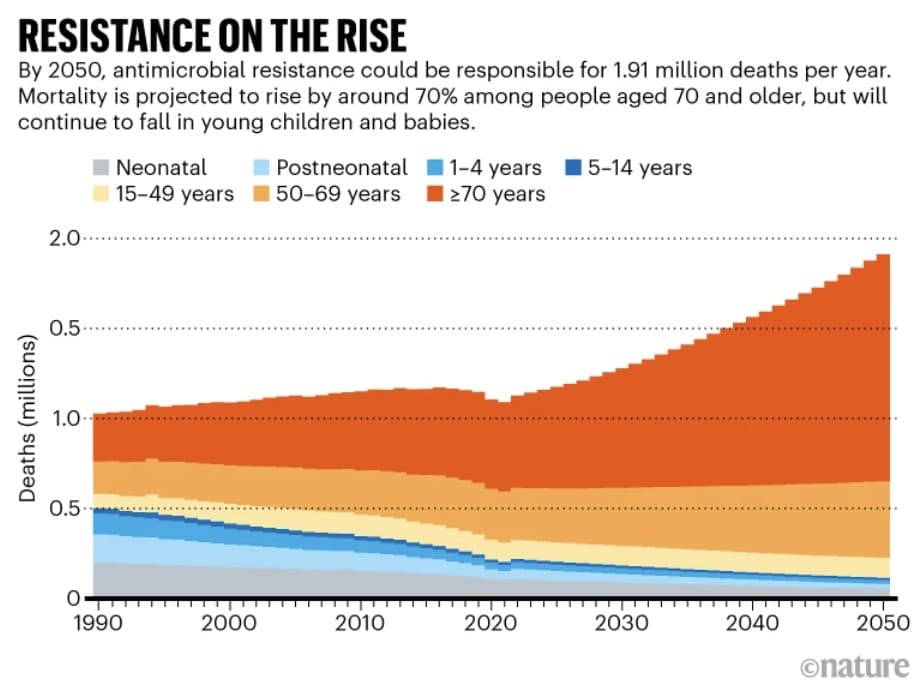
Posted by Drew SteigerwaldOct 14, 2025Superbugs could claim 1.9 million lives per year by 2050The increased use of antibiotics combined with an aging population, is projected to result in an almost 50% increase in global deaths from antimicrobial resistance each year. At the same time, antibiotic use for livestock is expected to increase by 30% over the same time frame. ZoomThe rise of ‘nightmare bacteria’: antimicrobial resistance in five chartsNaturehttps://www.nature.com/articles/d41586-025-03218-x
Posted by Dina Fine MaronMar 17Molecular evidence suggests the deadliest malaria parasite may be 100,000 years old.Show 2 more findings ZoomGates Foundationhttps://www.gatesfoundation.org/ideas/articles/advances-and-challenges-in-solving-global-malaria
Posted by Dina Fine MaronMar 13Vector-borne diseases kill more than 700,000 people globally each year—and are growingThe diseases with the greatest potential to spread widely aren't the ones that quickly kill human hosts. Instead, the best hosts or reservoirs for vector-borne diseases would be chronically ill over the long term, increasing the likelihood that the pathogen could be transmitted to others.https://open.spotify.com/episode/22xpvi20j6GgN7B8gQLXsj
Posted by Dina Fine MaronApr 28More than 4,000 people died from cholera in 2023This global health threat sickened more than half a million people in 2023 and killed 4,007 people. That's a 71% increase in deaths as compared to a year earlier. (Report only offered in PDF format.)World Health Organizationhttps://cdn.who.int/media/docs/default-source/dco/wer_36_2024_cholera-annual-report-for-2023_bilingual-proof.pdf?sfvrsn=86fb1faf_1
Posted by Dina Fine MaronJan 8, 2024Climate change is influencing the spread of diseaseRising temperatures and water levels are forcing animals and pathogens beyond their typical boundaries. This article and its data visualizations explore the proliferation of climate-driven diseases. ZoomClimate ConnectionsAP Newshttps://projects.apnews.com/features/2023/climate-change-disease-animals-warming-earth/index.html
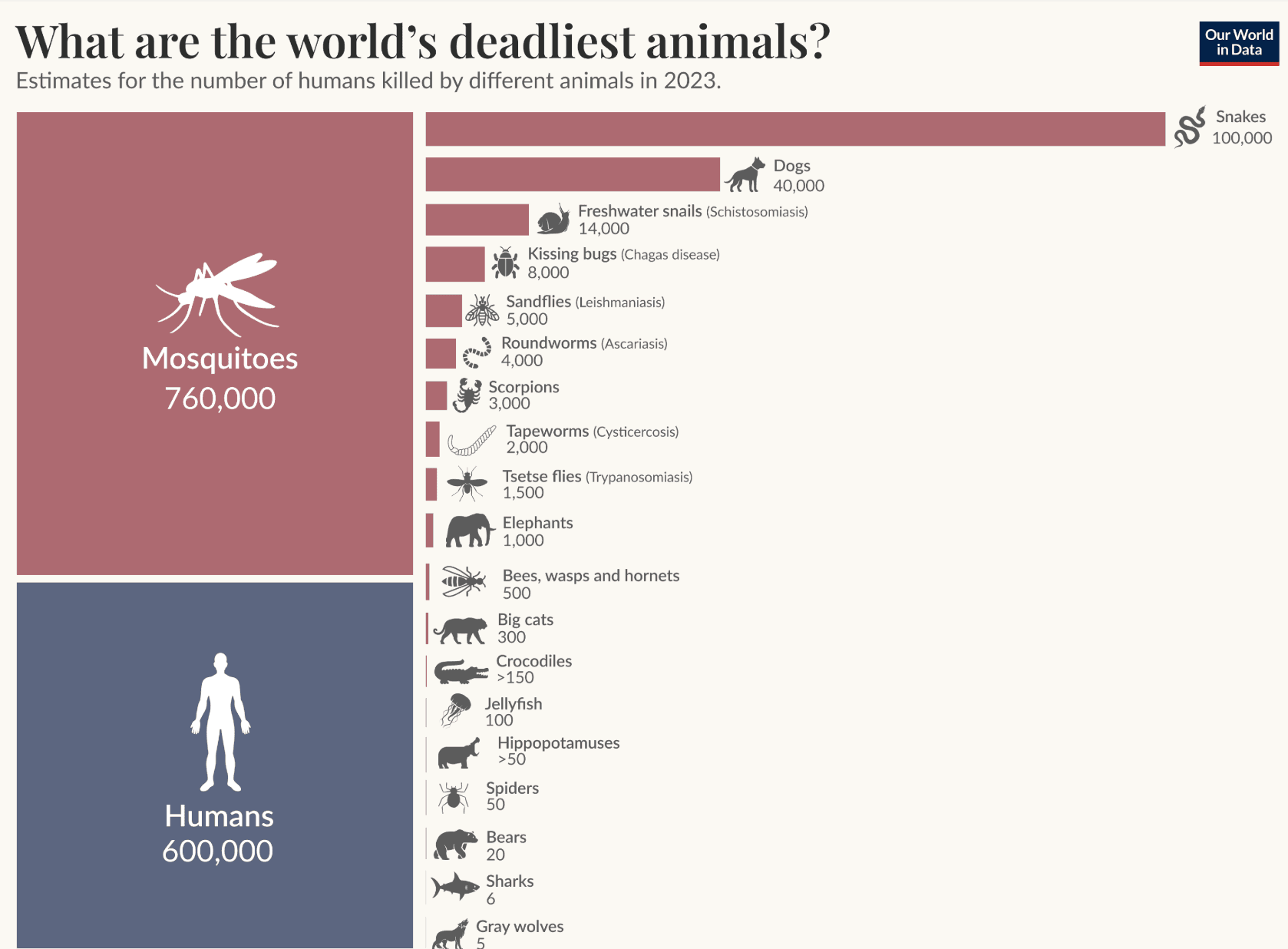
Posted by Dina Fine MaronMar 10Mosquitoes top the ranking of the world's deadliest animals.Show 3 more findings ZoomWhat are the world’s deadliest animals, and can we protect ourselves against them?Our World in Datahttps://ourworldindata.org/deadliest-animals
Posted by Teddy BurkhardtJun 30What if we killed every mosquito on Earth?Mosquitoes aren't just annoying, they're deadly. they're also responsible for an estimated 725,000 deaths worldwide, every year. Would it be so bad if we found a way to wipe them out completely? Real scientists have gamed out this hypothetical scenario, concluding it actually wouldn't be that bad. This five-minute video breaks down one way this could happen. 5:52What If We Killed Every Mosquito On Earth?https://www.youtube.com/watch?v=LIYEhcOn0a4
Posted by Dina Fine MaronMar 13Researchers are breeding genetically modified mosquitoes to be malaria-resistant.Show 3 more findings 2:31Reutershttps://www.youtube.com/watch?v=mR4chu4PYyM
Posted by Dina Fine MaronMar 1710 locally acquired malaria cases were reported in the US in 2023—a surpriseThe cases, reported in Florida, Texas, Maryland, and Arkansas, broke a 20-year streak since there had been no reported locally acquired mosquito-transmitted malaria in the country since 2003, when there was a case in Florida. ZoomLocally transmitted US malaria cases highlight increased risk, CDC report suggestsUniversity of Minnesota CIDRAPhttps://www.cidrap.umn.edu/malaria/locally-transmitted-us-malaria-cases-highlight-increased-risk-cdc-report-suggests
Posted by Dina Fine MaronFeb 19World health experts expect more than 240 million global cases of AMD in 2030The World Health Organization estimated in 2019 that by 2020 there would be roughly 195.6 million cases of age-related macular degeneration and projected that the number would continue to grow. (Some users may experience a paywall.)Statistahttps://www.statista.com/statistics/1081982/number-of-people-with-glaucoma-and-age-related-macular-degeneration-worldwide/?srsltid=AfmBOop_PeAGeVaeJRxtNJtKYmkex8cXKRc4ccXJ-kNia14T4V4nQK0t
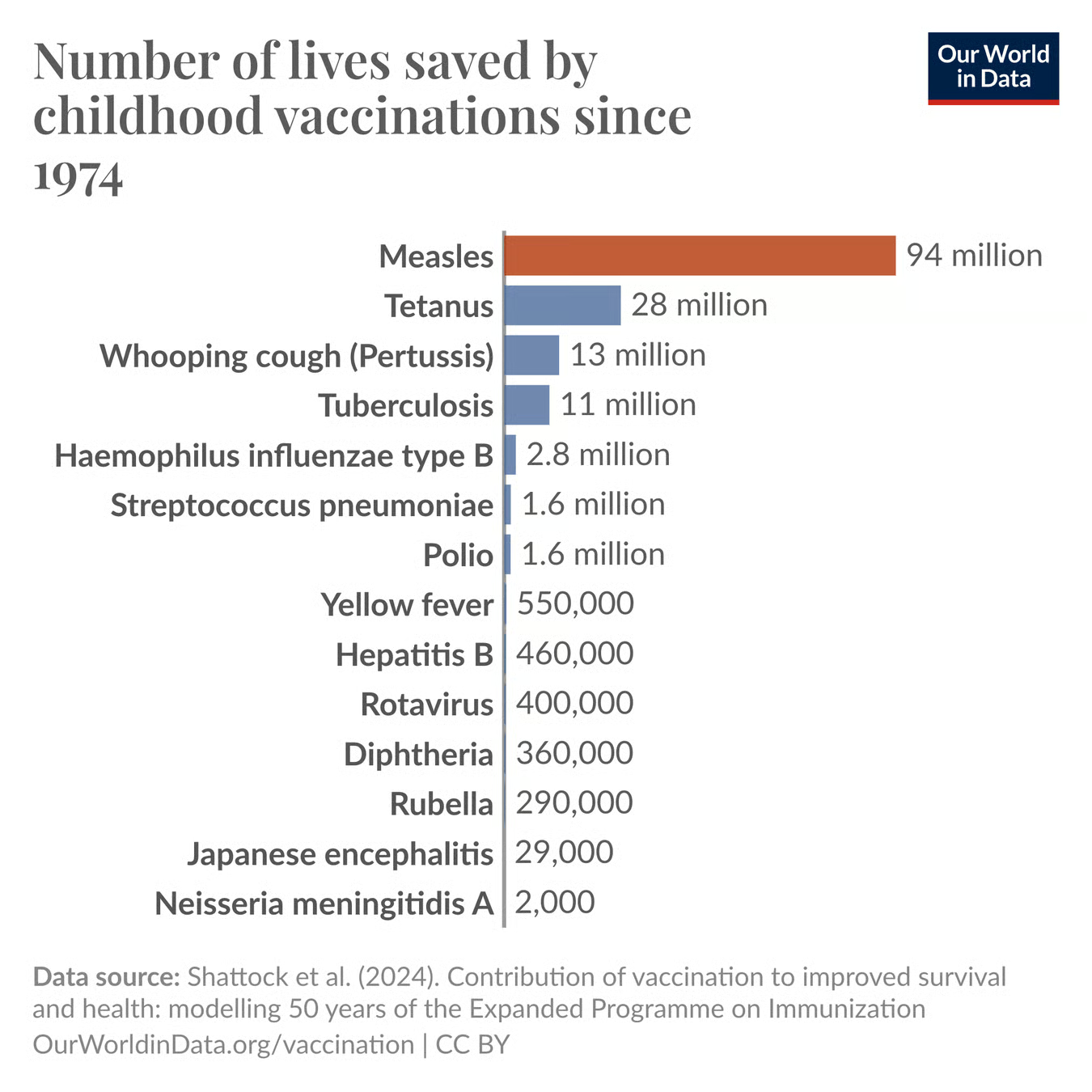
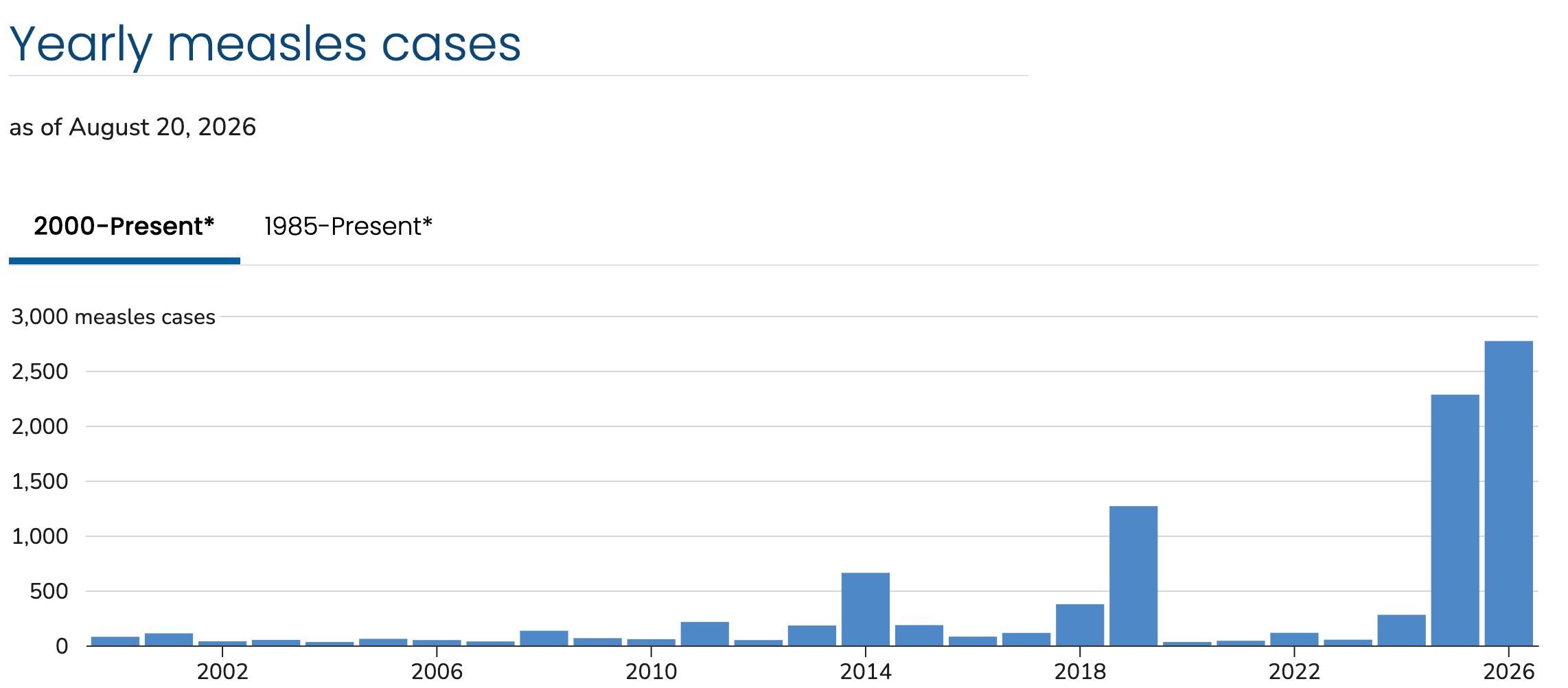
Posted by Drew SteigerwaldAug 14The measles vaccine has saved an estimated 94 million lives since its introduction.Show 2 more findings ZoomThe measles vaccine has saved an estimated 94 million lives since its introductionOur World in Datahttps://ourworldindata.org/data-insights/measles-vaccines-have-saved-over-90-million-children-in-the-last-50-years
Posted by Marco Daniel MachadoMay 16, 2025Hurricanes may kill 300 times more people than officially reportedA recent study suggests that, since 1930, more than 3.5 million people have died due to hurricanes. This incorporates the long-term effects of storms on people's health and economic well-being, contributing to thousands of premature deaths each year. ZoomHurricanes contribute to thousands of deaths each year — many times the reported numberNPRhttps://www.npr.org/2024/10/02/nx-s1-5131305/hurricanes-contribute-to-thousands-of-deaths-each-year-in-the-u-s-many-times-the-reported-number
Posted by Dina Fine MaronMar 17Malaria vaccines are not routine because they have limited effectiveness.Show 2 more findings ZoomUN authorizes a second malaria vaccine. Experts warn it’s not enough to stop the disease spreadingThe Seattle Timeshttps://www.seattletimes.com/seattle-news/health/un-authorizes-a-second-malaria-vaccine-experts-warn-its-not-enough-to-stop-the-disease-spreading/
Posted by Meher QazilbashJan 15, 2025Drug-resistant infections worldwide have increased by about 65% since 2000Since 1990, antibiotic resistance has claimed at least one million lives annually and is projected to account for 39 million deaths between now and 2050 if current trends continue. The expanded use of antibiotics, particularly in agriculture, combined with a slowing pipeline of new drugs has led to the crisis. 7:20Be Smart | Antibiotic Resistance and the Rise of Superbugs | Season 3 | Episode 25PBShttps://www.youtube.com/watch?v=fyRyZ1zKtyA
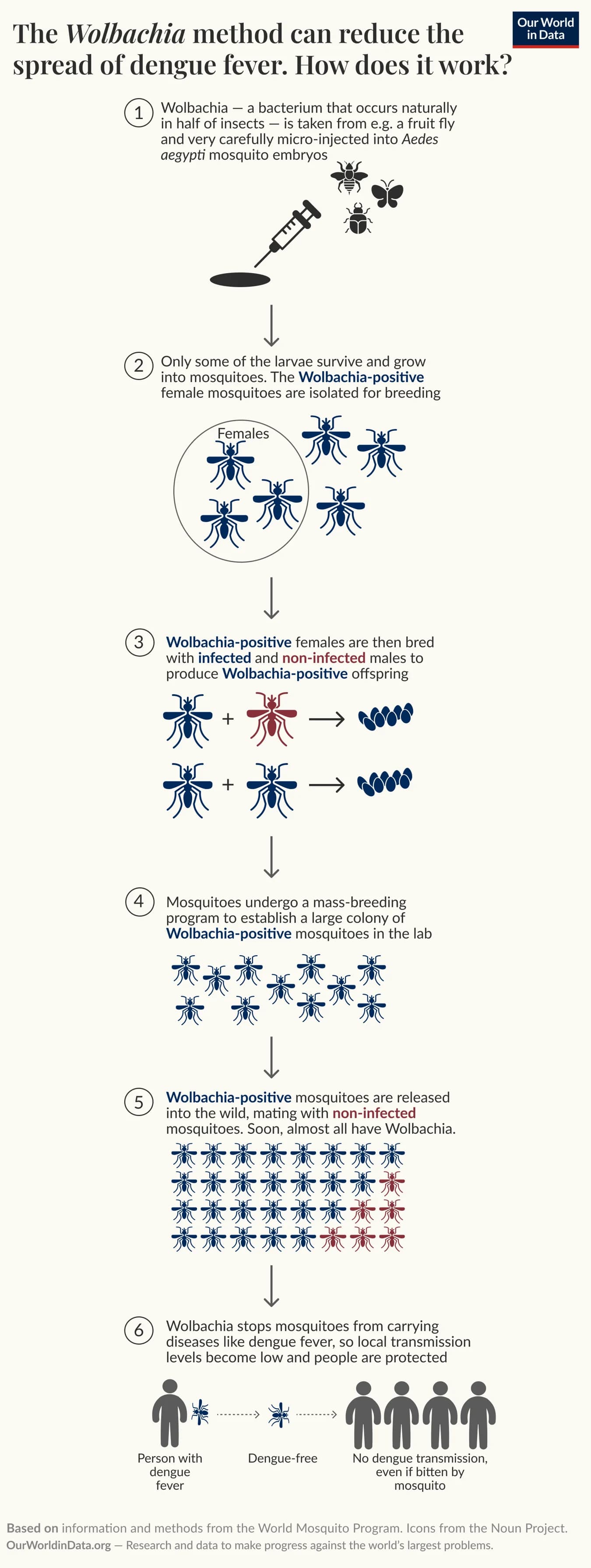
Posted by Drew SteigerwaldJan 5Wolbachia: the bacteria that could eliminate dengue feverDengue fever, transmitted by mosquitoes, kills more people annually than all types of natural disasters combined. However, mosquitoes that host Wolbachia bacterium have their ability to transmit the virus naturally suppressed, offering a route to eliminating nearly 25,000 deaths annually. ZoomHow Wolbachia bacteria could help us tackle some of the world’s most neglected tropical diseasesOur World in Datahttps://ourworldindata.org/wolbachia-neglected-tropical-diseases
Posted by Dina Fine MaronMar 17There are two recommended malaria vaccines by world health experts, but both have limited effectiveness. Show 3 more findings ZoomUS Centers for Disease Control and Preventionhttps://www.cdc.gov/malaria/php/public-health-strategy/malaria-vaccines.html
Posted by Marco Daniel MachadoJan 9Lightning may kill as many as 320 million trees each yearIgnoring the effects of tree loss resulting from lightning-induced wildfires, researchers at the Technical University of Munich developed a quantitative model to estimate the loss of these organisms due to cloud-to-ground strikes, based on global lightning data and forest structure. They expect the estimate to rise due to increased strikes resulting from climate change.Yale e360https://e360.yale.edu/digest/lightning-tree-mortality
Posted by Dina Fine MaronMar 13Mosquitoes are the world's deadliest animal, but gene drives could kill them.Show 2 more findings 5:27Ethical dilemma: Should we get rid of mosquitoes? - Talya HackettTED-Edhttps://www.youtube.com/watch?v=H7i9Anh0_Dg
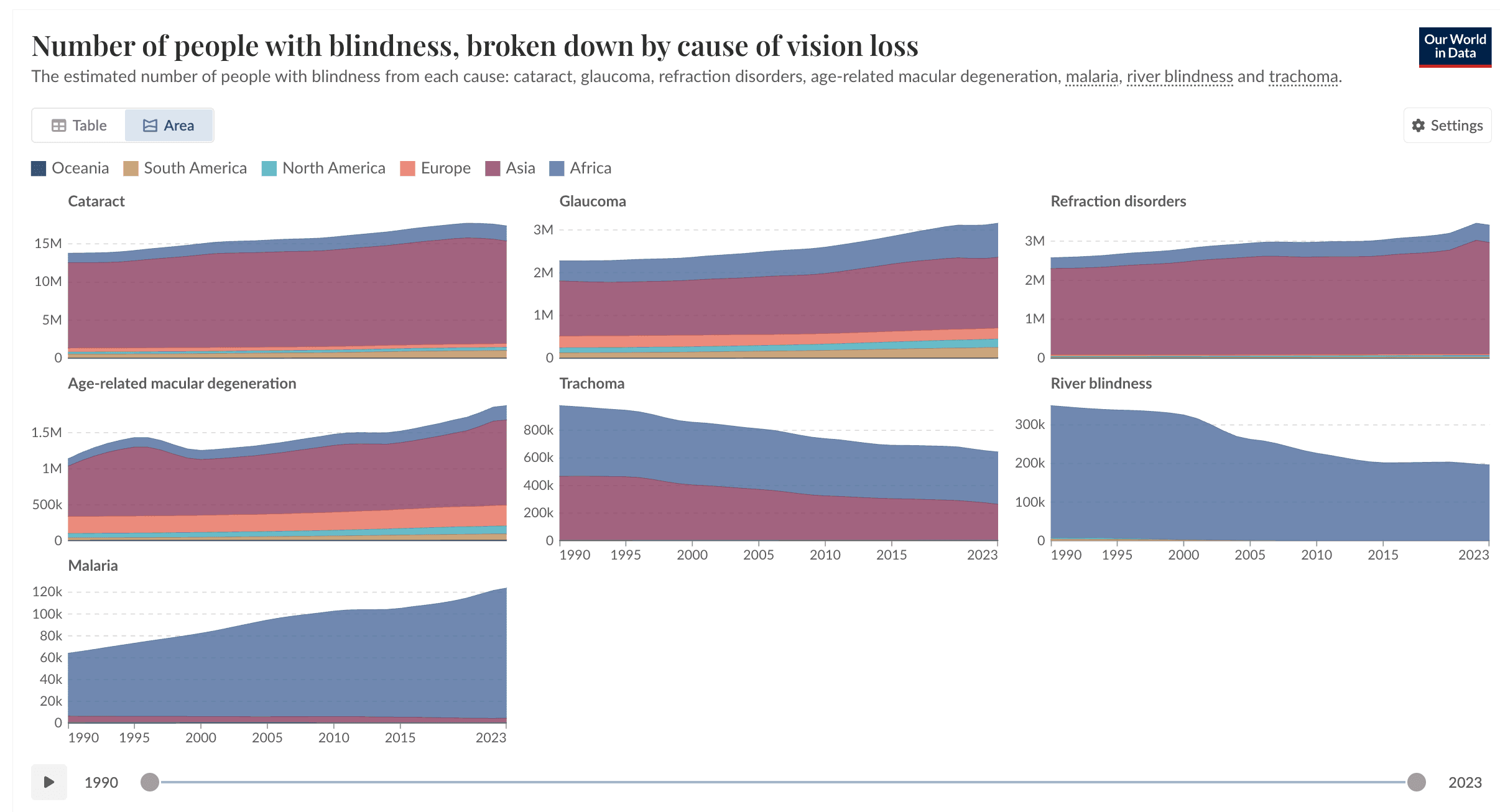
Posted by Dina Fine MaronFeb 19See the global blindness burden by cause and continent.Show 4 more findings ZoomNumber of people with blindness, broken down by cause of vision lossOur World in Datahttps://ourworldindata.org/grapher/number-of-people-with-blindness-due-to-each-cause
Posted by Dina Fine MaronApr 28Extreme weather conditions heighten cholera risks in settings like refugee campsRunoff from sewage—exacerbated by situations like flooding or extreme rains—heightens this threat. Increasing temperatures also create the ideal conditions for the bacteria to reproduce, increasing transmission risks. 36:58Wellcomehttps://www.youtube.com/watch?v=ct3Pak6mzx4&list=PL6vkBtYmFlj9Sf1WhwUf09YSLjqM4ghEz&index=2&t=8s
Posted by Dina Fine MaronMay 18US West Nile case numbers were up 40% in 2025 across the United States though theories vary to explain this surge.Show 2 more findings 1:45Health officials warn of rising West Nile virus casesNBC Newshttps://www.youtube.com/watch?v=Bd8kVjeLaCc
Posted by Dina Fine MaronMar 17The most severe form of malaria is caused by the Plasmodium falciparum parasite.Show 2 more findings 5:49Sri Chaitanya Academy NEEThttps://www.youtube.com/watch?app=desktop&v=BVRnNbb9cLU
Posted by Dina Fine MaronMar 17Anopheles mosquitoes are developing resistance to insecticides.Show 2 more findings ZoomNew tools saved a million lives from malaria last year but progress under threat as drug resistance risesWorld Health Organizationhttps://www.who.int/news/item/04-12-2025-new-tools-saved-a-million-lives-from-malaria-last-year-but-progress-under-threat-as-drug-resistance-rises
Posted by Dina Fine MaronMar 17A malaria case in Maryland stumped doctors in 2023—leading to the wrong treatment and underscoring the challenge of physicians being mindful of tropical diseases in our interconnected world.Show 3 more findingsArs Technicahttps://arstechnica.com/health/2023/10/in-the-us-malaria-can-easily-masquerade-as-an-endemic-parasite/
Posted by Dina Fine MaronJun 18Ebola virus, with an average fatality rate of around 50%, has been responsible for more than 2,000 confirmed deaths during the 2026 outbreak in the Democratic Republic of the Congo and Uganda.Show 3 more findings 5:31The Ebola Virus Explained — How Your Body Fights For SurvivalKurzgesagt – In a Nutshellhttps://www.youtube.com/watch?v=sRv19gkZ4E0
Posted by Teddy BurkhardtOct 9, 2025Influenza infects up to a billion people worldwide each yearThe World Health Organization estimates that seasonal influenza causes about 1B cases annually, including 3 to 5M severe illnesses and between 290,000 to 650,000 deaths.Influenza (seasonal)World Health Organizationhttps://www.who.int/news-room/fact-sheets/detail/influenza-(seasonal)
Posted by Drew SteigerwaldJan 29A timeline of major pandemics from 1899–2025Modern pandemics have been defined by the race between globalization (which increases risk) and the development of new medicines. The Great Influenza epidemic claimed some 50 million lives, and the COVID-19 pandemic killed more than 7 million. In between, diseases like Ebola, cholera, AIDS, and more have devastated communities. ZoomMajor Pandemics of the Modern EraCouncil on Foreign Relationshttps://www.cfr.org/timeline/major-epidemics-modern-era
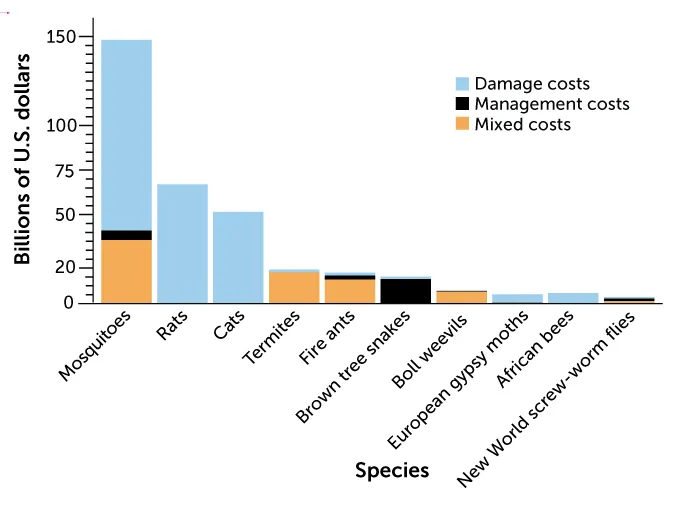
Posted by Marco Daniel MachadoFeb 18From 1970 to 2017, invasive species have caused $1.28T in damage globallyThe costliest species were the Asian tiger and yellow fever mosquitoes ($149B), which arrived in the US from Asia and sub-Saharan Africa, respectively. The bulk of their damage came from their transmission of diseases such as Zika, chikungunya, and dengue. (Some readers may experience a paywall.) ZoomScience Newshttps://www.sciencenews.org/article/invasive-species-cost-billions-damages-global-economy
Posted by Dina Fine MaronMay 18West Nile was reported in 47 states in 2025, with more than 1,400 people severely affectedTracking numbers from the CDC indicate that the virus spread widely that year, with more than 2,000 reported human cases and many states seeing more than 25 sickened people. More than 1,400 people had neuroinvasive cases of the disease—meaning the virus had entered the nervous system, which can cause severe, potentially life-threatening illness. ZoomCurrent Year Data (2025)US Centers for Disease Control and Preventionhttps://www.cdc.gov/west-nile-virus/data-maps/current-year-data.html
Posted by Meher QazilbashJan 15, 2025Antimicrobial resistance is responsible for 1.3 million deaths each yearAntimicrobial resistance is a global health threat, driven by the misuse and overuse of antimicrobials in humans, animals, and more. Estimates suggest superbugs could lead to $1T in healthcare costs by 2050, and the world faces a shortage of new drug development to meet the challenge. ZoomAntimicrobial resistanceWorld Health Organizationhttps://www.who.int/news-room/fact-sheets/detail/antimicrobial-resistance?gad_source=1&gclid=Cj0KCQiA3sq6BhD2ARIsAJ8MRwVbkzSZjeVjl_hBT491TAfbKG8WjJcmj0zzBB5Go9fYsLfRPMEa0WAaAhrZEALw_wcB
Posted by Dina Fine MaronApr 28Environmental conditions, shifting immunity, and viral strain could help explain 2025 spikeThe surge in HFMD in the summer and early fall of 2025 in the mid-Atlantic could be the result of a confluence of factors, including a more virulent strain of disease-causing virus, good environmental conditions for the virus to spread—hot, humd—and a potential immunity gap among kids due to milder HFMD outbreaks the previous year.MedPage Todayhttps://www.medpagetoday.com/infectiousdisease/generalinfectiousdisease/118631
Posted by Dina Fine MaronMar 17Malaria comes from the Italian term 'mal'aria,' meaning 'bad air'The term refers to marshy areas associated with the disease. An estimated 94% of malaria cases—215 million—occur in Africa.National Library of Medicinehttps://pmc.ncbi.nlm.nih.gov/articles/PMC10237628/
Posted by Marco Daniel MachadoJan 2Malaria mosquitoes in a lab were wiped out using CRISPRScientists at Imperial College London disabled a gene in female Anopheles gambiae mosquitoes to make them infertile and propagated the infertility mutation at unnaturally high rates using a gene drive. The entire population collapsed within a dozen generations, showing promise for subsequent with mosquitoes in mimicked tropical environments. ZoomCRISPR gene editing drives caged mosquitoes to extinctionhttps://cen.acs.org/biological-chemistry/biotechnology/CRISPR-gene-editing-drives-caged/96/i39