Back

Posted by

Despite claims of limitless free energy, zero-point energy cannot be harnessed

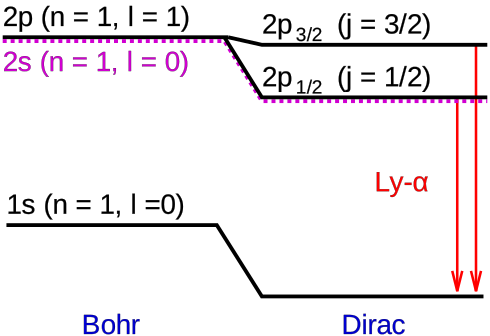
Because quantum mechanics prevents systems from ever reaching an energy value of zero, a seemingly empty vacuum of space still contains some amount of energy associated with its lowest allowed state. Since descending to even lower states is forbidden, extracting meaningful amounts of energy from an empty vacuum is impossible.

Similar Posts

Here’s what we found related to above. Click through to dive even deeper.

  • Posted by

    Quantum field theory overestimated the value of dark energy by 120 orders of magnitude—a prediction considered among the worst in the history of physics.

  • Posted by

    Electricity can flow indefinitely along a ring of superconducting material, which provides zero resistance to the movement of charges due to quantum effects.

  • Posted by

    Atoms slow down and become more organized as an object cools to absolute zero, gradually losing entropy as they approach this limit.

  • Posted by

    Every fundamental particle is a vibration in a field that spans the entire universe, according to quantum field theory.

  • Posted by

    The ultraviolet catastrophe is the infinite energy prediction of classical physics

    When scientists first tried calculating the radiation emitted by a heated object, their assumption was that energy was equally distributed across wavelengths and produced infinite energy at low wavelengths. This contradicted observations, which showed near-zero energy intensity at those values.

  • Posted by

    Visualize quantum field theory, where observable forces like electromagnetism result from energy and momentum being exchanged between universe-sized fields.

  • Posted by

    How string theory explains gravity on the quantum scale, but may be untestable

    Combining the general theory of relativity with quantum field theory creates nonsensical mathematical outcomes, such as probabilities of infinity. These are resolved by treating particles as vibrating strings rather than points of matter. However, probing the scale of these strings to validate the theory requires technology equivalent to a particle accelerator the size of the solar system.

  • Posted by

    Under a model of quintessence, the strength of dark energy should change over time

    The theory suggests that dark energy permeates space and may drive the universe to expand or contract throughout its history. The model's flexibility allows it to fit every possible observed behavior of the universe's expansion, rendering it unfalsifiable and untestable.

  • Posted by

    Metal plates can be pushed together by empty space—the Casimir effect—because of virtual particles that cannot be observed but are predicted by quantum field theory.

  • Posted by

    Quantum mechanics-based technology may explain the Fermi paradox

    It describes the discrepancy between the high likelihood of life beyond Earth given the vastness of the universe and the lack of evidence for such life, since extraterrestrial civilizations have not communicated with us. However, quantum communication—a more information-dense and effective method than classical means—requires massive receivers and very narrow signals, which would easily miss Earth, making a lack of signals expected.

  • Posted by

    It is impossible for any real-world system to be 100% efficient, according to the second law of thermodynamics.

  • Posted by

    Despite fears of creating black holes, the Large Hadron Collider produces collisions with energies of 13.6 trillion electronvolts, about one million times smaller than the energy needed to create the lightest possible black holes.

  • Posted by

    By combining special relativity with quantum mechanics, antimatter was predicted four years before it was observed, though the math suggested it possessed negative energy.

  • Posted by

    Dark energy is the placeholder term for the unknown mechanism that has been causing accelerated expansion of the universe for about 5 billion years.

  • Posted by

    Quantum mechanics and general relativity—two of the most successful explanations of the physics seen across the universe—are logically incompatible with one another because they use contradictory models for space and time.

  • Posted by

    Emergent quantum phenomena can produce nonfundamental quasiparticles

    While physicists have discovered new particles by colliding known ones at high speeds, placing known particles in extreme environments or configurations can allow quantum mechanics to produce bizarre behaviors, making them seem like new types of matter.

  • Posted by

    You have never made physical contact with anything in your life because electrons in the outer layer of atoms on the surface of objects repel one another.

  • Posted by

    Quantum tunneling allows particles to pass through classically impenetrable barriers.

  • Posted by

    Stephen Hawking predicted that black holes evaporate by analyzing the interaction between quantum fields and spacetime curved by black holes.

  • Posted by

    Quantum electrodynamics is considered the first true quantum field theory, which applied quantum mechanics to the electromagnetic radiation field.

  • Posted by

    Once cooled to temperatures just above 2 Kelvin, helium atoms exhibit a quantum property that removes internal friction, allowing the fluid to climb up walls.

  • Posted by

    In quantum mechanics, matter is not in one location until it's measured

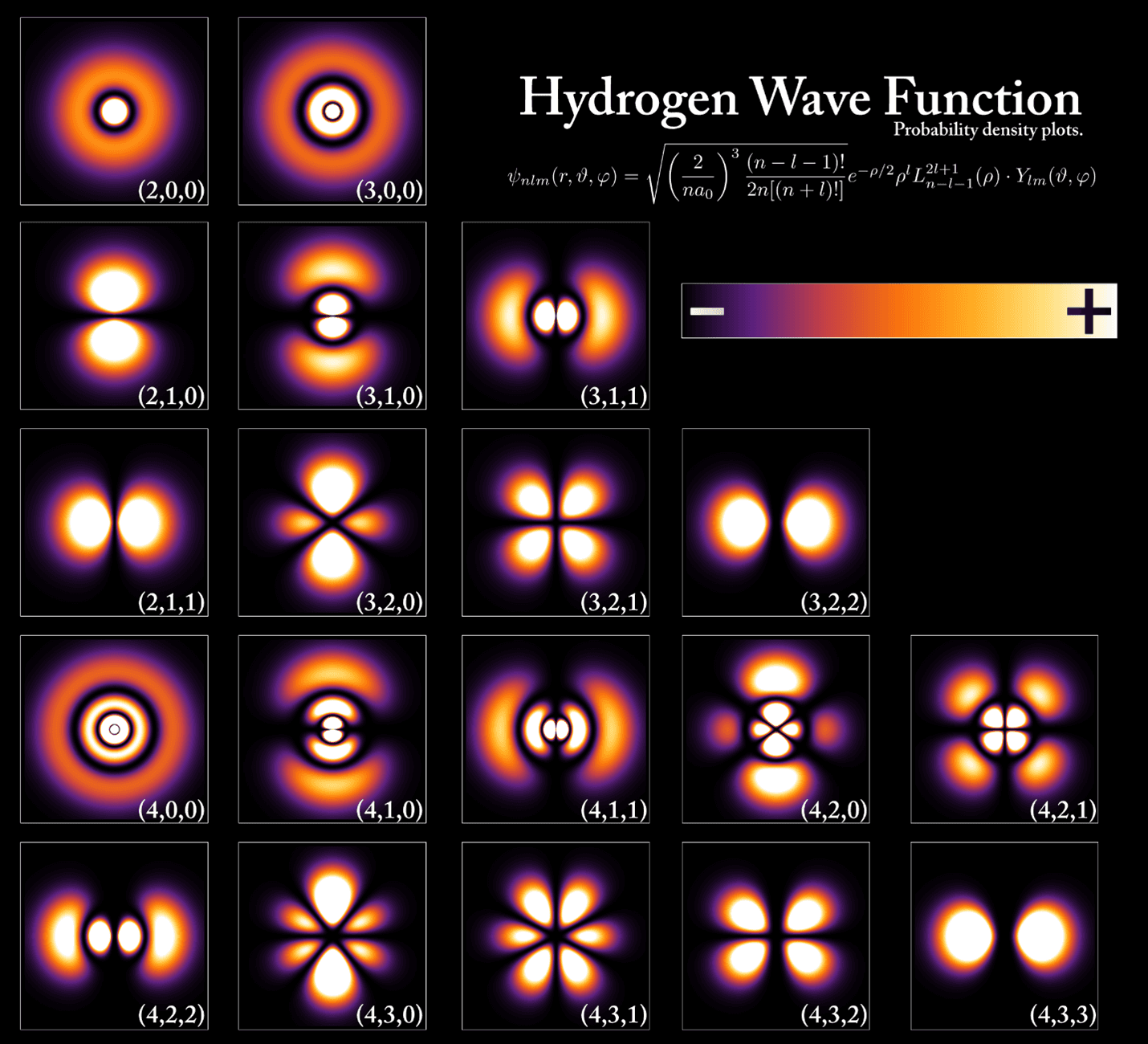
    The probability that a particle is located at a given point is described by a wave function, in which peaks correspond to high probability and valleys to low probability. The wave nature of matter introduces uncertainty, allows it to exhibit complex behavior, such as interfering with itself, and also explains the observed structure of atoms.

  • Posted by

    If the universe continues to expand forever, as current cosmological models suggest, it will eventually reach heat death, becoming a cold, dark, and empty void.

  • Posted by

    Dark matter and dark energy, explained

    What is dark energy? What is dark matter? Well, if we knew exactly, we would have a Nobel prize—we know that they exist, though. Scientists have theorized that the former may be a property of three-dimensional space itself, while the latter could be exotic particles that interact with almost nothing. This video from Kurzgesagt explains what we know and what we don't.

  • Posted by

    If they could be built, antimatter drives, which run on energy released from the collision of matter and antimatter particles, would be the most efficient engines in existence.

  • Posted by

    Quantum mechanical principles are responsible for chemical properties

    Besides quantization, the wave-particle duality, and probabilistic features, quantum theory's mathematics introduces the exclusion principle, quantum tunneling, quantum entanglement, and other phenomena foreign to our everyday experiences. Some suggest that all possibilities for a quantum system may also occur across the multiverse.

  • Posted by

    The strongest test of quantum field theory has been measurements of g-2—an anomaly in the magnetic property of electrons caused by virtual particles.

  • Posted by

    What lies inside a black hole remains one of the universe's greatest mysteries

    At the center of black holes is a theoretical point of infinite density called a singularity. Alternatively, one theory suggests a black hole's core could form a Planck star—a mind-bogglingly tiny object just a trillionth trillionth trillionth of a meter in size.

  • Posted by

    Watch how the machine at the heart of NASA's Cold Atom Lab produces atoms near absolute zero—the coldest theoretical temperature in the universe.

  • Posted by

    Antimatter particles possess the same mass and spin as their normal particle counterparts, but possess an opposite charge and transform into pure energy upon colliding with normal matter.

  • Posted by

    Nuclear fusion can produce near-limitless clean energy, but it requires extreme conditions to get started because of the natural repulsion between atomic nuclei.

You've reached the end.