Posted by Kevin KearneyFeb 11Mass market paperbacks—the chunky, cheaply made books—were originally designed to fit in a pocket.Show 4 more findings 2:53Farewell, Pocket BooksThe New York Timeshttps://www.youtube.com/watch?v=wFOi7Izeeyo
Posted by Kevin KearneyJul 10Check out cheap, mass-market, and often trashy editions of classic books from Ralph Ellison, James Joyce, Jane Austen, and many more.Show 2 more findings Zoom50 Pulp Cover Treatments of Classic Works of LiteratureLiterary Hubhttps://lithub.com/50-pulp-cover-treatments-of-classic-works-of-literature/
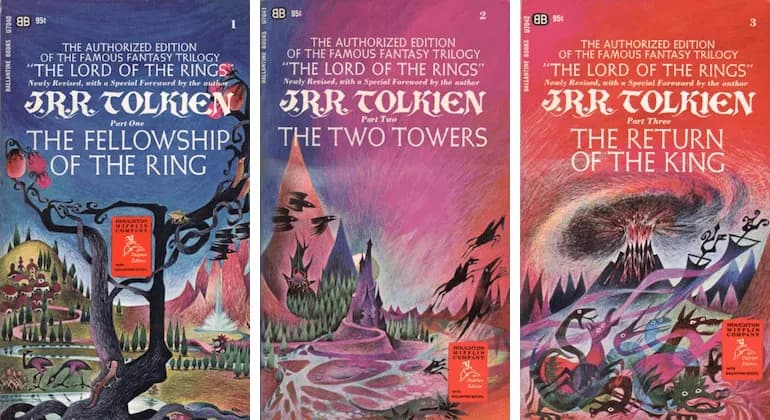
Posted by Kevin KearneyJan 16The US paperbacks of JRR Tolkien's 'Lord of the Rings' series transformed fantasy from a fringe literary genre to a mainstream form.Show 3 more findings ZoomHow The Lord of the Rings Changed Publishing Forever - ReactorReactor Magazinehttps://reactormag.com/a-new-age-the-lord-of-the-rings-by-j-r-r-tolkien/
Posted by Phoebe BainJul 22More than 80% of New York City's newsstands have closed in the past two decades, in part due to a series of price caps that hurt the stands' ability to evolve. Show 5 more findings 1:45NYC is erasing these1440 Originalshttps://www.youtube.com/shorts/5mvK80Bo3GI
Posted by Kevin KearneyApr 24, 2025Why are books released in hardcover and paperback?Publishers regularly release books in hardcover only to rerelease them in paperback a year later. It's a strategy that might seem counterintuitive. Why spend so much time on two separate releases? And why spend so much money on two individual products? This Reader's Digest article goes behind the scenes in the publishing industry to answer these questions and others, offering insight into the intricacies of a complicated business. ZoomWhen Do Paperbacks Come Out? Hardcover vs. Paperback BooksReader's Digesthttps://www.rd.com/article/why-hardcover-books-are-published-first/
Posted by Kevin KearneyApr 26, 2025Circulating libraries helped the novel's popularity surgeAs literacy rates began to rise in the 19th century, so did the demand for reading materials. The only problem? Newspapers and books weren’t cheap, and newly literate middle-class families struggled to afford literature. That changed when booksellers began offering small fees for patrons who decided to borrow rather than purchase books. This was eventually called a circulating library, an innovation that would satisfy the burgeoning readership of novels and increase literacy rates further. ZoomThe Rise of Circulating Libraries - Random Bits of Fascinationhttps://randombitsoffascination.com/2018/09/11/the-rise-of-circulating-libraries/
Posted by Kevin KearneyJun 22Independent bookstores are expanding across the country, though studies show literacy rates are rapidly declining, with only 35% of American high school seniors considered proficient readers.Show 4 more findings ZoomA Bookstore Boom in a Time of Literacy DeclineLiterary Hubhttps://lithub.com/a-bookstore-boom-in-a-time-of-literacy-decline/
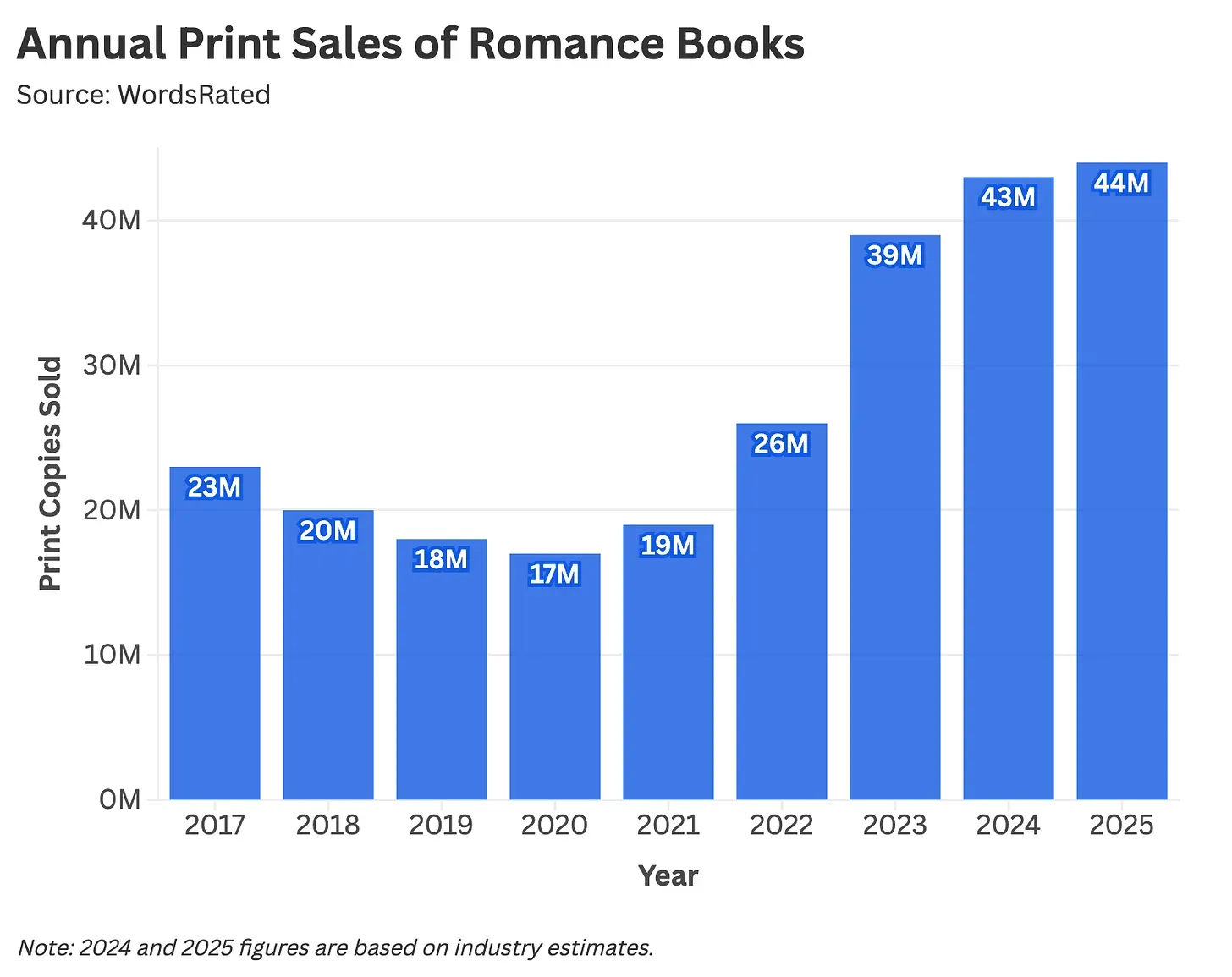
Posted by Kevin KearneyApr 28The economics of romance novelsRomance is the publishing industry's most popular genre, with over 44 million units sold in 2025 alone. This episode of "The Economics of Everyday Things" podcast explores how the once-maligned form became the most reliable kind of book in the industry.27. Romance Novels • The Economics of Everyday ThingsThe Economics of Everyday Thingshttps://open.spotify.com/episode/3EmIwbAiUMFb0lznVmVqHB?dlsi=b98ef7aa052f454a&nd=1&si=10a74f0b7ba6438c
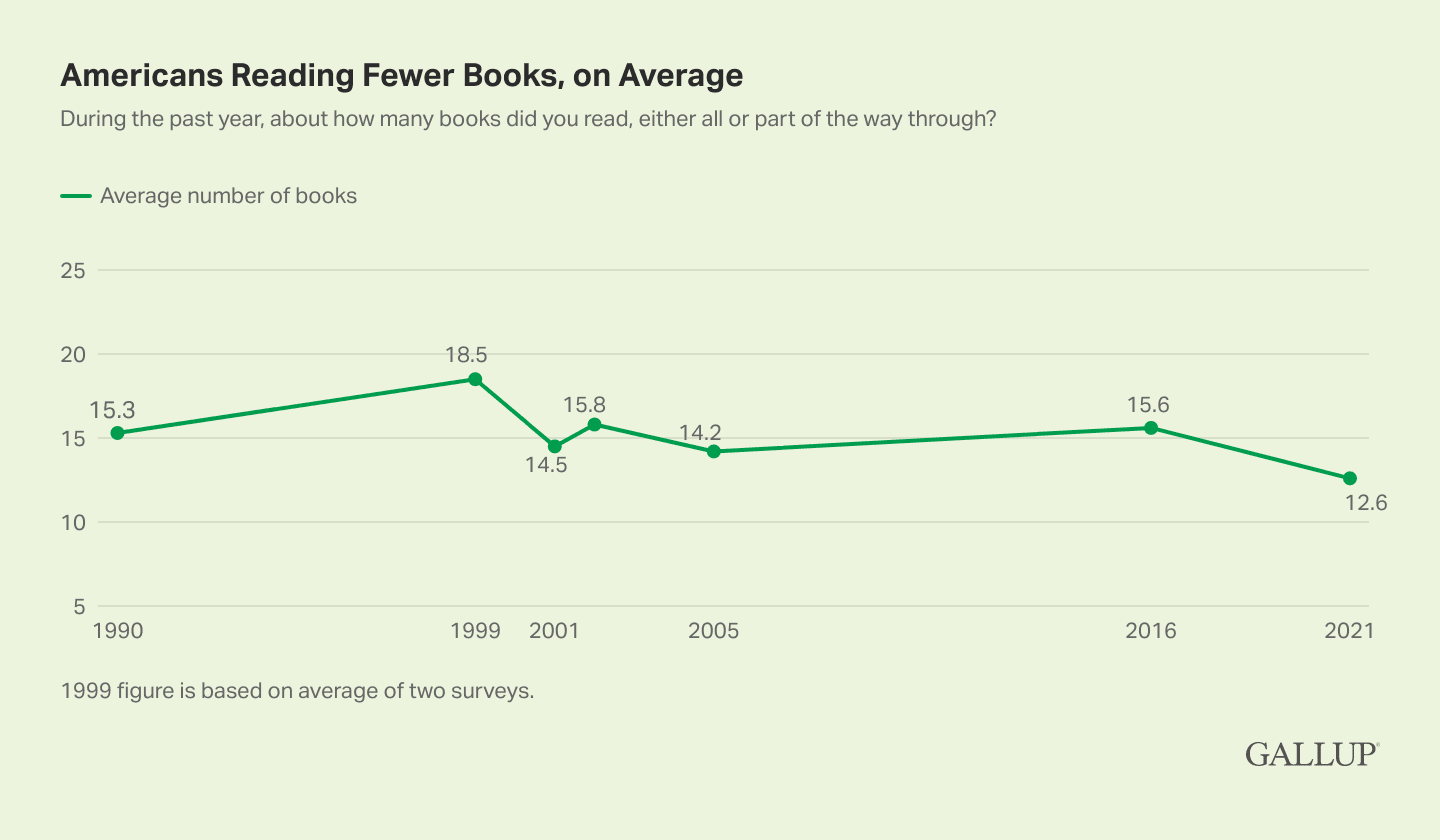
Posted by Kevin KearneyApr 23, 2025Americans are reading fewer books than in the pastA 2022 Gallup survey found that Americans are reading fewer books than ever before. An additional study found that the time people spend reading has dropped over the last 20 years. The most compelling narrative for the shift? Screens have stolen potential readers, occupying the time that they otherwise would’ve spent with books. ZoomAmericans are reading fewer books for less time. People want to know why : NPRNPRhttps://www.npr.org/2025/02/20/nx-s1-5298185/americans-are-reading-fewer-books-for-less-time-people-want-to-know-why
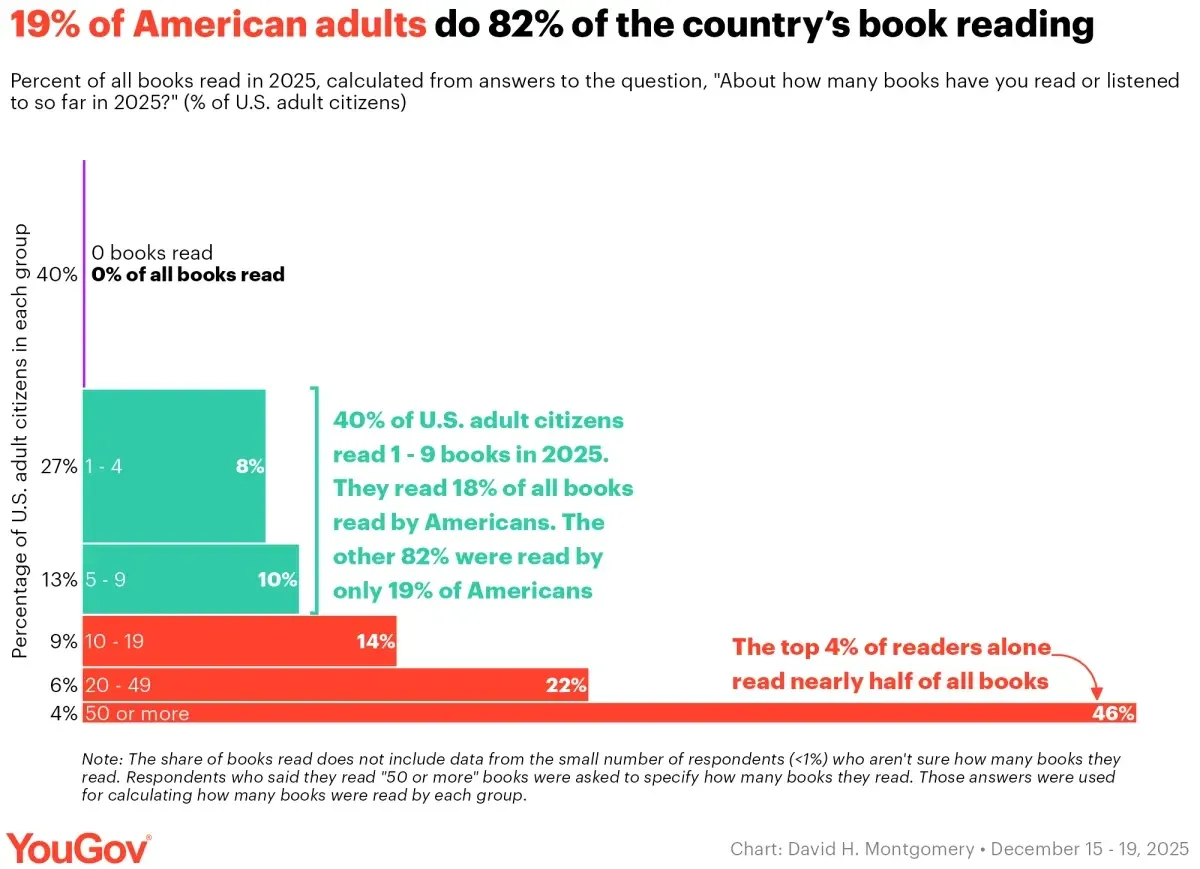
Posted by Kevin KearneyJan 2740% of Americans didn't read a book in 2025, with 19% of adults responsible for 82% of the country's book reading.Show 2 more findings ZoomMost Americans didn't read many books in 2025 | YouGovYouGovhttps://today.yougov.com/entertainment/articles/53804-most-americans-didnt-read-many-books-in-2025
Posted by Phoebe BainFeb 2Paper coupon suppliers and major newspaper insert distributors are in declineGiven the uptick in digital coupon adoption, sellers who offered coupon inserts or individual coupons for sale online have been closing up shop in recent years.https://couponsinthenews.com/2025/09/03/as-paper-coupons-recede-more-coupon-insert-sellers-retire/
Posted by Kevin KearneyApr 23, 2025The printing press spread novels widelyJohannes Gutenberg's invention of the printing press in 1440 changed how writing was reproduced. It allowed multiple manuscripts to be copied via movable type rather than by hand, making more literature more widely available. Over time, that change caused literacy rates to rise, creating a market for even more literature. 5:05The Gutenberg Printing Press and Its Effect on Mass Communicationhttps://www.youtube.com/watch?v=HGErx4wy8r0
Posted by Kevin KearneyMay 7A book series aimed at World War II soldiers helped popularize works like 'The Great Gatsby' and 'Of Mice and Men.'Show 4 more findings ZoomBooks in Action: The Armed Services Editions | TimelessLibrary of Congresshttps://blogs.loc.gov/loc/2015/09/books-in-action-the-armed-services-editions/
Posted by Kevin KearneyJan 13Nonfiction books have been struggling to sell in the mid-2020sIn the early 2020s, readers sought out nonfiction books to help explain prominent current events, such as the first presidency of Donald Trump and the BLM movement. That interest has since waned, as publishers note that readers have lately shown a preference for escapism and gather their information from podcasts. ZoomAre we falling out of love with nonfiction?The Guardianhttps://www.theguardian.com/books/2025/dec/17/are-we-falling-out-of-love-with-nonfiction
Posted by Teddy BurkhardtNov 7, 2025'Harry Potter’ transformed the young adult publishing industryThe series’ success reshaped the market for youth fiction. In 1997, about 3,000 young adult titles were published annually. By 2009, that number soared to 30,000 as publishers chased the next major phenomenon.Young adult literature | Books, Authors, Genre, Examples, Age Range, & Censorship | BritannicaBritannicahttps://www.britannica.com/art/young-adult-literature
Posted by Teddy BurkhardtMay 6Paper boarding passes have become rarer in recent yearsMany travelers have shared their attachment to the documents as their utility fades. This sharply illustrated timeline reviews the development of the paper boarding pass as technology evolved. ZoomFinal call for paper boarding passes? A visual history of the beloved mementoCNNhttps://www.cnn.com/interactive/2023/09/travel/paper-boarding-pass-history-emirates-dg/index.html
Posted by Kevin KearneyJan 12The opening chapters of bestselling novels are thousands of words shorter than they were in the 1950sNovels like "The Catcher in the Rye" and "Lord of the Flies" averaged opening chapters with about 4,500 words. Titles from the 2020s, on the other hand, including "Fourth Wing" and "Lessons in Chemistry," are closer to 2,500 words. ZoomChapters shrink to suit short attention span of TikTok readershttps://www.thetimes.com/culture/books/article/chapters-shrink-short-attention-span-booktok-readers-td7ppn8mn
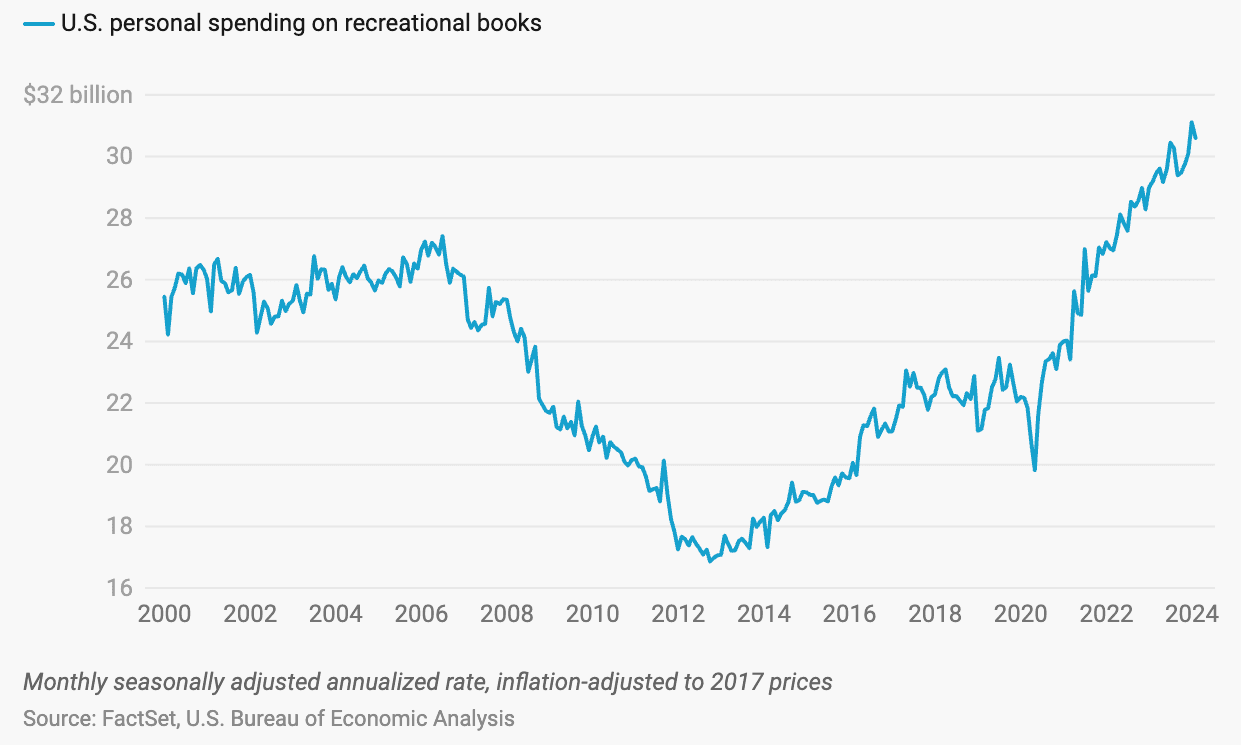
Posted by Kevin KearneyJun 22Consumers are buying more books now than they were 20 years ago, thanks to a 2020 boom and a popular literary corner on TikTok.Show 2 more findings ZoomPublishers are scouring the world of fan fiction to find the next hit authorSherwoodhttps://sherwood.news/business/publishers-are-scouring-the-world-of-fan-fiction-to-find-the-next-hit-author/
Posted by August MoonApr 30, 2025Pulitzer's newspapers were intended for the massesHis newspapers, the St. Louis Post-Dispatch and the New York World, transformed journalism by marketing to a mass audience rather than just the elite. 1:05The Person Behind the Pulitzer Prize1440 Originalshttps://www.youtube.com/shorts/YN1LaRyduS4
Posted by Kevin KearneyJun 1None of Dickens' books has gone out of printDickens was a literary celebrity during his lifetime, but his popularity has endured over a century after his death. Publishers have kept his books in print to satisfy demand. It's paid off: "A Tale of Two Cities" alone has sold over 200 million copies. ZoomWhat the Dickens? | BU Today | Boston UniversityBoston Universityhttps://www.bu.edu/articles/2012/what-the-dickens/
Posted by Kevin KearneyNov 14, 2024Dystopian books have grown especially popular with younger audiencesIn the late 2000s, Suzanne Collins’s dystopian "The Hunger Games," a young adult book series where impoverished children are pitted against one another for entertainment, spent over five years on The New York Times bestseller list. 10:33Why are we so fascinated by dystopian fiction? | Scopehttps://www.youtube.com/watch?v=e7v544YawIc
Posted by Kevin KearneyFeb 14In 1996, King had 6 books on the New York Times bestseller listStephen King has been wildly popular for decades, but he was never more visible than in the 1990s—especially for one week in 1996. All six volumes of the serialized novel "The Green Mile" appeared on the New York Times bestseller list. Reading the article not only provides some context for King's ubiquity, but also hints at what would become a norm in publishing: a few big-name authors dominating the charts with their popular series. (Some users may experience a paywall.) ZoomKing’s Serial Thriller Rules Best-Seller ListsThe New York Timeshttps://www.nytimes.com/1996/08/05/business/king-s-serial-thriller-rules-best-seller-lists.html?unlocked_article_code=1.qE8.E5jT.LFsXcg0Tsu2q&smid=url-share
Posted by August MoonAug 4The Atlantic proclaimed that 'The End of Reading is Here,' which might be alarmist but is based on significant data.Show 3 more findings 1:40Why you can't finish a book anymore1440 Originalshttps://www.youtube.com/watch?v=i4xAEBoSlbw
Posted by Kevin KearneyMay 9, 2025Why aren’t students reading?It's not just anecdotal: Current students struggle to read longer texts and report lower reading levels for enjoyment than past generations. This brief explainer from the Chronicle of Higher Education diagnoses some of the possible causes (increased screen time and learning loss during the COVID-19 pandemic among them) along with how some educators are trying to correct the problem. 3:03Why Aren’t Students Reading?https://www.youtube.com/watch?v=QXIOfEnCoFs&ab_channel=ChronicleofHigherEducation
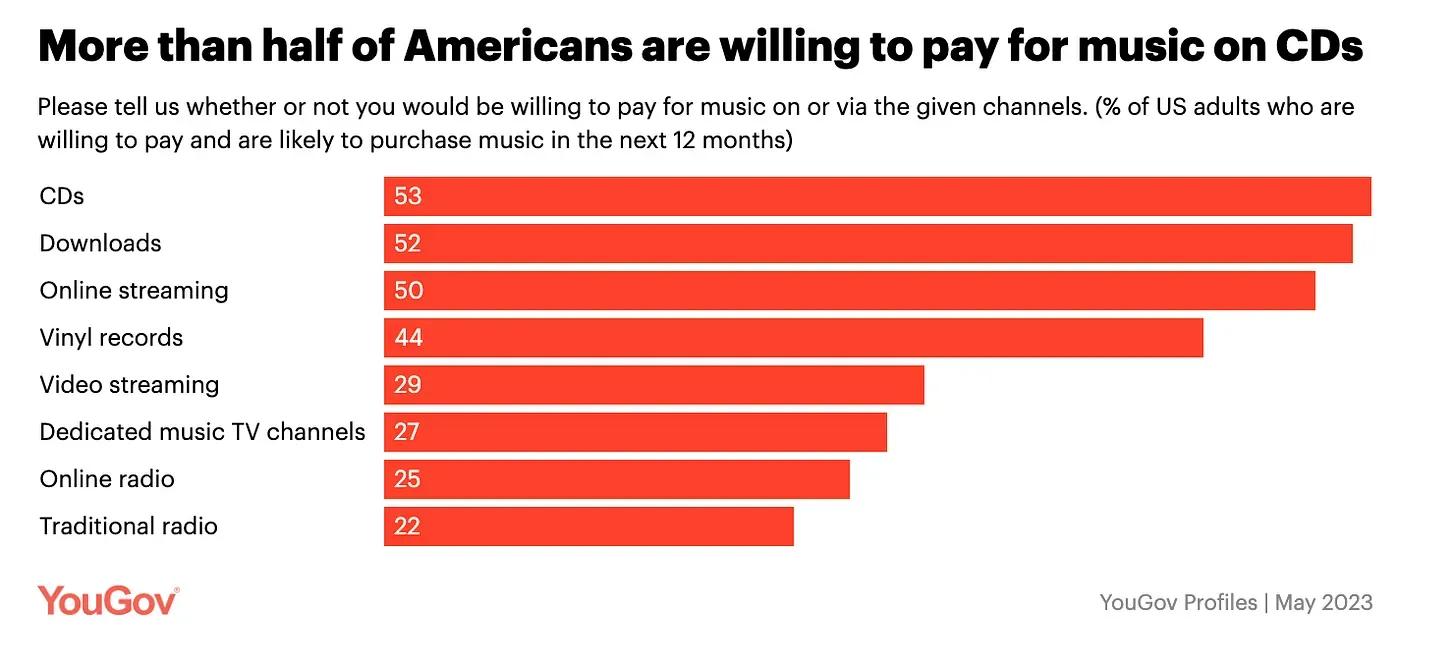
Posted by Kevin KearneyFeb 16Although no longer the dominant format, CDs are increasingly popular with younger people.Show 3 more findings ZoomAre CDs Making a Comeback? A Statistical AnalysisStat Significanthttps://www.statsignificant.com/p/are-cds-making-a-comeback-a-statistical
Posted by Kevin KearneyApr 23, 2025Young readers are increasingly interested in graphic novelsSales for the form, which relies on illustration as much as text but otherwise follows the form of the novel, are up 69% among young school-aged children. The genre has many sophisticated, intellectual, and critically-acclaimed titles, though it's sometimes derided as a less serious form of literature. Still, studies find that young children who read graphic novels and comics report higher levels of affinity for reading. ZoomGraphic novels are booming in popularity. It's changing children's relationship with books - Fast CompanyFast Companyhttps://bookriot.com/graphic-novels-childrens-literacy/
Posted by Kevin KearneyApr 6Breaking down 'clinch covers,' a defining characteristic of '80s romance novelsAs romance novels became more popular in the 1980s, publishers leaned into the books' steamier content by advertising it on their covers. Eventually, one specific kind of portrait emerged: the clinch cover, which featured a muscly man, usually shirtless, holding a woman against his chest. This episode from 99% Invisible explores the history of the trend and why it's largely disappeared from modern romance novels.99% Invisiblehttps://open.spotify.com/episode/5B05SW64XtC6om41qHfXjm
Posted by Kevin KearneyApr 6How Harlequin became the most famous name in romance fictionThe publisher, which began as a modest family operation in 1949 in Winnipeg, took off when it noticed its bestselling titles were romance novels. That success intensified as it began selling its titles in grocery stores during the 1970s. This deep dive explores its meteoric rise and how that would set the stage for the genre for years to come.https://www.jezebel.com/how-harlequin-became-the-most-famous-name-in-romance-1692048963
Posted by Kevin KearneyAug 14Science-fiction legend Ray Bradbury couldn't afford college, but he spent several days a week in his local library, teaching himself how to become a writer.Show 3 more findings ZoomBecoming Ray BradburyNPRhttps://www.nprillinois.org/arts-life/2011-12-01/becoming-ray-bradbury
Posted by Kevin KearneyApr 23, 2025The novel broke new ground by offering realistic storiesIn this brief interview, Terry Castle, an English professor at Stanford, explains the origins of the early British novel. Castle details how the novel was produced for a newly literate middle class interested in recognizable characters and stories “about life as they knew it” rather than Greek and Roman myths or medieval romances. She also explains why a newly enfranchised female demographic was attracted to the fiction of writers like Jane Austen and Virginia Woolf. 6:06Defining the Humanities: The History of the NovelStanford Universityhttps://www.youtube.com/watch?v=M49C-K1W_oo
Posted by Kevin KearneyJun 1Dickens wrote his books as they were serialized in newspapersDickens, like many Victorian writers, published his novels as serials that were released piecemeal, over an extended period. Unlike most of his contemporaries, though, Dickens wrote the story as it was released, allowing him to respond to public reactions.Project Boz // Digital WPIWorcester Polytechnic Institutehttps://digital.wpi.edu/collections/sq87bv394?locale=en
Posted by Kevin KearneyAug 14Ray Bradbury wrote 'Fahrenheit 451,' his landmark dystopian novel, on a rented typewriter in the basement of a UCLA library.Show 3 more findings ZoomDispL.A. Case #71: Ray Bradbury's Typewriter - LAmagLos Angeles Magazinehttps://lamag.com/news/displa-case-71-ray-bradburys-typewriter/
Posted by Phoebe BainOct 25, 2024Why the publishing industry is hot for romance Romance books are currently trending in the publishing industry. That means romance authors are currently seeing greater commercial success than many writers in other genres. This podcast episode dives into what's behind the publishing industry trend from a business perspective. Listen to it here. ZoomWhy the publishing industry is hot (and bothered) for romance : The Indicator from Planet MoneyNPRhttps://www.npr.org/2024/10/22/1211596939/love-week-why-romance-genre-novels-thriving
Posted by Teddy BurkhardtMay 24, 2024The history of real-life crime magazinesBefore podcasts and streaming services, details of true crime cases could be found smushed between glossy magazine pages. "True Detective Mysteries," a magazine of fictional crime retellings that debuted in 1924, quickly pivoted to sharing detailed reporting of real criminal cases after seeing what drove sales. Rebranding itself as "True Detective," the magazine launched dozens of imitators and only shut down publishing in January 2024. ZoomTrue crime pays: the history of real-life crime magazinesThe Independenthttps://www.independent.co.uk/news/long_reads/true-crime-pays-the-history-of-reallife-crime-magazines-a7647976.html
Posted by Phoebe BainMar 6One of LVMH's key business innovations was widening the luxury market's target audienceWhile certain items under the LVMH umbrella can cost thousands of dollars, like large Louis Vuitton bags, others, like coin purses or lipstick, cost significantly less. Some argue that these comparatively lower-priced items allows LVMH's target audience to be much larger in size than it would have been if it only targeted the world's wealthiest shoppers, whereas others argue that it makes the brand more vulnerable to economic downturns.Acquiredhttps://www.acquiredbriefing.com/p/lvmh
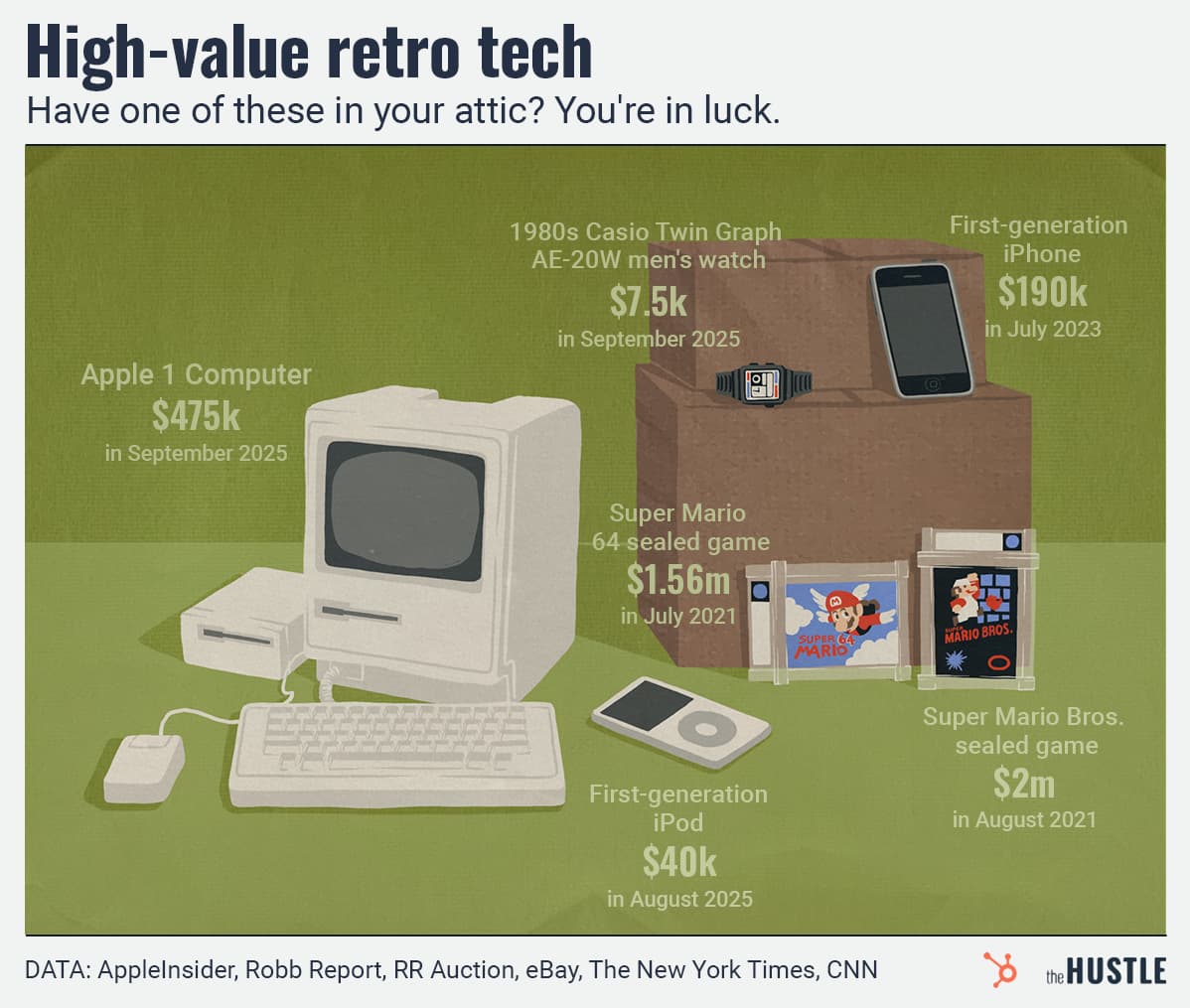
Posted by Phoebe BainFeb 2Retrospekt is one of many companies making money by flipping old, fan-favorite technology like Polaroids, cassette tapes, and Tamagotchis. Show 3 more findings ZoomThe nostalgia factory that’s made millions flipping old PolaroidsThe Hustlehttps://thehustle.co/originals/the-nostalgia-factory-thats-made-millions-flipping-old-polaroids?hubs_content=thehustle.co%2Foriginals%2Fthe-woman-who-puts-america-to-sleep&hubs_content-cta=null
Posted by Kevin KearneyMar 10, 2025What's behind the cassette renaissance Cassettes fell out of fashion in the late 1990s as the popularity of compact discs ascended. But in the streaming era, tapes are having a moment thanks to changing audio preferences, the desire for tangible objects, and a healthy dose of nostalgia. This article explores the recent resurgence, asking whether it's the future of music consumption or just another passing trend. ZoomHow cassettes went from forgotten to hip | Back Markethttps://www.backmarket.co.uk/en-gb/c/audio/cassette-player-trend
Posted by Teddy BurkhardtAug 5, 2025The 'dupe' economy is fueled by the youthful thrill of thriftHistorically, you don't want people to know you have a knock-off luxury item. But today's younger generations are embracing the "dupe" economy, an open celebration of luxury knock-off items where consumers are proud to pay less for something roughly equivalent to premium brand offerings. ZoomBye bye, Birkin? Gen Z leans into the dupe economyhttps://www.salon.com/2025/01/14/bye-bye-birkin-gen-z-leans-into-the-dupe-economy/
Posted by Kevin KearneyNov 14, 2024Why dystopian literature remains popularYale English professor Joe Cleary argues that dystopian literature’s continued relevance is due to a torrent of additional societal anxieties and that the streaming adaptations of dystopian classics "The Handmaid’s Tale" and "The Man in the High Castle" have expanded the genre’s popularity, introducing new audiences to its tropes. ZoomWhy has the dystopian genre made a comeback? A Yale professor weighs inYale e360https://news.yale.edu/2017/03/10/why-has-dystopian-genre-made-comeback-yale-professor-weighs