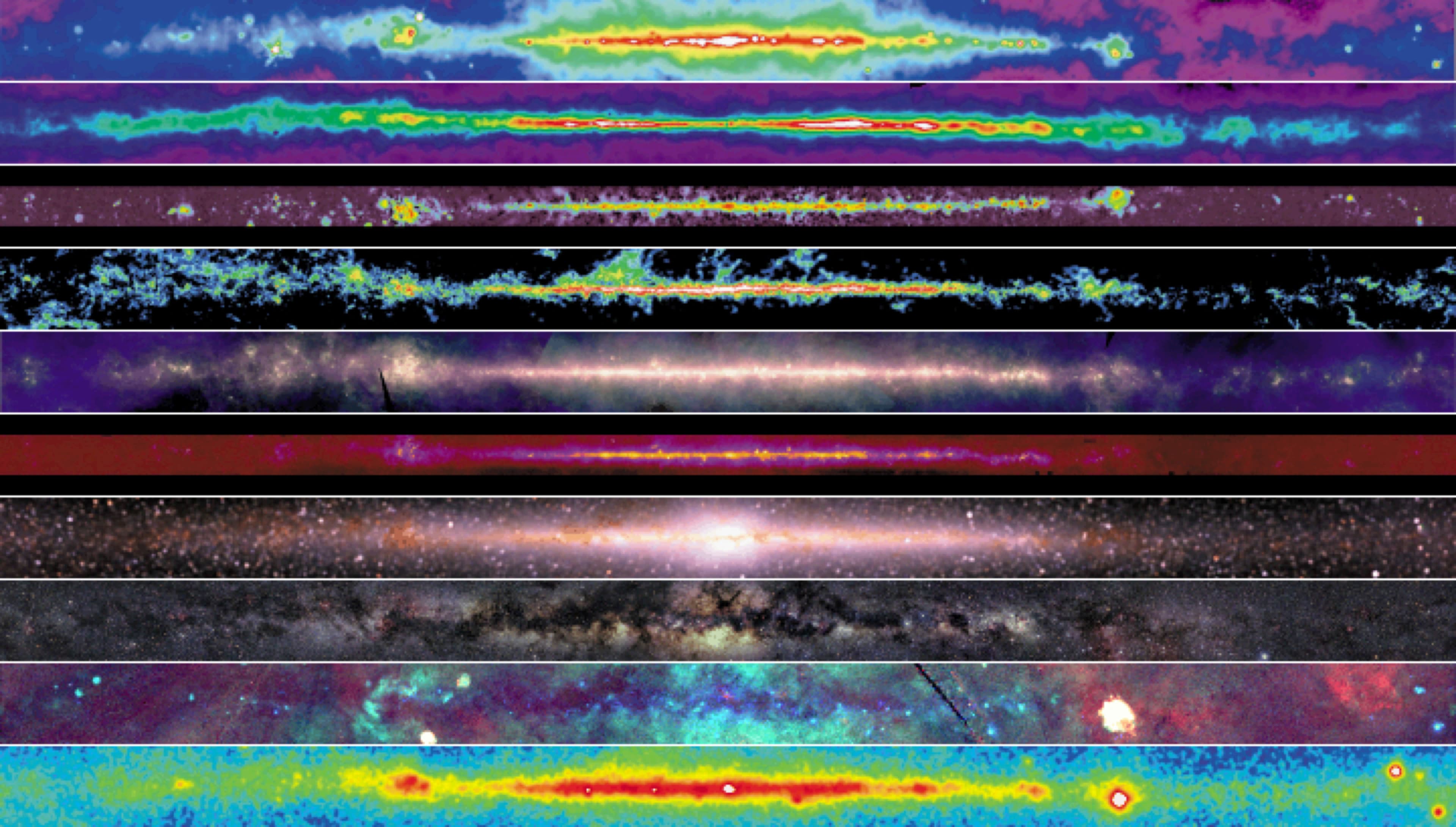
Posted by Marco Daniel MachadoDec 31, 2025View maps of the Milky Way across all wavelengths of light.Show 2 more findings ZoomMultiwavelength Milky Way ImagesNASAhttps://asd.gsfc.nasa.gov/archive/mwmw/mmw_images.html

Posted by Marco Daniel MachadoDec 31, 2025Variations in the energy of light force the use of multiple telescopesJust as Earth's atmosphere allows the sun's visible light to pass through while blocking other harmful radiation, telescope mirrors and other optics can only reflect, absorb, or transmit certain types of light. Detectors also utilize semiconducting materials that react to specific energies of light, thereby preventing a one-telescope-fits-all solution.Astronomy Magazinehttps://www.astronomy.com/science/ask-astro-how-do-telescopes-see-different-parts-of-the-electromagnetic-spectrum/
Posted by Marco Daniel MachadoApr 29Colorizers convert Hubble's gray scale images into color composites of different wavelengthsThe near-infrared and ultraviolet light captured by the space telescope is not visible to human eyes, but observational data of these types of light can be filtered and modified into visible colors. Many detailed images of astronomical objects are the result of combining these artificially colored images into layers. 4:57https://www.youtube.com/watch?v=jyM32Rdbdts
Posted by Teddy BurkhardtJan 25, 2023Zoom into this mega-photo of the Milky Way galaxyA telescope in Chile has captured 21,400 exposures of the central region of the Milky Way galaxy, and scientists created one composite image showcasing over 3 billion celestial objects. Zoom in here. ZoomLegacy Survey Sky Browserhttps://decaps.legacysurvey.org/viewer
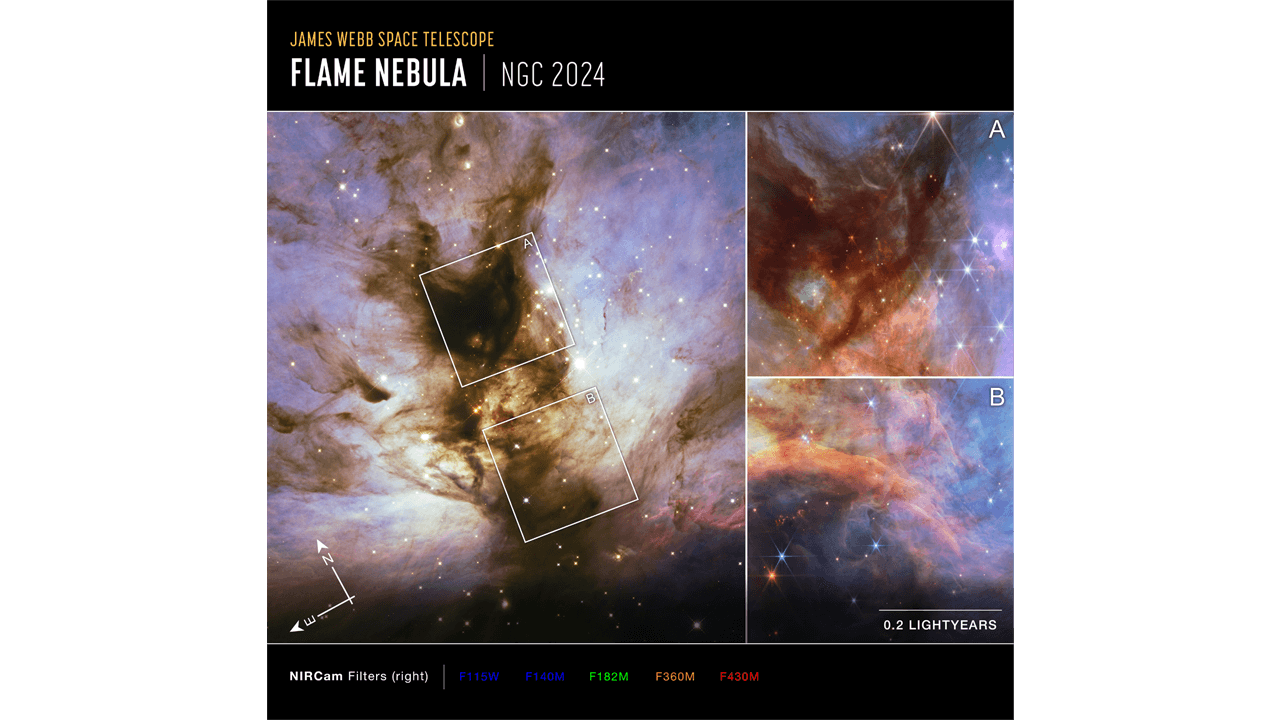
Posted by Marco Daniel MachadoSep 26, 2022View a gallery of stunning images taken by the James Webb Space TelescopeWhile the James Webb telescope collects an astounding amount of scientific data, a major part of its allure is its ability to return stunning, high-resolution images. These images include nearby stars, distant galaxies, and some of the oldest structures in the universe. ZoomImage ResourcesNASAhttps://webbtelescope.org/images
Posted by Meher QazilbashDec 18, 2024A map of the Milky WayCurious about the layout of the cosmos? This resource presents a detailed map of our galaxy, the Milky Way. Learn the basic structure and identify prominent global clusters, nebulae, main arms, spurs, and constellations. With numerous different maps and mediums, get oriented with the universe’s configuration and where exactly we fit into it. ZoomMilky Way Map - Pablo Carlos Budassihttps://pablocarlosbudassi.com/2021/05/milky-way-map.html
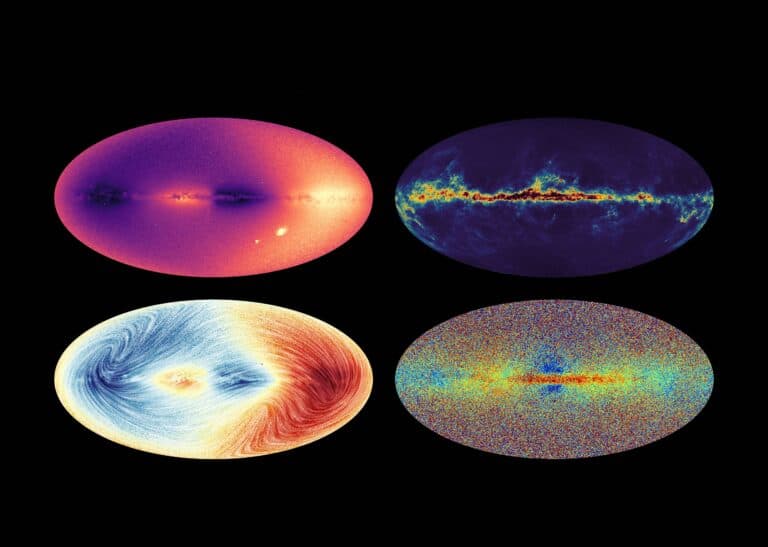
Posted by Marco Daniel MachadoFeb 19Gaia mapped two billion stars in the Milky WayUsing geometric parallax, the European Space Agency mission made position measurements accurate to 2.78 × 10⁻¹⁰ degrees, revealing large-scale galactic structure and dynamics. Remnants of ancient galactic mergers were also identified within the Milky Way. ZoomHow Gaia revealed the Milky WayAstronomy Magazinehttps://www.astronomy.com/science/how-gaia-revealed-the-milky-way/
Posted by Teddy BurkhardtDec 4, 2022See to the edge of the universe with this two-decade astronomy projectA New Mexico telescope has captured astronomical data for two decades to compile this map of the universe. Starting from earth and ending at the "edge" of the universe, it shows one slice of the cosmos: a total of 200,000 galaxies. ZoomThe Map of the Universehttps://mapoftheuniverse.net/
Posted by Teddy BurkhardtMar 22, 2024Mapping the universe's 1.3 million quasars Quasars form the core of active galaxies where supermassive black holes devour unimaginable amounts of matter. You can see a map of all 1.3 million of these objects with this 3D map. It was assembled with data from the Gaia spacecraft and shows how the spread of dark matter across space matches that described by the Cosmic Microwave Background. Zoom3D map of over 1 million black holes traces where the universe’s dark matter liesSpace.comhttps://www.space.com/quasar-3d-map-dark-matter-distribution
Posted by Meher QazilbashApr 29Fly through the deepest image of space ever taken by the Hubble Space TelescopeTaken over 11 days between 2003 and 2004, when the space telescope was aimed at a seemingly empty patch of the sky, the Hubble Ultra-Deep Field revealed about 10,000 sources of light, most of which are entire galaxies. This visualization expands the 2D image into a 3D view spanning 12 billion years. 2:02The deepest image of the Universe ever taken | Hubble: The Wonders of Space Revealed - BBCBBChttps://www.youtube.com/watch?v=WRHIGuoH6ic
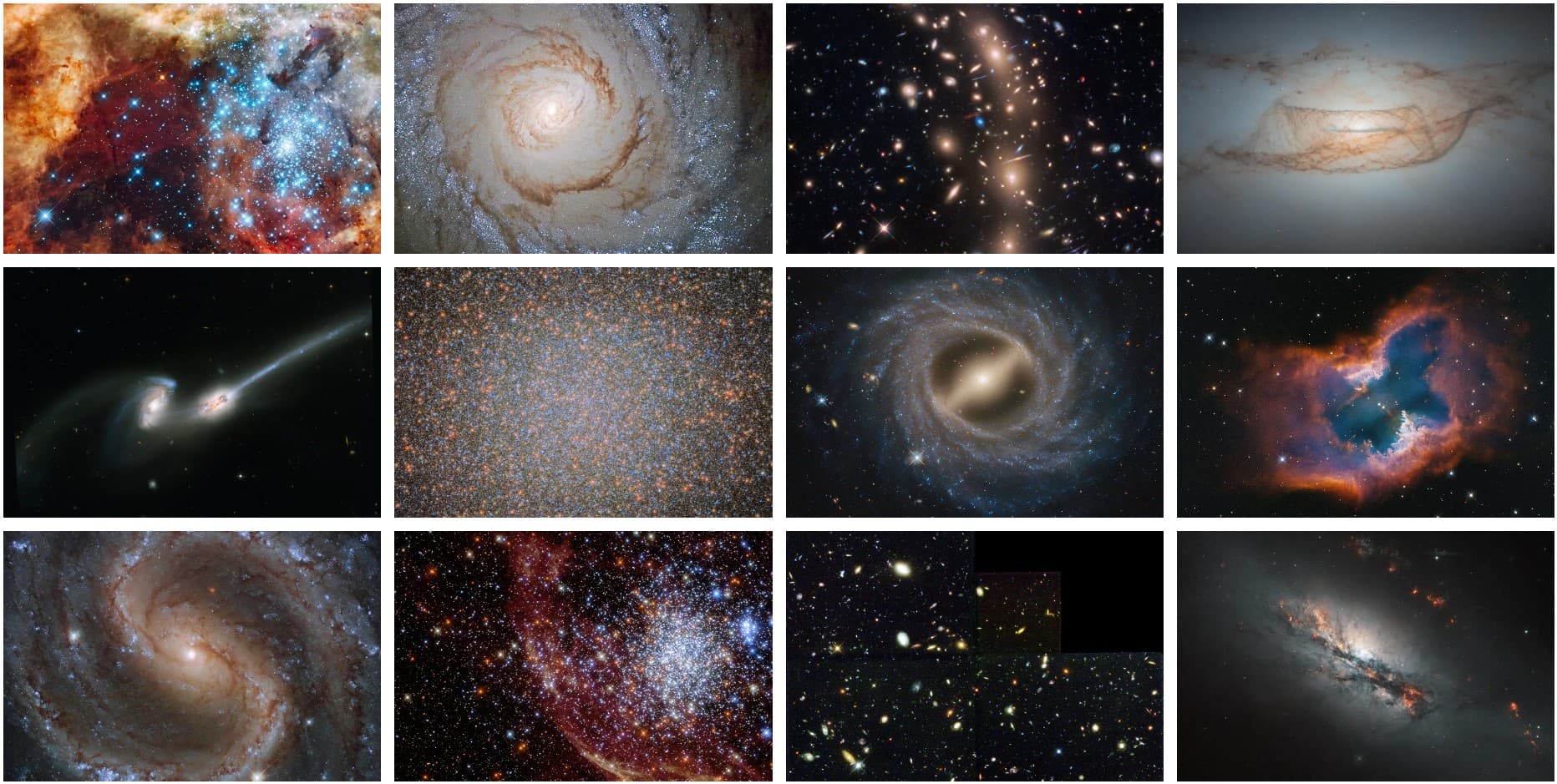
Posted by Meher QazilbashMay 6, 2025View galleries of images taken by the Hubble Space TelescopeWith more than 1.7 million observations made since 1990, the Hubble Space Telescope has captured images of space missions, planets, stellar nurseries, interstellar comets, star clusters, galaxies, and more. This search tool allows users to sort and filter across these celestial objects to explore over 35 years of Hubble's astrophotography. ZoomHubble Images - NASA ScienceNASAhttps://science.nasa.gov/mission/hubble/multimedia/hubble-images/
Posted by Marco Daniel MachadoFeb 26The European Space Agency's Euclid telescope maps dark matterAs light rays travel near massive objects in space, their paths can be distorted on their way to Earth, causing objects to appear displaced, magnified, shrunken, or sheared. By simulating these effects for various mass distributions, astronomers can match the distortion to a simulated mass and compare it with the observed visible matter to infer the presence of dark matter. 4:13ESA Space Science Hubhttps://www.youtube.com/watch?v=sAP5rauEyG4
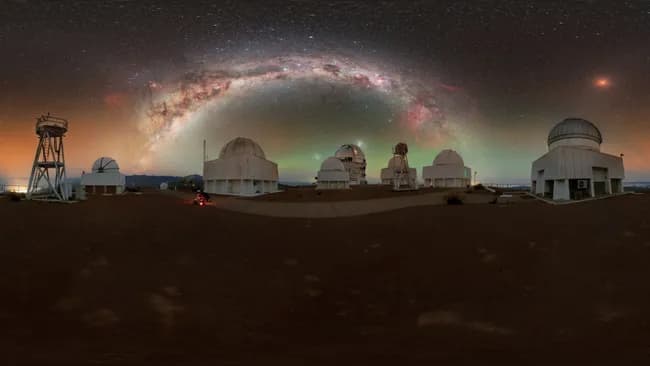
Posted by Marco Daniel MachadoMay 20By separating light with tools such as prisms, scientists can reveal the presence and composition of celestial matter by identifying color fingerprints unique to specific elements and molecules.Show 4 more findings 7:53Spectroscopy, ExplainedNASA Goddardhttps://www.youtube.com/watch?v=_1mpHBAXh1c
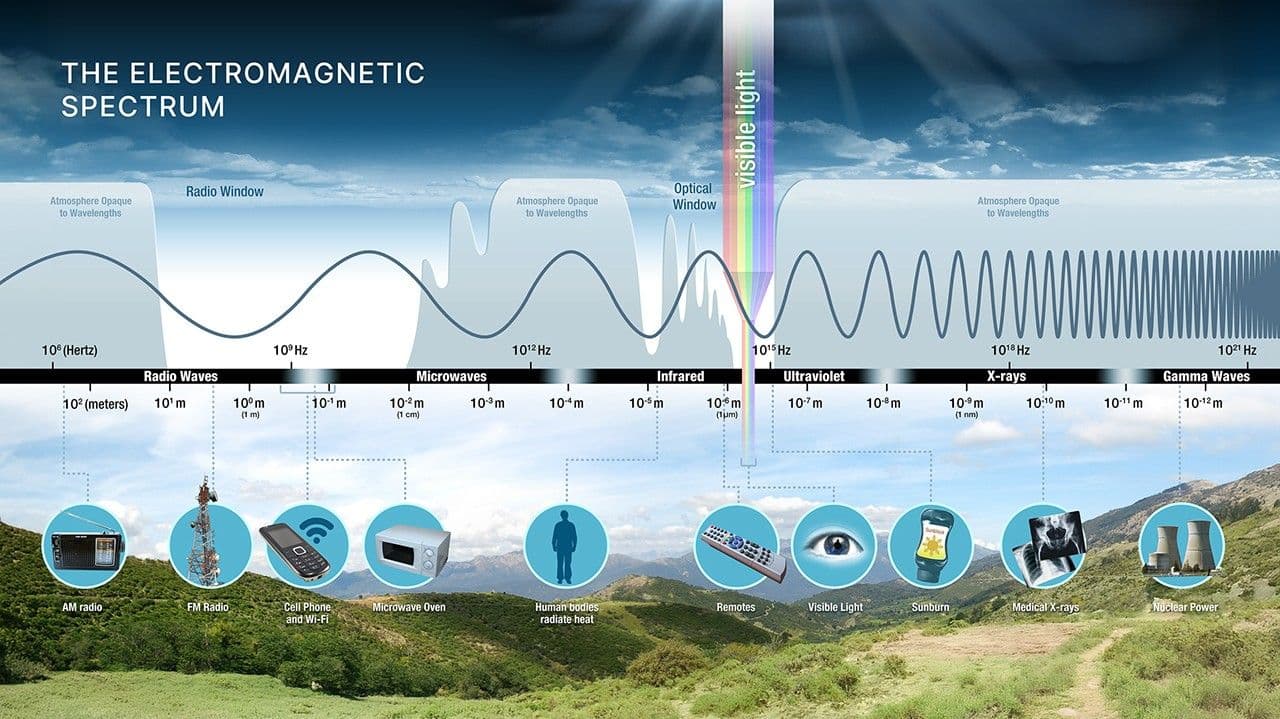
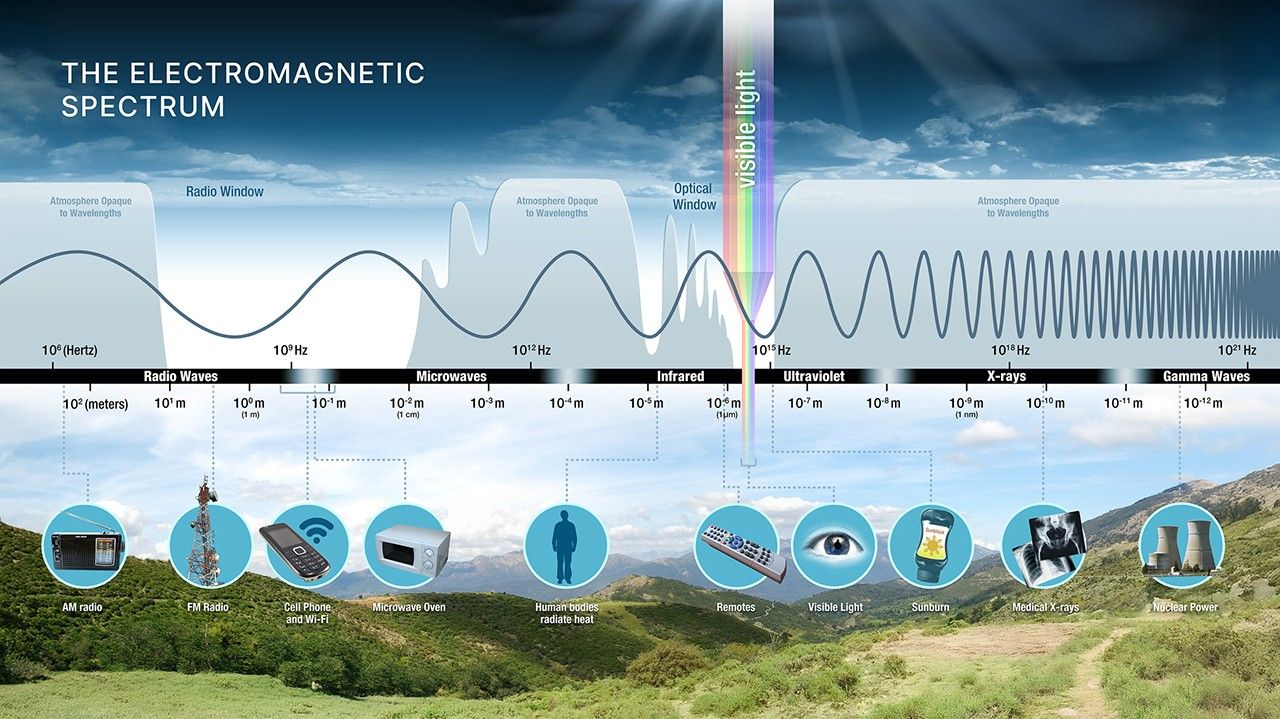
Posted by Marco Daniel MachadoDec 31, 2025View the electromagnetic spectrum and the properties of different types of lightAll forms of electromagnetic radiation, from radio waves to gamma rays, travel at the speed of light in a vacuum, but their wavelengths decrease as their frequencies increase. The light-sensitive nerve cells in the human eye are sensitive to a narrow range of values, which we observe as the spectrum of visible light. ZoomNASAhttps://assets.science.nasa.gov/dynamicimage/assets/science/cds/learn/images/ems/EMS_Diagram_09172025.jpg
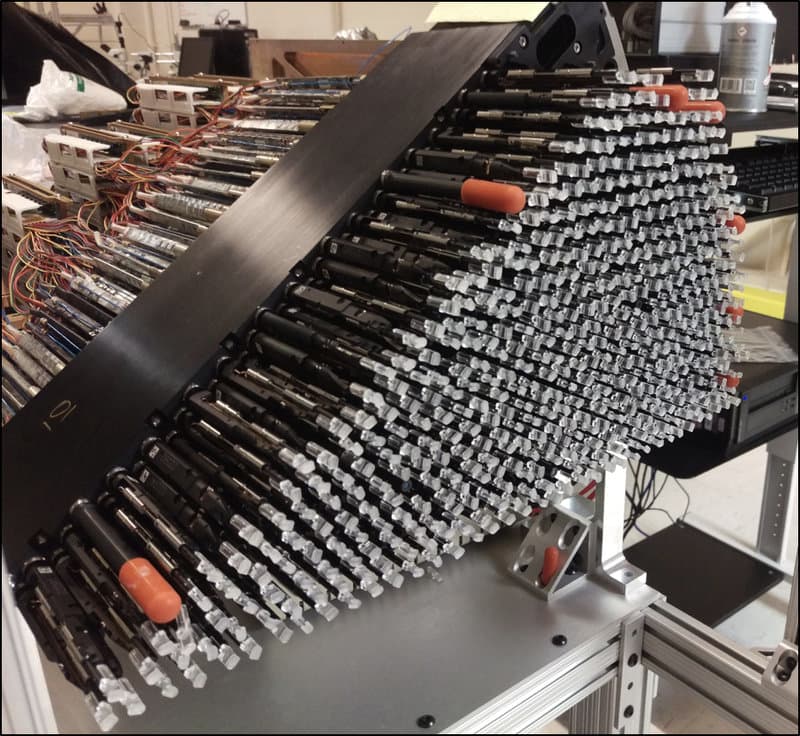
Posted by August MoonJul 23, 2025Published photography from JWST are false-color imagesThe James Webb Telescope captures invisible light, not photos. Scientists then color-map wavelengths of infrared light to show us the invisible universe. 1:06How We Capture Images From Space1440 Originalshttps://www.youtube.com/shorts/5a0Q7o4BctQ
Posted by Marco Daniel MachadoApr 2View the transparency of Earth's atmosphere and how it blocks most forms of lightThe gases that make up Earth's atmosphere block most harmful forms of electromagnetic radiation from reaching the planet's surface, except for some ultraviolet light. Their transparency to radio waves means this form of light can reach Earth's surface, which is why most radio telescopes are ground-based rather than space-based. ZoomNASAhttps://www.earthdata.nasa.gov/learn/earth-observation-data-basics/electromagnetic-spectrum
Posted by Teddy BurkhardtJan 25, 2024The aesthetics of the James Webb imagesThe highly popular images produced by the James Webb Space Telescope are an artful collaboration between data science and visual designers. The raw data reflects real physical aspects of space, but it arrives without visual representation. Visual experts assign colors to specific wavelengths, crop and orient images in an accessible way, and consider the emotional impact of images as they incorporate design principles into the final product. Learn the fascinating details here. ZoomHow images from NASA’s James Webb Space Telescope get their iconic lookThe Vergehttps://www.theverge.com/2022/10/10/23393194/nasa-image-processing-jwst-astrophotography
Posted by Teddy BurkhardtFeb 7, 2022The new history of the Milky WayNew data garnered from European spacecraft Gaia in 2018 allowed astronomers to rewrite the Milky Way Galaxy's biography. Charting the movements of more than 1 billion stars, Gaia made astronomers reassess how our galaxy formed. Evidence of long-ago collisions and proof of unexpected and unusual movements were just the beginning of the beginning. ZoomThe 14-billion-year history of the Milky WayQuanta Magazinehttps://www.quantamagazine.org/the-new-history-of-the-milky-way-20201215/
Posted by Marco Daniel MachadoApr 26, 2023View a gallery of Einstein ringsAs light from a distant galaxy spreads in all directions, rays that pass around a massive object, such as another galaxy, may be bent around it. If the massive object is positioned between the distant galaxy and our telescopes, we may observe this deflected light forming a ring around it. ZoomWhat is gravitational lensing?https://earthsky.org/space/what-is-gravitational-lensing-einstein-ring/
Posted by Marco Daniel MachadoApr 7View a simulation of the dark matter filaments that make up the cosmic webThe distribution of matter in the universe is not uniform, with interconnected threads of galaxy clusters surrounded by voids of empty space. Simulations of the universe show this is only possible within 13.8 billion years—the universe's age—if a foundational network of seeds—dark matter halos—were present to gravitationally attract visible matter. ZoomEuropean Southern Observatoryhttps://supernova.eso.org/exhibition/images/1114_E_27_Teyssier_M_Cosmo25gold_SC14_hires/
Posted by Teddy BurkhardtAug 2, 2023James Webb Space Telescope aims to unlock secrets of the early universeDecades in the making, JWST is designed to study the universe in infrared light, allowing it to see through cosmic dust and observe ancient galaxies, star formation, and potentially life-supporting exoplanets. The Webb will orbit the sun at a stable point 1.5 million kilometers from Earth. ZoomLooking back in timeReutershttps://www.reuters.com/graphics/SPACE-EXPLORATION/TELESCOPE/klvyknwbrvg/
Posted by Marco Daniel MachadoJul 1Throughout its 10-year mission to create a time-lapse of the universe, the Vera C. Rubin Observatory will generate 500 petabytes of data by taking an ultrawide, ultra-high definition image every 34 seconds.Show 3 more findings ZoomRubin Observatory’s First Images Are StunningIEEE Spectrumhttps://spectrum.ieee.org/vera-rubin-observatory-first-images
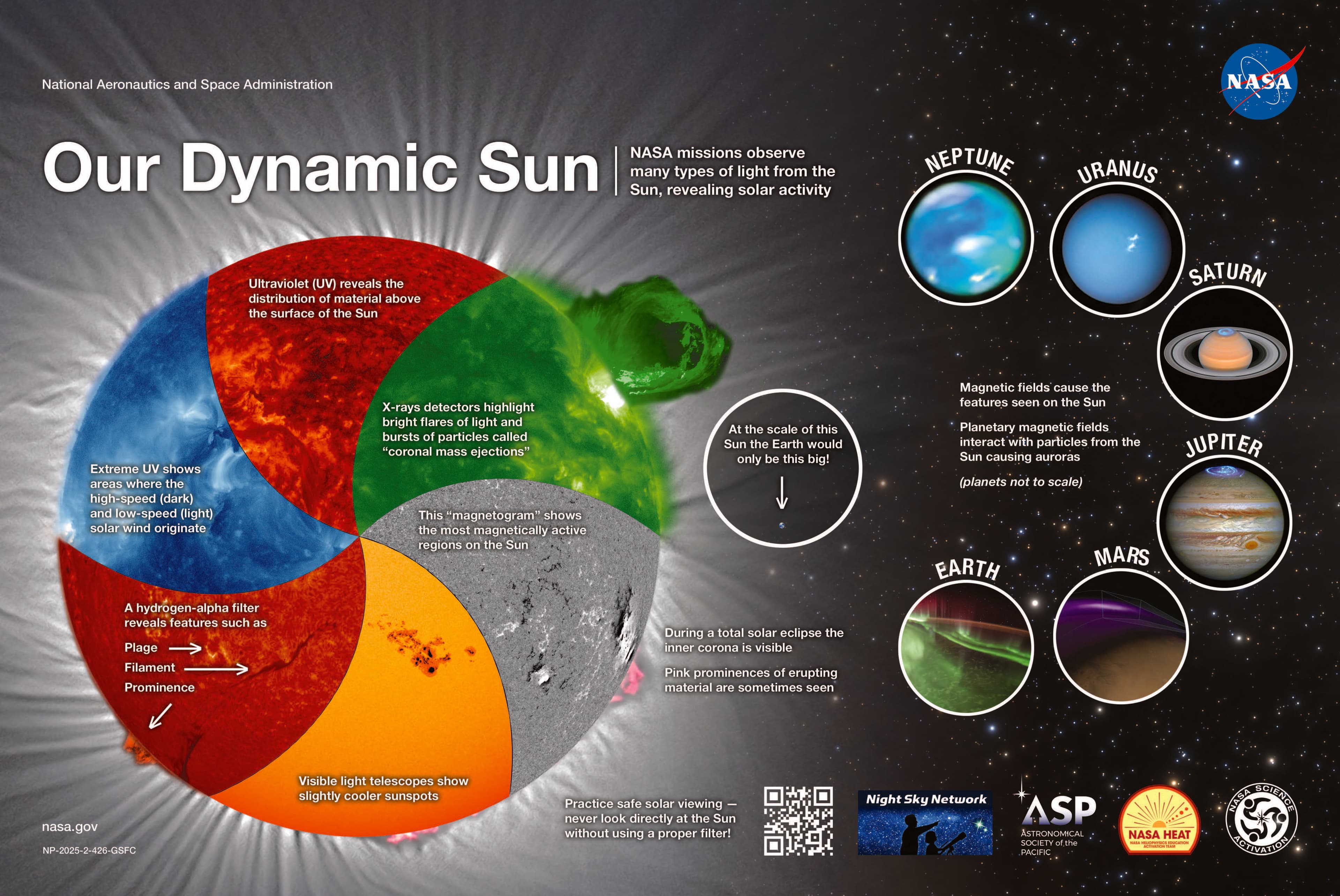
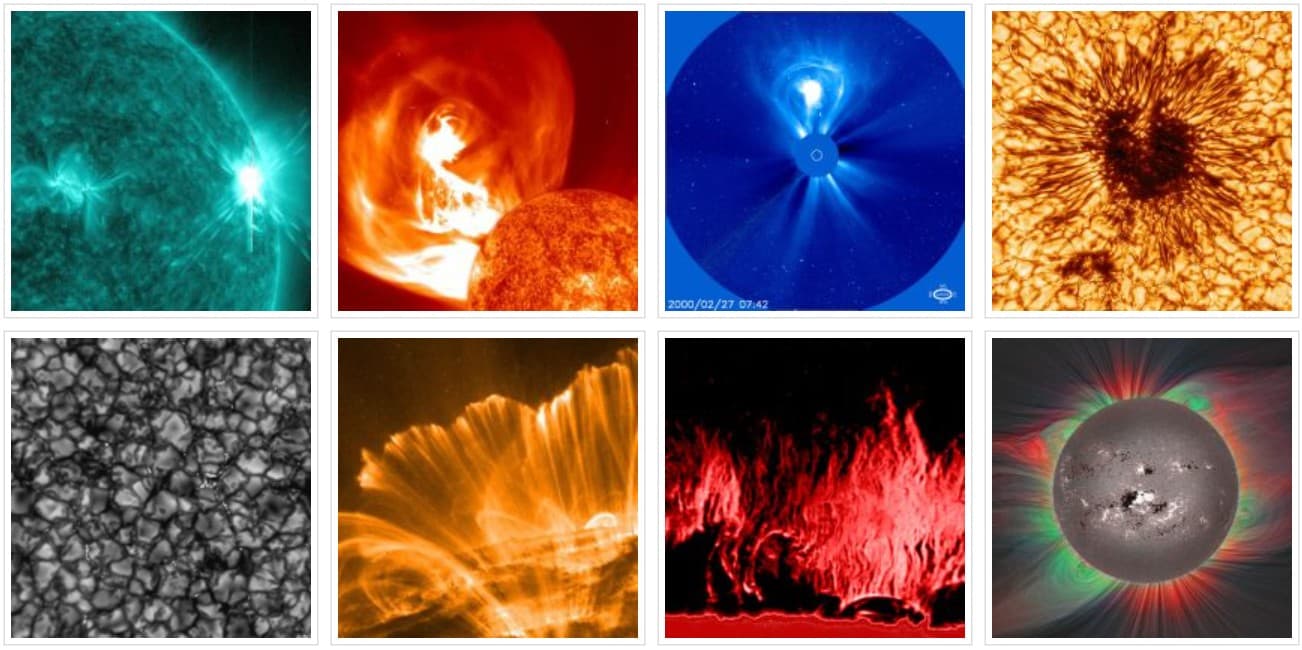
Posted by Marco Daniel MachadoMay 13A composite of telescope images of the sun, which each reveal unique solar featuresWhile traditional cameras can reveal sunspots—cooler regions on the sun's surface—in visible light, x-ray detectors can highlight explosions of high-energy plasma and magnetic fields known as coronal mass ejections. Hydrogen-alpha filters can reveal clouds and filaments of material suspended in magnetic fields above the sun's surface. ZoomNASAhttps://nightsky.jpl.nasa.gov/news/109/
Posted by Marco Daniel MachadoApr 29Watch a tour of a 3D visualization of the Pillars of CreationCombining observational data from the Hubble and James Webb Space Telescopes has allowed NASA scientists to create a multiwavelength model of the star-forming region at the heart of the Eagle nebula. 2:29Pillars of Creation Star in New Visualization from NASA’s Hubble and Webb TelescopesNASA Goddardhttps://www.youtube.com/watch?v=9ZooCy59rV0
Posted by Marco Daniel MachadoMay 13View a colorful gallery of solar features, including coronal loops and filamentary prominences, curated by the National Solar Observatory.Show 2 more findings ZoomNational Solar Observatoryhttps://nso.edu/gallery/gallery-solar-features/
Posted by Marco Daniel MachadoJun 18Explore an interactive forecast of the future of the universe, from the return of Halley's Comet to the last light in the cosmos. ZoomUniverse ForecastNeal Agarwalhttps://neal.fun/universe-forecast/
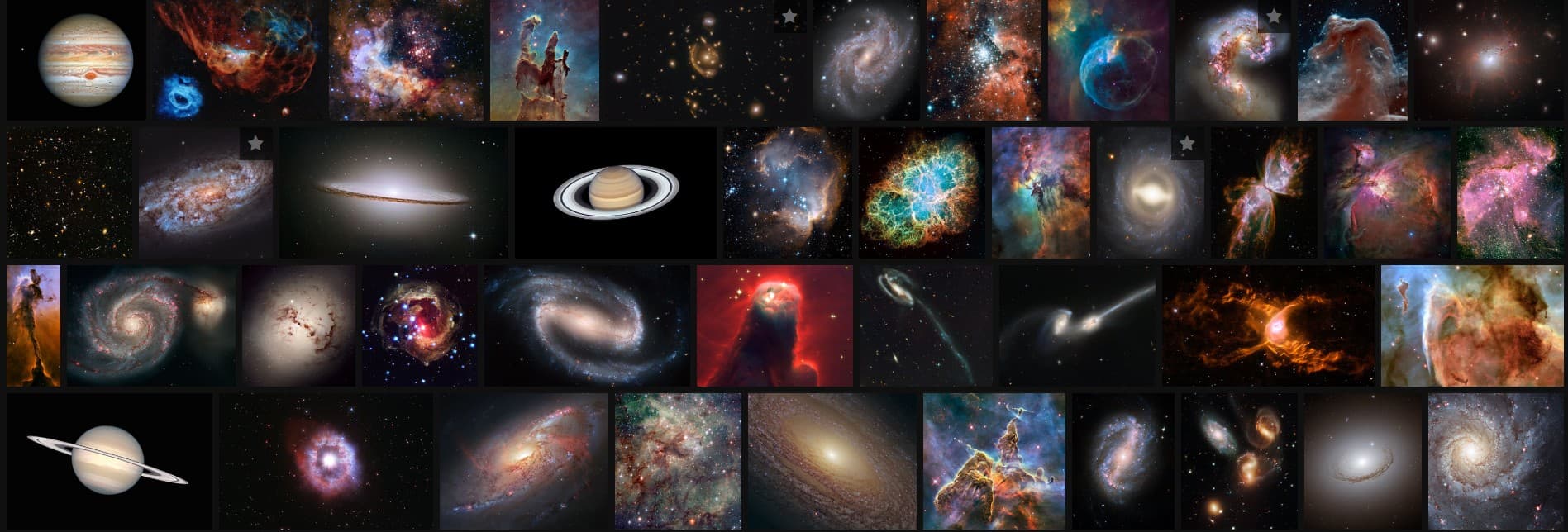
Posted by Marco Daniel MachadoAug 22Explore a gallery of astronomical images curated by the European Space Agency, which includes illustrations and images of aurorae, planets, stars, galaxies, stellar nurseries, exoplanets, and black holes. ZoomImagesESAhttps://esahubble.org/images/viewall/
Posted by Marco Daniel MachadoFeb 7, 2022The first image of a black hole was created from an international telescope networkThe Event Horizon Telescope united radio observatories worldwide to image the supermassive black hole at the center of the Milky Way, known as Sagittarius A*. The team couldn’t transmit their massive dataset online, so they physically flew hundreds of terabytes of data to MIT aboard airplanes. ZoomThe story of the Event Horizon TelescopeThe New York Timeshttps://www.nytimes.com/2015/06/09/science/black-hole-event-horizon-telescope.html?unlocked_article_code=1.VU8.kBiA.i_XobmgsKMqn&smid=url-share
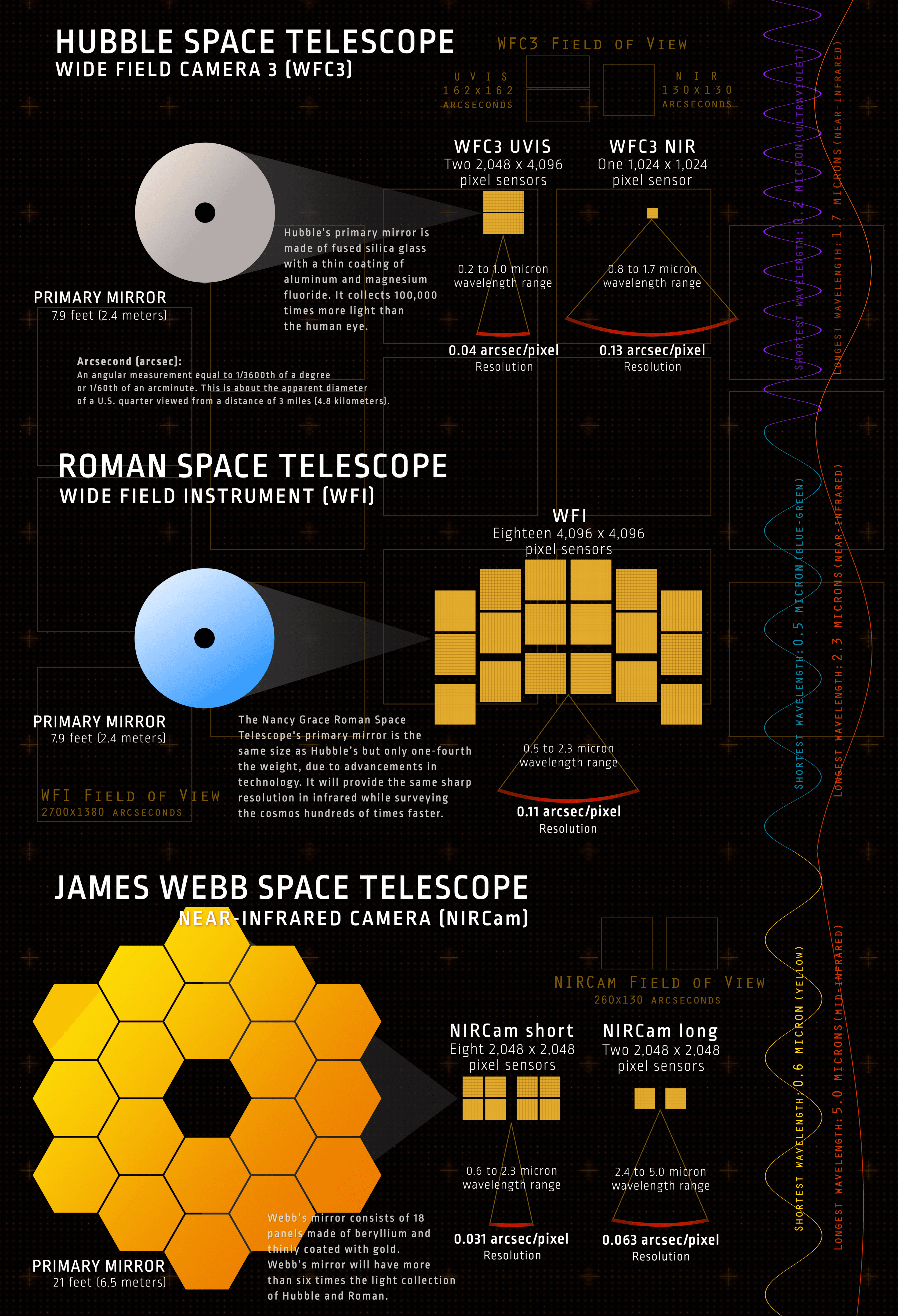
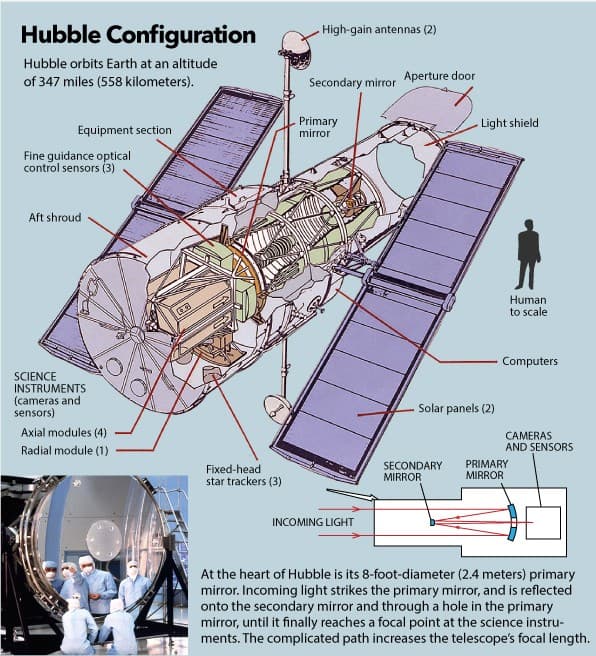
Posted by Meher QazilbashMay 6, 2025The Hubble Space Telescope uses curved mirrors to collect and focus lightClassified as a Cassegrain reflector, the observatory bounces incoming visible light and some infrared and ultraviolet light off a primary mirror with a diameter of 2.4 meters. The reflected light is directed to a secondary mirror, which reflects it through a tiny hole in the primary mirror and onto detectors. ZoomU5gRbUfvWzrXmWpE2tfAxL.jpg.webp (620×3430)Space.comhttps://cdn.mos.cms.futurecdn.net/U5gRbUfvWzrXmWpE2tfAxL.jpg
Posted by Teddy BurkhardtJan 23, 2023Explore the night's sky from anywhereStellarium Web is a planetarium running in your web browser. It shows a realistic star map, just like what you see with the naked eye, binoculars or a telescope. Using its interface, you can click on object's visible at your location on the Earth... ZoomStellarium Web Online Star Maphttps://stellarium-web.org/
Posted by Marco Daniel MachadoFeb 7, 2022Infrared vision gives Webb telescope access to the oldest light in the universeTo peer into the universe’s earliest moments, the Webb had to solve several immense engineering challenges: deploying a massive sun shield, surviving extreme cold, and stabilizing ultra-sensitive instruments. The telescope’s mirrors can adjust themselves in steps 10,000 times smaller than a human hair. 31:23The engineering marvel of the James Webb Telescopehttps://www.youtube.com/watch?v=aICaAEXDJQQ
Posted by Teddy BurkhardtMar 13, 2023New ways of seeing the cosmos have redrawn the map of human identityFrom Galileo’s crude spyglass to the James Webb Space Telescope, each technological leap has expanded our observational reach and redefined philosophical and moral conceptions of our place in the universe. Identifying signs of life through the study of exoplanet atmospheres would represent the next great revolution. ZoomJWST’s cosmic revelations will change our interior lives too | Aeon EssaysAeonhttps://aeon.co/essays/jwsts-cosmic-revelations-will-change-our-interior-lives-too
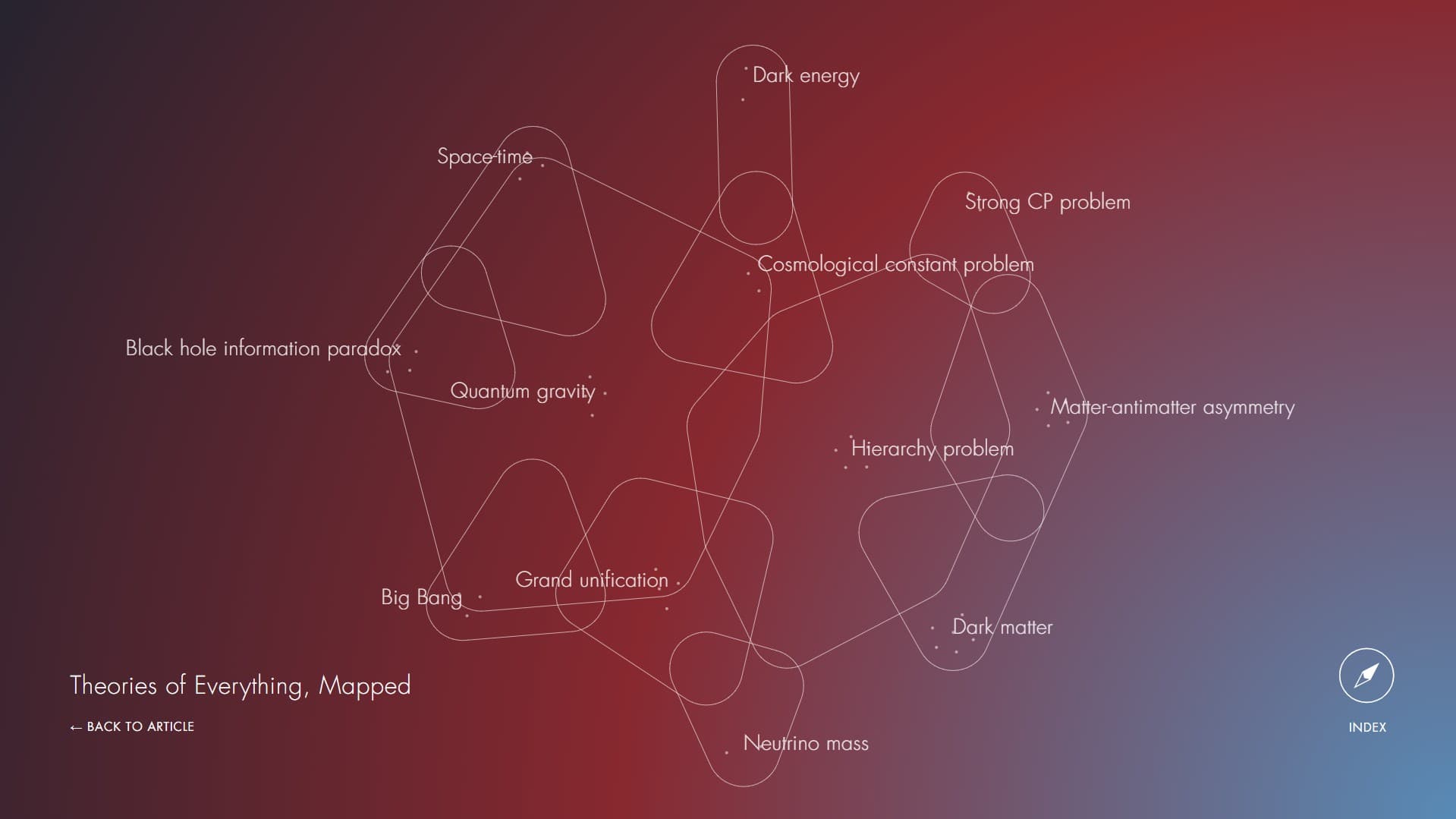
Posted by Marco Daniel MachadoMay 7Explore an interactive map of the unified theories of everythingThis interactive concisely describes many highly complex theories ranging from quantum gravity and black holes to dark matter and energy. Supplementary resources, key questions, and possible solutions accompany each description. As of 2026, no developed theory provides an accepted explanation of all observed phenomena in the universe at all scales. ZoomTheories of Everything, Mapped | Quanta MagazineQuanta Magazinehttps://www.quantamagazine.org/theories-of-everything-mapped-20150803/
Posted by Teddy BurkhardtJul 8, 2022The entire observable universe in one mapScientists believe we’ve only discovered about 5% of the universe. Here’s a map of what we’ve found so far, visualized using a log scale. ZoomA Logarithmic Map of the Entire Observable UniverseVisual Capitalisthttps://www.visualcapitalist.com/cp/map-of-the-entire-known-universe/
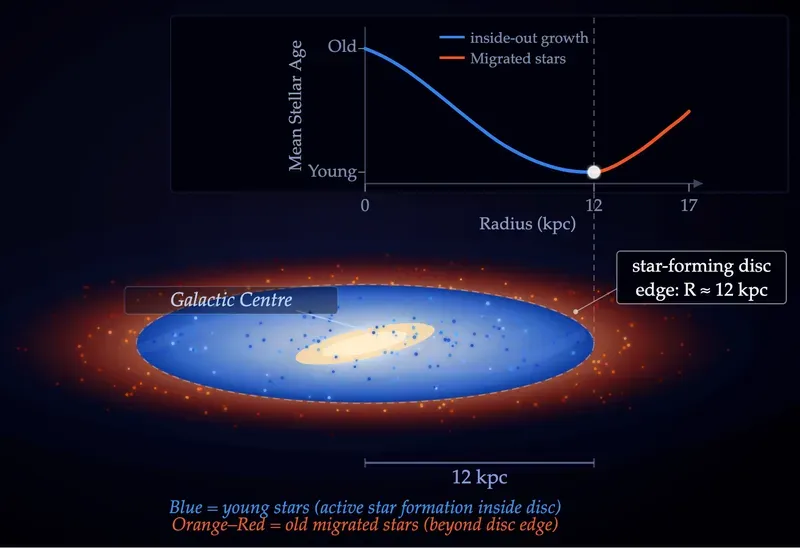
Posted by Marco Daniel MachadoApr 29The edge of the Milky Way may be identified by its star-forming diskLike Earth's atmosphere and its core, galaxies become more diffuse with increasing distance from their centers, making it hard to define where they end. However, one approach focuses on where gas concentrations are no longer dense enough to support measurable star formation. ZoomThis Might Be The Closest We’ll Get To Confirming Where Our Galaxy, The Milky Way, Actually EndsIFLSciencehttps://www.iflscience.com/where-does-our-galaxy-end-at-last-we-might-know-where-the-milky-ways-most-important-boundary-lies-83284
Posted by Drew SteigerwaldJan 9The James Webb Space Telescope is rewriting what we know about the early universeThanks to its advanced infrared sensors and massive mirror, the James Webb Space Telescope can see farther back in cosmic history than Hubble, revealing galaxies formed just 500 million years after the Big Bang. 3:56James Webb Space Telescope Explained1440 Originalshttps://www.youtube.com/watch?v=Ep8Tm2VYqDE
Posted by Meher QazilbashApr 29The Hubble Space Telescope made discoveries within our solar system and across the universeThe observatory helped confirm the presence of water on Jupiter's moon Europa, and uncovered seasonal variations on planets like Uranus. It also observed exoplanets and gravitational lensing, proved the existence of supermassive black holes at the centers of galaxies, and detected the accelerated expansion of the universe. ZoomHow the Hubble Space Telescope changed our view of the Universe | BBC Sky at Night MagazineBBC Sky at Night Magazinehttps://www.skyatnightmagazine.com/space-science/how-hubble-space-telescope-changed-view-of-universe
Posted by Meher QazilbashApr 17, 2025Explore a gallery of space-based images and animations of EarthThis collection compiles shots of well-known locations, such as US national parks, and natural features, including aurora borealis and fall foliage, to provide a high-level view of Earth's surface. ZoomNASA Visible Earth - HomeNASAhttps://visibleearth.nasa.gov/
Posted by Marco Daniel MachadoJun 11By analyzing the color of starlight, astronomers can determine how fast stars within a galaxy are moving toward or away from Earth, revealing the expansion rate of the universe.Show 6 more findings 3:26Redshift: Motion and colorLas Cumbres Observatoryhttps://www.youtube.com/watch?v=Y3cTy4HXNmM