Back

Posted by

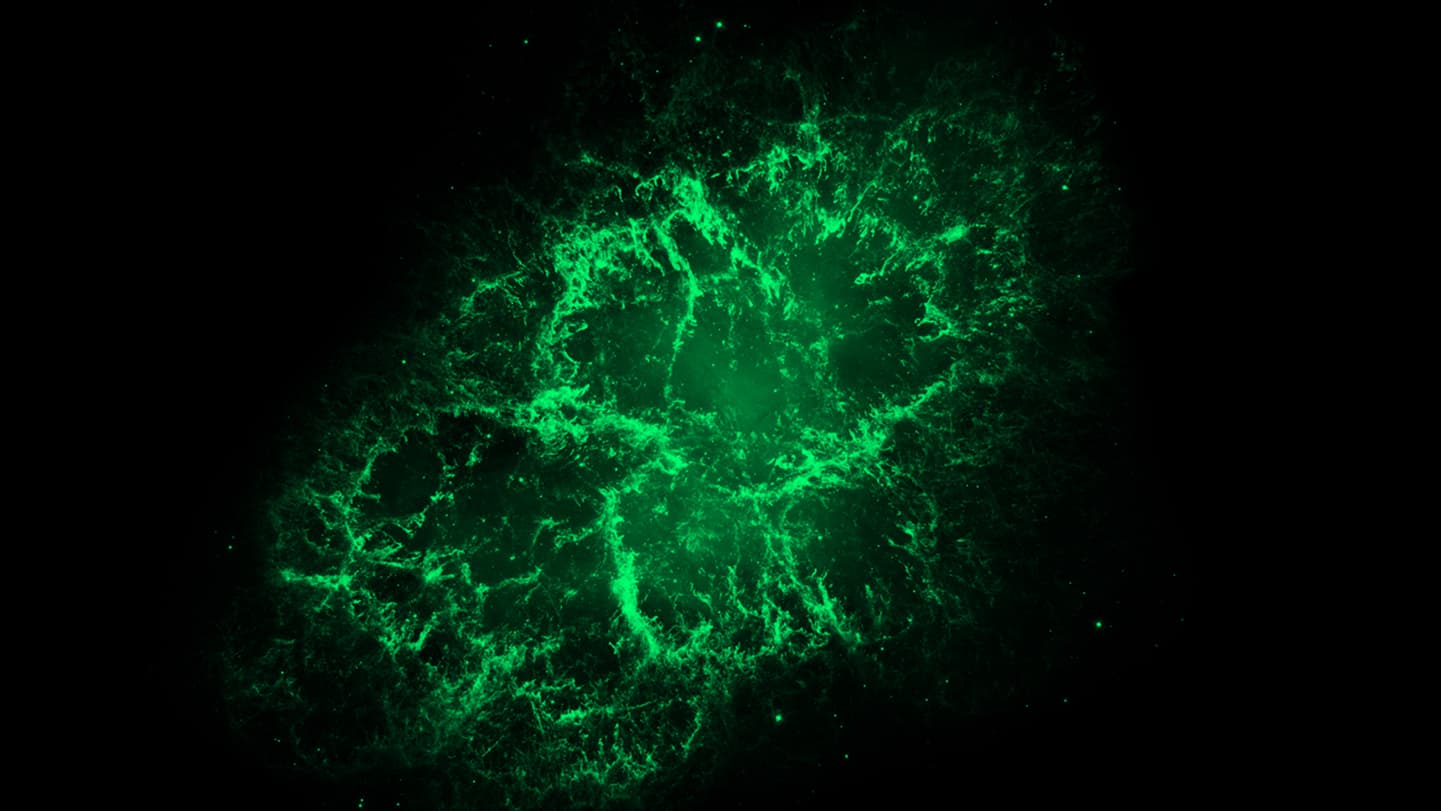
How big is a supernova explosion?

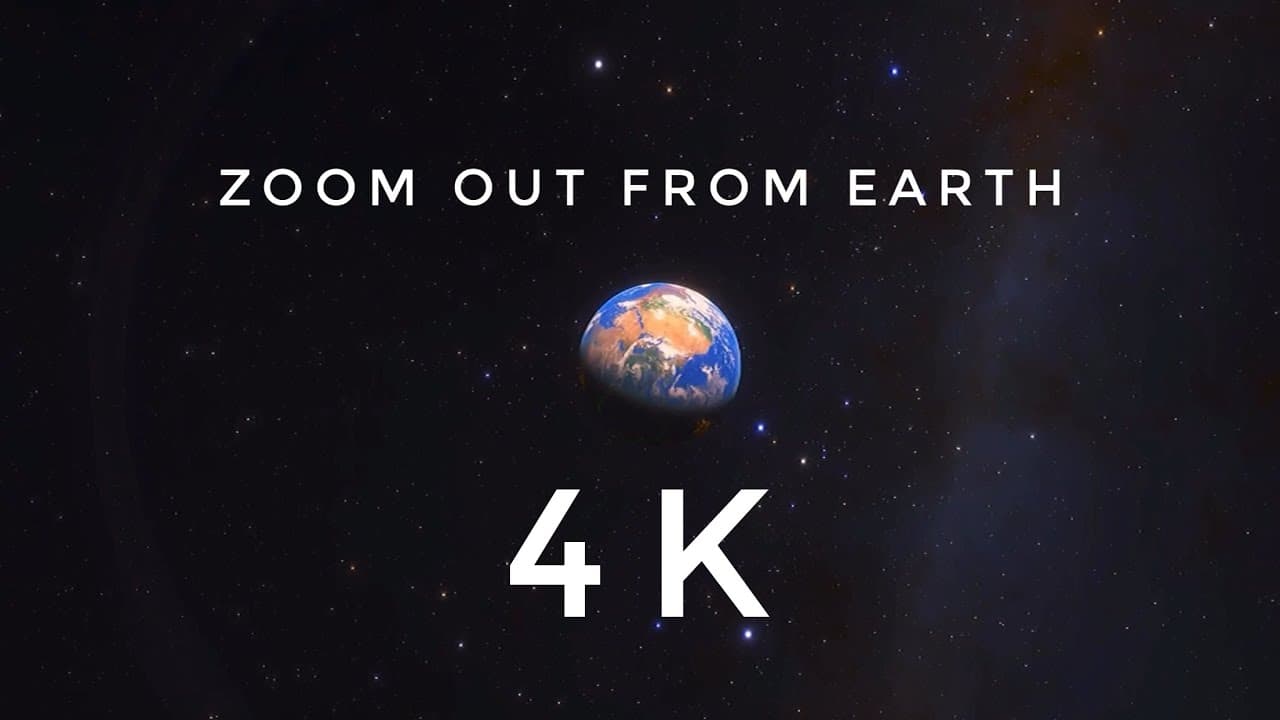
Supernovas are the biggest explosions in the universe, often obliterating the area surrounding them. So what would happen if one exploded near Earth? If the sun went supernova it'd be like getting hit by a nuclear explosion every second for weeks. Of course, that's not happening anytime soon. This animated video shows how distance is the key factor, and how you shouldn't be worried.

Similar Posts

Here’s what we found related to above. Click through to dive even deeper.

  • Posted by

    Neutron stars, the remains of some massive stars after they explode in a supernova, are the densest directly observable objects in the universe.

  • Posted by

    While Type Ia supernovae obliterate a white dwarf from the inside, novae can temporarily increase the star's brightness up to 100,000 times without self-destruction.

  • Posted by

    Watch a 3D simulation of a Type Ia supernova, in which carbon fusion completely destroys a white dwarf in seconds.

  • Posted by

    Stars hold off gravitational collapse with the energy produced in nuclear reactions in their core, but when massive stars run out of fuel for these reactions, runaway collapse can produce a black hole.

  • Posted by

    Watch the birth of a neutron star, which takes less than one second, in this high-fidelity, 3D visualization.

  • Posted by

    Watch an artist's impression of two neutron stars merging in a kilonova explosion

    Such an event produces enough light to briefly outshine an entire galaxy and to produce characteristic gravitational wave and gamma-ray signals. On August 17, 2017, these signals were captured by the LIGO–Virgo and Fermi/INTEGRAL observatories, respectively, from a kilonova about 130 million light-years away.

  • Posted by

    You would be crushed almost immediately if you stood on a white dwarf, whose surface gravity is over 100,000 times stronger than Earth's.

  • Posted by

    Detonating the largest nuclear weapon ever tested in the Mariana Trench would create a pulsating energy bubble that would be largely unnoticed on the surface.

  • Posted by

    Unlike black holes and neutron stars, white dwarfs are the only major stellar remnant not to form via a supernova.

  • Posted by

    The deaths of massive stars and the mergers of neutron stars and black holes can produce gamma-ray bursts—jets of particles moving in opposite directions at near-light speed that comprise the universe's most powerful explosions.

  • Posted by

    What would happen if a massive asteroid struck Earth?

    While NASA states that no known asteroid currently threatens Earth, past impacts demonstrate that the risk is real. The agency has tested deflection technology to alter an asteroid's path, as this visualization imagines a worst-case collision scenario.

  • Posted by

    Watch visualization of different-sized asteroid impacts

    The animations range from a 4-meter-wide asteroid that would burn up in the atmosphere with the impact of 0.6 Hiroshima nuclear bombs to a 940-kilometer asteroid the size of the dwarf planet Ceres, which would produce a mass extinction event.

  • Posted by

    A black hole with the mass of the observable universe would be larger than the observable universe, leading some theorists to suggest that we may live inside a black hole.

  • Posted by

    Earth is constantly bombarded by material from space

    Most of this matter is composed of small particles, with any smaller than 33 feet in diameter burning up in the atmosphere. Larger asteroids can reach the ground, and those larger than several thousand feet cause global damage, including earthquakes and tsunamis.

  • Posted by

    If the entire universe were replaced with antimatter, except for Earth, our planet would slowly be annihilated from the outside in as it moved through space.

  • Posted by

    Watch a 3D visualization of the formation of a black hole from the merging of two neutron stars.

  • Posted by

    Why starquakes may explain various phenomena associated with neutron stars

    Fast radio bursts—repeated millisecond-long pulses of enormous energy from neutron stars—are emitted with a timing that resembles the earthquakes and aftershocks seen on Earth when geological activity releases energy from within the planet. Although pulsars should gradually spin more slowly as they lose energy from emitting jets of radiation, sudden increases may result from interior matter moving during starquakes.

  • Posted by

    Replacing the sun with a black hole of identical mass would not change Earth's orbit, but life on Earth would collapse rapidly.

  • Posted by

    The sun's energy output could support about 482 trillion times Earth's current population, assuming humans were powered by sunlight and consumed 2,000 calories a day.

  • Posted by

    Watch an animated, step-by-step reconstruction of the Chernobyl explosion

    This video shows how a 1986 safety test at Chernobyl spiraled out of control—leading to a massive rise in temperatures, an explosion and reactor meltdown that produced the largest civilian nuclear disaster in history.

  • Posted by

    TON 618, the largest black hole ever detected, has the mass of 66 billion suns

    The supermassive black hole is 18 billion light-years away and emits radiation with the brightness of 100 trillion stars. It is so massive that light would take an entire week to travel from its edge to its center.

  • Posted by

    Exploding white dwarfs, spinning galaxies, and the expansion of the universe are used by astronomers to measure distances across the cosmos.

  • Posted by

    You could see the same star being born and dying on opposite sides of the sky if the universe were finite in size.

  • Posted by

    More than 40 quintillion black holes are estimated to exist in the universe, including about 100 million in the Milky Way, each with masses up to hundreds of times that of the sun.

  • Posted by

    Watch a simulation of a collapsing star becoming a black hole

    When a massive star can no longer release enough energy through fusion in its core to fight off gravitational collapse, the dense core collapses first, producing an event horizon that traps light within it, including some light produced within the star at the time of collapse. As more material falls into the growing event horizon, the star will appear to eclipse itself from the inside.

  • Posted by

    Units involving light, such as light-seconds and light-years, describe the distances traveled by light across that amount of time.

  • Posted by

    Trillions of neutrinos travel through your body every second without leaving a trace.

  • Posted by

    See how distant aliens could preemptively strike humanity

    Could aliens destroy us from light-years away? The team at Kurzgesagt imagines the impact of a highly sophisticated alien civilization setting out to crush humanity and considers the real-world logistics for warfare conducted across the Universe.

  • Posted by

    A scale of the universe, from atoms to cosmos

    Can you really appreciate just how small protons are, or how massive the universe is? To attempt to grasp it, watch this short video which zooms out from a young woman in California to the very limits of the cosmos using established scales. Then, dive deep into the atoms of her white blood cells for a fully-rounded effect.

  • Posted by

    If the Earth stopped spinning, about 85% of the world's population would experience supersonic winds.

  • Posted by

    The formation of a neutron star through a core collapse lasts one-tenth of a second

    Massive stars keep fusing heavier and heavier elements in their cores to produce energy that pushes against the weight of the star itself. However, the fusion of silicon into iron consumes energy and initiates a feedback loop that rapidly compresses the stellar core, creating neutrons and neutrinos from the combination of electrons and protons.

  • Posted by

    Research suggests a 95-kilometer-wide (59-mile-wide) asteroid impact could boil the Earth's oceans

    Even a 1-kilometer-wide (0.62-mile-wide) asteroid can trigger earthquakes and tsunamis on impact with oceans. The overwhelming majority of asteroids that reach Earth are much smaller and burn up in the atmosphere before reaching the ground.

  • Posted by

    No black dwarf stars exist, but most of the universe's stars will become one.

  • Posted by

    Quasars are extremely luminous cores of distant galaxies, powered by supermassive black holes that consume as much as 100 Earth masses of material per minute.

  • Posted by

    A 25-magnitude earthquake would release enough energy to destroy the sun, while a -15-magnitude quake is made whenever dust settles onto a table's surface.

  • Posted by

    The most mysterious (known) star in the universe

    Something massive, with roughly 1,000 times the area of Earth, is blocking the light coming from a distant star known as KIC 8462852. One of astronomers' more intriguing theories: Alien technology. Discovered via NASA's Kepler space telescope and a...

You've reached the end.