Posted by Jeremy CronigMar 10Voting rights expanded from 6% of Americans in 1789 to nearly all adult citizens today.Show 4 more findings 4:31The fight for the right to vote in the United States - Nicki Beaman GriffinTED-Edhttps://www.youtube.com/watch?v=P9VdyPbbzlI
Posted by Jeremy CronigMar 20The 19th Amendment, which granted women the right to vote in the United States, was a culmination of over 70 years of organizing and advocacy.Show 4 more findings 31:28Fighting for the Vote: Women’s Suffrage in America | Historical Documentary | Lucasfilmhttps://www.youtube.com/watch?v=71ERshnPxI8
Posted by Jeremy CronigFeb 24The 15th Amendment granted Black men the right to vote nationwideRatified in 1870, the 15th Amendment prohibited federal and state governments from denying the right to vote based on race, color, or previous condition of servitude—enfranchising millions of Black men.National Constitution Centerhttps://constitutioncenter.org/the-constitution/amendments/amendment-xv
Posted by Jeremy CronigFeb 26Early American citizenship was defined inconsistently by individual states.Show 3 more findingsInterpretation: The Citizenship Clause | Constitution CenterNational Constitution Centerhttps://constitutioncenter.org/the-constitution/amendments/amendment-xiv/clauses/700
Posted by Teddy BurkhardtApr 20, 2023How Americans have voted throughout historyFrom shouting candidates’ names, to hanging chads to electronic scanning, the nature of voting has a long, sometimes bumpy history in the United States. See descriptions and images in chronological order with this digestible timeline. ZoomHow Americans Have Voted Through HistoryHISTORYhttps://www.history.com/news/voting-elections-ballots-electronic
Posted by Jeremy CronigFeb 24Ratified in 1868, the 14th Amendment guaranteed citizenship to all people born in the United States and required states to provide equal legal protection to all.Show 4 more findings ZoomThe 14th Amendment of the U.S. ConstitutionNational Constitution Centerhttps://constitutioncenter.org/the-constitution/amendments/amendment-xiv
Posted by Jeremy CronigFeb 24Southern states enacted voting restrictions aimed at circumventing ReconstructionAfter 1877, former Confederate states passed poll taxes, literacy tests, property requirements, and grandfather clauses to disenfranchise Black voters—restrictions that remained in place for nearly a century until the Voting Rights Act of 1965. 4:21https://www.youtube.com/watch?v=P2qPT_j2brk
Posted by Jeremy CronigApr 21Native Americans were not granted US citizenship until 1924The Indian Citizenship Act granted citizenship to all Native Americans born in the US, more than 130 years after the Constitution's ratification. Even then, some states continued to deny Native Americans the right to vote for decades.National Constitution Centerhttps://constitutioncenter.org/blog/on-this-day-in-1924-all-indians-made-united-states-citizens
Posted by Jeremy CronigApr 6The Voting Rights Act expanded the DOJ's power to enforce voting protectionsThe Voting Rights Act of 1965 expanded the Department of Justice's power to challenge discriminatory election laws, send federal examiners, and supervise voting changes in areas with histories of voter suppression—although some of these powers have been limited by court rulings since then. 5:29https://www.youtube.com/watch?v=VbFmicUTb_k
Posted by Jeremy CronigFeb 8The Reconstruction Amendments aimed to rebuild the nation and secure freedom after slaveryRatified between 1865 and 1870 after the conclusion of the war, the 13th, 14th, and 15th Amendments abolished slavery, guaranteed citizenship and equal protection, and extended voting rights to Black men—transforming the Constitution's definition of liberty and equality.National Constitution Centerhttps://constitutioncenter.org/education/classroom-resource-library/classroom/the-reconstruction-amendments
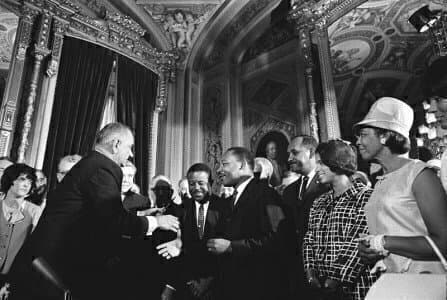
Posted by Jeremy CronigJan 14The Voting Rights Act reshaped federal protection of voting rightsSigned into law in 1965, the Voting Rights Act aimed to end racial discrimination in voting. This resource traces its creation and explains how later court rulings have weakened its enforcement power over time. ZoomNational Constitution Centerhttps://constitutioncenter.org/blog/the-history-and-legacy-of-the-voting-rights-act
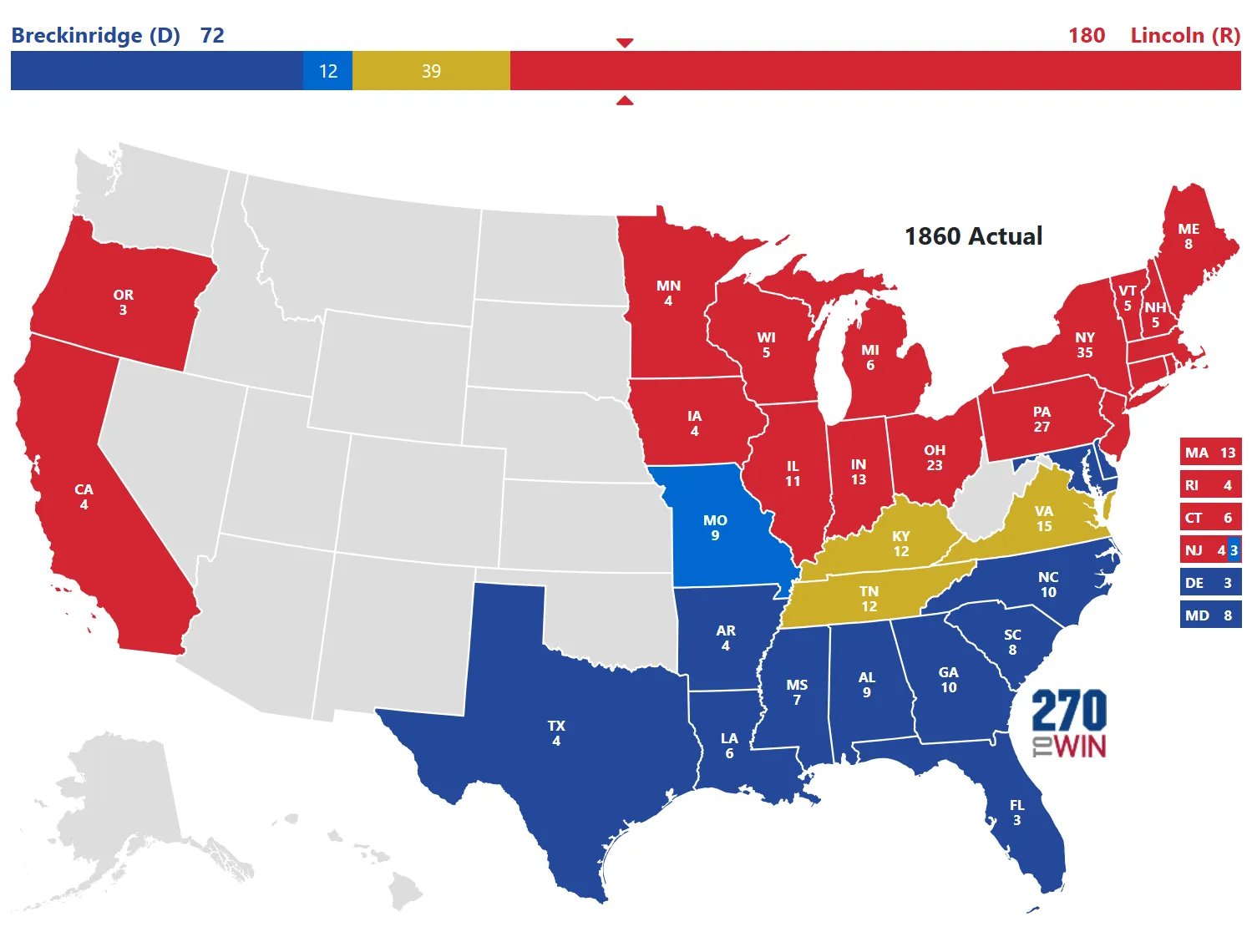
Posted by Jeremy CronigFeb 8Abraham Lincoln received only 40% of the popular vote in the 1860 election, highlighting the deep divisions in the country on the eve of the Civil War.Show 3 more findings ZoomPresidential Election of 1860 - 270toWin270 to Winhttps://www.270towin.com/1860-election/
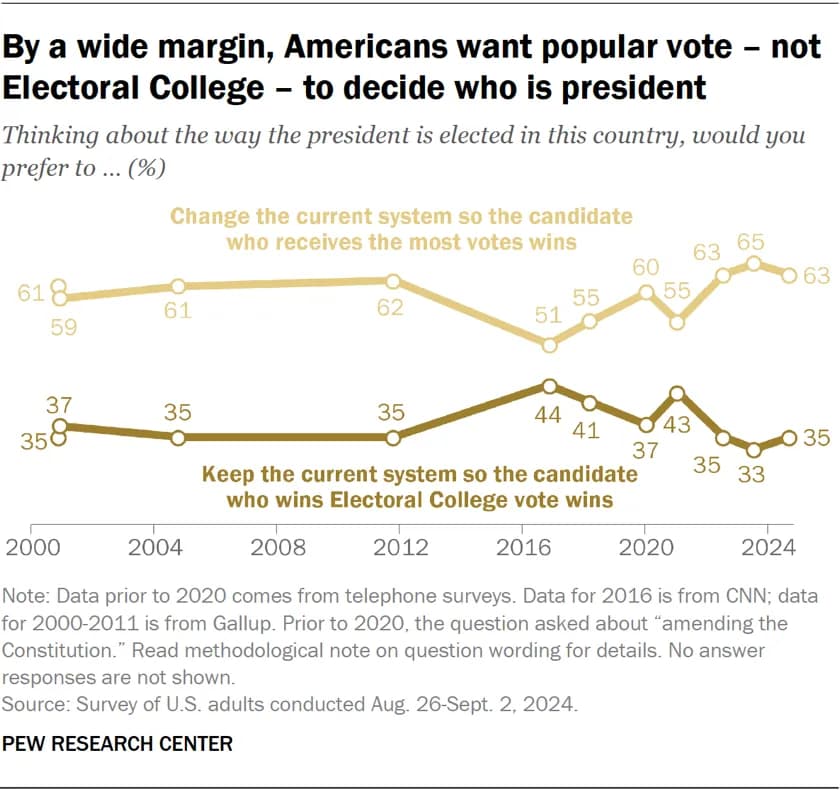
Posted by Drew SteigerwaldMar 10A majority of Americans support replacing the Electoral College with a popular vote.Show 3 more findings ZoomMajority of Americans continue to favor moving away from Electoral CollegePew Research Centerhttps://www.pewresearch.org/short-reads/2024/09/25/majority-of-americans-continue-to-favor-moving-away-from-electoral-college/
Posted by Jeremy CronigFeb 26The Nationality Act of 1790 restricted new citizenship to 'free white persons'The first federal citizenship law limited naturalization to white immigrants, excluding enslaved people, Indigenous communities, and most non-Europeans.https://immigrationhistory.org/item/1790-nationality-act/
Posted by Jeremy CronigMay 11Black Americans were systematically excluded from juries for much of US historyLiteracy tests, poll taxes, and even explicit laws kept Black Americans off juries until well into the 20th century. The Jury Selection and Service Act of 1968 mandated that federal juries reflect a fair cross-section of the community, though racial disparities in jury selection persist.EJIhttps://eji.org/report/race-and-the-jury/
Posted by Teddy BurkhardtJan 22Most Americans support age limits for justices, elected officialsAs members of Congress and Supreme Court justices continue to serve at an average age far older than in the past, polls show a majority of Americans favor setting an age limit for these roles. Roughly 79% support caps for federal elected officials, and 74% favor such limits for Supreme Court justices. A constitutional amendment would be required. ZoomMost Americans favor maximum age limits for federal elected officials, Supreme Court justicesPew Research Centerhttps://www.pewresearch.org/short-reads/2023/10/04/most-americans-favor-maximum-age-limits-for-federal-elected-officials-supreme-court-justices/
Posted by Jeremy CronigFeb 3Thousands of state voting changes have been federally blocked since the Voting Rights ActSince 1965, federal oversight has blocked thousands of state-level voting changes—including redistricting plans—by requiring approval for measures that could affect minority representation, a process scaled back by the Supreme Court in 2013.Brennan Centerhttps://www.brennancenter.org/our-work/research-reports/preclearance-under-voting-rights-act
Posted by Teddy BurkhardtAug 22, 2023How demographics influence voter turnout and electionsThis article breaks down demographic data to show what it means for American elections. According to the latest US Census, the US is growing increasingly diverse. As the population becomes more diverse, so does the electorate. Analyzing the... ZoomElection Demographics and Voter Turnout | Bloomberg Governmenthttps://about.bgov.com/brief/election-demographics-and-voter-turnout/
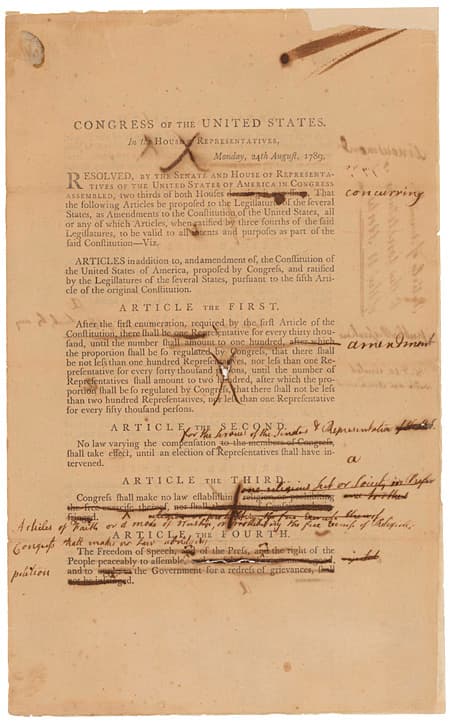
Posted by Jeremy CronigJan 19James Madison wrote the first draft of the Bill of RightsMadison drafted the initial set of constitutional amendments in 1789. The House approved 17 amendments; the Senate reduced them to 12; and 10 were ratified as the Bill of Rights. One rejected amendment was later ratified in 1992 as the 27th Amendment. ZoomNational Archiveshttps://www.archives.gov/legislative/features/bor
Posted by Jeremy CronigMar 173 states did not officially ratify the Bill of Rights until 1939Massachusetts, Connecticut, and Georgia originally rejected or tabled the amendments in 1791. With Virginia's ratification already clearing the three-fourths threshold of adoption, there was no legal pressure to revisit it—until all three states acted symbolically on the 150th anniversary of Congressional approval of the amendments.Ratifying the Bill of Rights . . . in 1939National Archiveshttps://www.archives.gov/publications/prologue/2016/winter/poh-bill-of-rights
Posted by Jeremy CronigFeb 26The 14th Amendment aimed to guarantee citizenship for formerly enslaved peopleThe 14th Amendment was crafted to overturn Dred Scott by granting birthright citizenship to formerly enslaved people and their descendants, securing their legal status under federal law.National Archiveshttps://www.archives.gov/milestone-documents/14th-amendment
Posted by Jeremy CronigFeb 24Thousands of Black men held local, state, and federal offices during ReconstructionBetween 1865 and 1877, more than 1,500 Black Americans served in local, state, and federal offices—including 16 in Congress. This unprecedented political participation largely ended after Reconstruction as Jim Crow laws and racial violence suppressed Black voting. 8:40TIMEhttps://www.youtube.com/watch?v=YfgNdOCdowE
Posted by Jeremy CronigMar 10See the results of all 59 presidential elections from 1789 to 2024This interactive tool lets users explore the outcomes of every US presidential election from George Washington's uncontested 1789 victory through 2024, showing how electoral votes, state results, and shifting coalitions shaped each race. ZoomPBS Electoral DecoderPBShttps://www.pbslearningmedia.org/resource/pbs-electoral-decoder/pbs-electoral-decoder/
Posted by Jeremy CronigMar 17The Bill of Rights was designed to protect individuals from the power of the federal governmentWhen the Bill of Rights was ratified in 1791, its protections applied only to the federal government. It wasn't until the 14th Amendment (1868) and the Supreme Court's doctrine of selective incorporation that most provisions were extended to state governments—a process that began in 1925. 4:13Why is incorporation an important part of America’s constitutional story?National Constitution Centerhttps://www.youtube.com/watch?v=Ho5sUbCSBkc
Posted by Teddy BurkhardtSep 26, 2022Understand the US electorate demographicsEver wonder how much of each group make up the American voting bloc? Find raw data from the '16 and '18 elections broken out by a variety of factors (click on "validated voters database" link). ZoomA voter data resource: Detailed demographic tables about verified voters in 2016, 2018Pew Research Centerhttps://www.pewresearch.org/fact-tank/2020/10/30/a-voter-data-resource-detailed-demographic-tables-about-verified-voters-in-2016-2018/
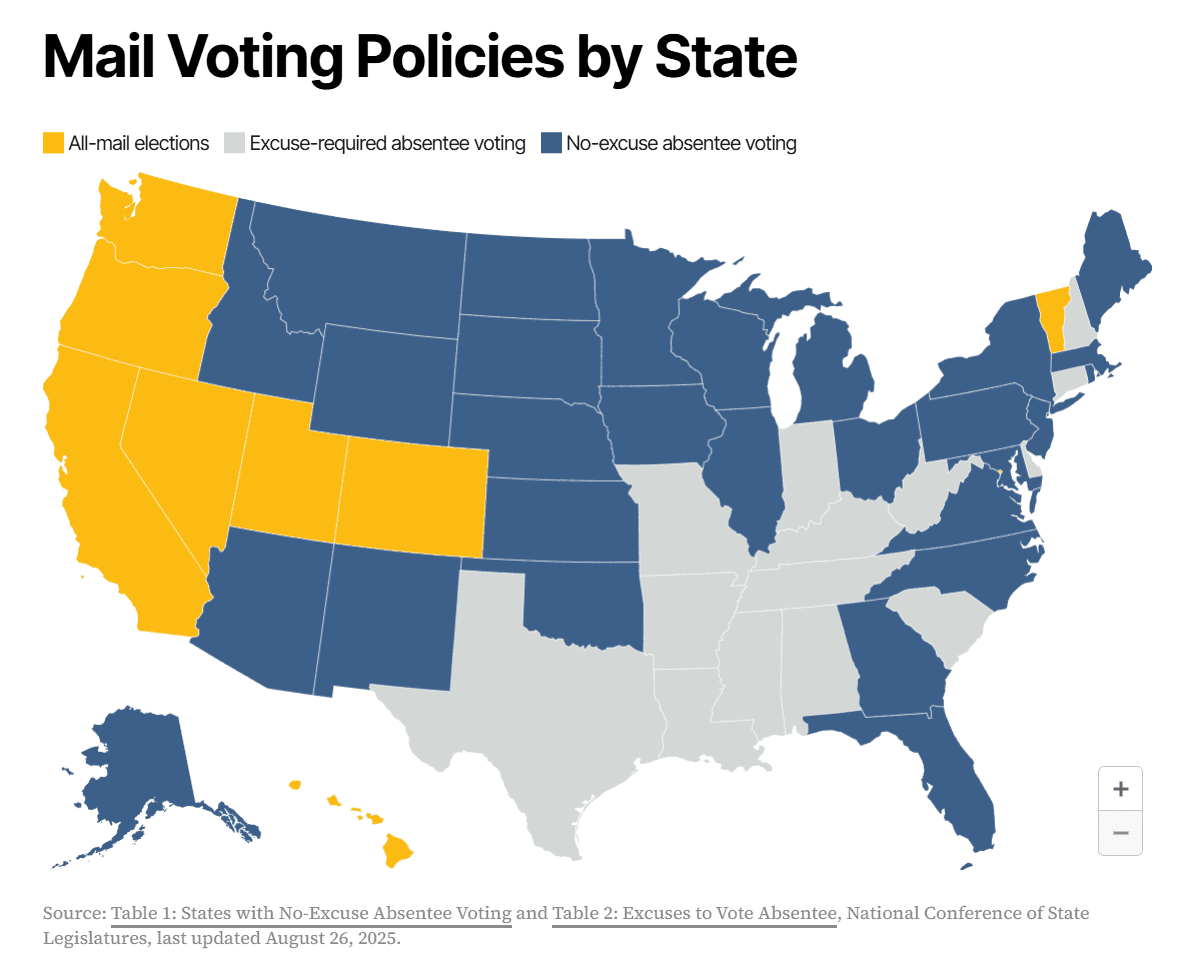
Posted by Jeremy CronigAug 25Voting by mail is safe and secure, and used by voters of both political parties.Show 5 more findings Zoomhttps://bipartisanpolicy.org/wp-content/uploads/2022/08/shutterstock_1938307825.jpgBipartisan Policy Centerhttps://bipartisanpolicy.org/report/mail-voting-is-safe-secure/
Posted by Jeremy CronigJul 13Read an annotated 1866 essay by abolitionist Frederick Douglass, where he laid out his vision for reshaping America after the Civil War.Show 3 more findings ZoomThe Annotated Frederick DouglassThe Atlantichttps://www.theatlantic.com/magazine/archive/2023/12/frederick-douglass-atlantic-reconstruction-essay/675485/
Posted by August MoonMar 26Over a century ago, fewer than 1% of Americans paid income taxes—but the cost of World War II prompted the federal government to greatly expand the number of people required to pay income taxes.Show 5 more findings 1:24The Evolution of Income Tax1440 Originalshttps://youtube.com/shorts/nhWqIGID5AM
Posted by Jeremy CronigJan 31Congress selected the president in 1801 and 1825In a contingent election, the United States House of Representatives is constitutionally required to choose the president, with each state delegation casting one vote when no candidate secures a majority of the electoral votes.https://open.spotify.com/episode/1fnNcmdW11lMP2efq2B4af
Posted by Jeremy CronigMar 17James Madison's original draft of the First Amendment was far more expansive than what was ratifiedMadison's first proposed language guaranteed the right "to speak, to write, or to publish" one's sentiments freely—broader and more explicit than the final text—and described the free press as "one of the great bulwarks of liberty."Historical Background on Free Speech Clause | Constitution Annotated | Congress.gov | Library of CongressLibrary of Congresshttps://constitution.congress.gov/browse/essay/amdt1-7-1/ALDE_00013537/
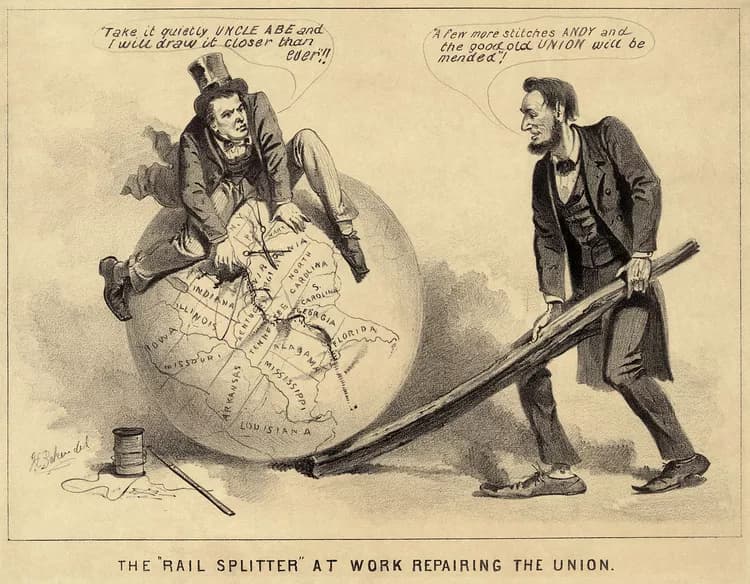
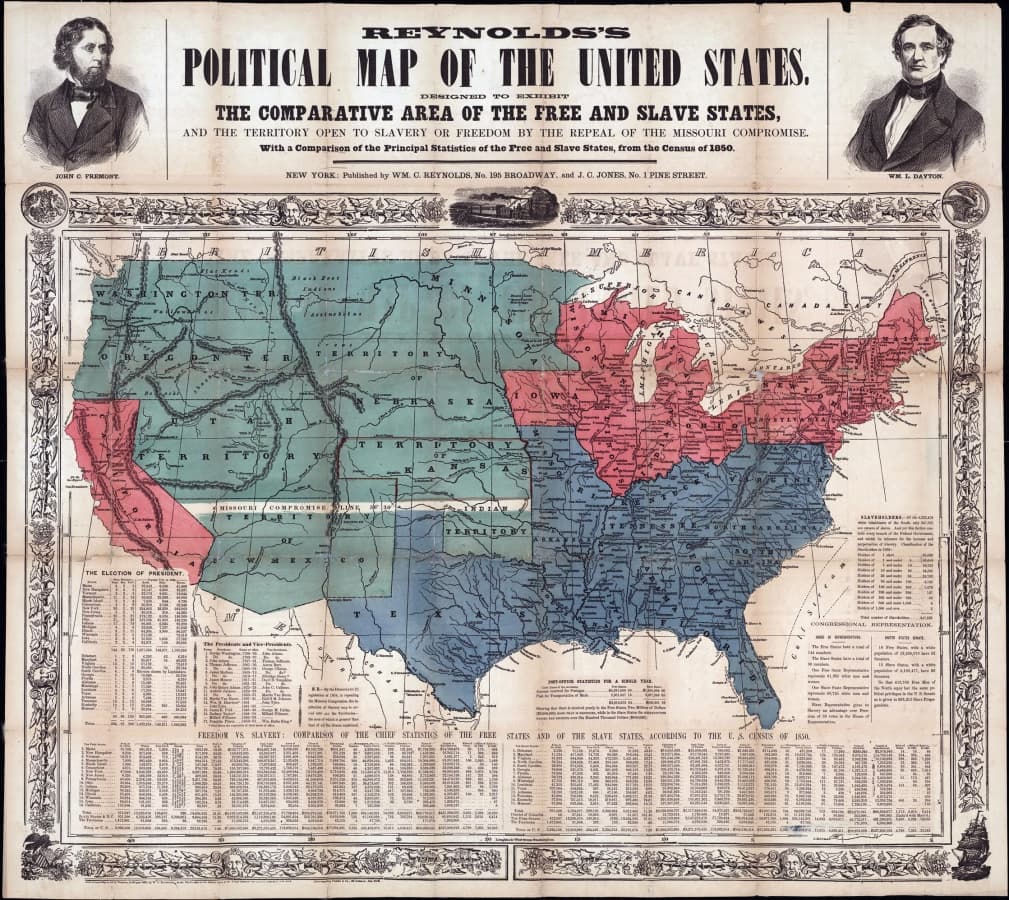
Posted by Jeremy CronigFeb 8US westward expansion—and the status of slavery in the new territories—was a major cause of the American Civil WarThe addition of new western lands forced the nation to confront whether slavery would spread beyond the South. Each debate over the admission of a new state sharpened the divide between free and slaveholding regions. Zoomhttps://ushistoryscene.com/article/civil-war-west-expansion/
Posted by Teddy BurkhardtFeb 20Trace how the Bill of Rights, inspired by centuries of political theory, took shape between 1774 and 1789.This interactive resource from the National Constitution Center traces the complex drafting process behind the Bill of Rights, showing how state proposals and revisions evolved into the first 10 amendments.Show 3 more findings ZoomConstitutional Rights Origins and Travels - Writing RightsNational Constitution Centerhttps://constitutioncenter.org/rights/writing.php
Posted by Teddy BurkhardtSep 19, 2023Explore a comprehensive archive of US presidential election dataThis University of California, Santa Barbara archive compiles presidential election data from 1789 to the present, including popular vote totals, turnout figures, and contextual resources that explain how the electoral process and political landscape have evolved. Zoom2020 | The American Presidency Projecthttps://www.presidency.ucsb.edu/statistics/elections/2024
Posted by Drew SteigerwaldMar 10The 2020 and 2024 elections ranked among the highest-turnout contests in over a centuryVoter turnout reached 66% in 2020—the highest since 1908—and 64% in 2024, tied for second-highest with 1960. In 2024, Trump benefited from higher turnout among his prior voters and new voters. Zoom1. Voter turnout, 2018-2022https://www.pewresearch.org/politics/2025/06/26/voter-turnout-2020-2024/
Posted by August MoonJun 2The power and influence of the American presidency have expanded significantly over time—far beyond what the founders envisioned. Show 3 more findings 22:07How the Presidency Built a Throne1440 Exploreshttps://www.youtube.com/watch?v=iDR0xqmTlts
Posted by Teddy BurkhardtFeb 20, 2023What impact did WWI have on the US civil rights movement?One of the great hypocrisies in American history involve the expectation of African-Americans to defend liberty in several wars while being deprived of it when they returned home to, as this article puts it "disfranchisement, segregation, debt peonage and racial violence." The writer reflects on World War I and how it affected the fight for civil rights in the USA. ZoomAfrican-American Veterans Hoped Their Service in World War I Would Secure Their Rights at Home. It Didn’tTIMEhttps://time.com/5450336/african-american-veterans-wwi/
Posted by Teddy BurkhardtDec 15, 2022America's demographic change in one chartFrom 1901 to 2020, the US population has changed significantly. This video reveals the change in America’s demographics over more than 100 years. ZoomAnimated Chart: America’s Demographics Over 100+ YearsVisual Capitalisthttps://www.visualcapitalist.com/cp/animated-americas-demographics-over-100-years/