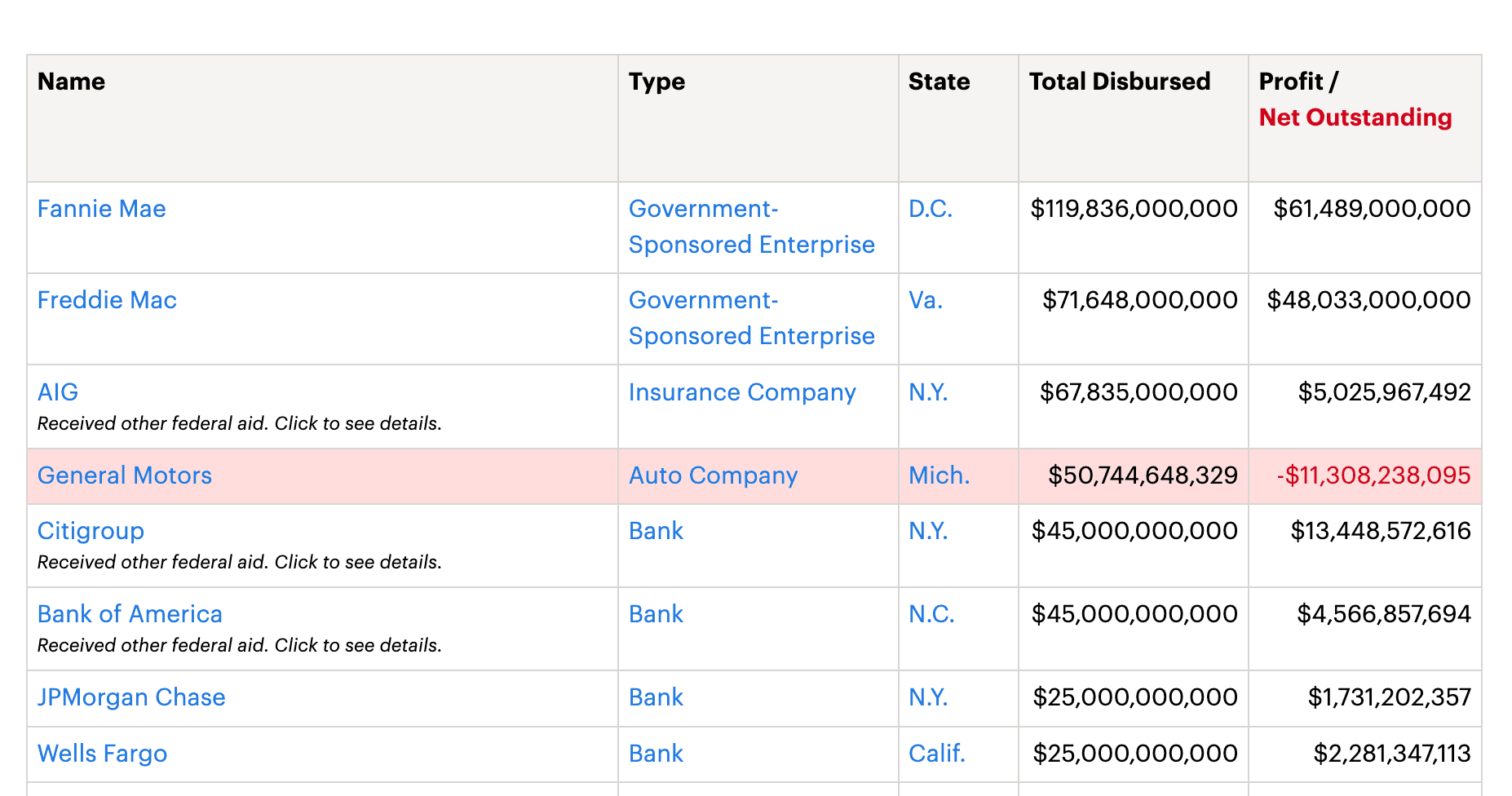
Posted by Phoebe BainJun 10Track how much the US government has spent on bailouts.Show 2 more findings ZoomProPublicahttps://projects.propublica.org/bailout/list
Posted by Phoebe BainJun 10Commonly referred to as the 'bank bailout,' the Troubled Asset Relief Program disbursed $443B in an attempt to keep the financial system solvent.Show 2 more findings 2:17Bush Signs Laws With $700B Bailout | On This DayBloomberghttps://www.youtube.com/watch?v=EaeJ1cRbUao
Posted by Phoebe BainMar 10If the US government paid off its debt, it could disrupt the entire bond market, as Treasury bonds are among the most common bonds for investors and the majority of the national debt is in bonds.Show 4 more findings 11:28Why The U.S. Won’t Pay Down Its DebtCNBChttps://youtu.be/9yU_bVZqqYk?si=6RGhZ717LdYFHjWy
Posted by Phoebe BainFeb 20The Federal Reserve fought the Great Recession primarily with quantitative easing and repurchasing agreements.Show 2 more findings 6:52 Marginal Revolution Universityhttps://www.youtube.com/watch?v=dTivWJvGYtI
Posted by Teddy BurkhardtJun 5, 2024In the aftermath of the 2008 financial crisis, the Fed began a program of quantitative easingThis program injected trillions of dollars of new money into financial markets to stimulate the economy. The move catalyzed an 11-year bull run and was repeated during the pandemic. Experts argue such power could worsen wealth inequality and contribute to bubbles in housing and finance. 53:18The Power of the Fed (full documentary) | FRONTLINEhttps://www.youtube.com/watch?v=9RbL8lTsITY
Posted by Phoebe BainJun 10American International Group, one of the largest insurance companies in the world, received $182B from the federal government—the largest of any bailout in the wake of the Great Recession.Show 2 more findings ZoomUnderstanding the U.S. Government's AIG Bailout During the Financial CrisisInvestopediahttps://www.investopedia.com/articles/economics/09/american-investment-group-aig-bailout.asp
Posted by Phoebe BainJun 10Before Lehman Brothers filed for bankruptcy in 2008 with more than $600B in debt, the Federal Reserve tried to orchestrate a private deal to save the then-fourth-largest investment bank in the US.Show 2 more findings 12:55Company Manhttps://www.youtube.com/watch?v=BnDbdQa_r38
Posted by Teddy BurkhardtJun 5, 2024Central banking in the US has had a fraught political historyThat history includes its doomed early efforts in the First and Second National Banks, as well as its failure to address the worst financial period in US history, the Great Depression. ZoomHow the Federal Reserve Was FormedInvestopediahttps://www.investopedia.com/articles/economics/08/federal-reserve.asp
Posted by Phoebe BainJul 8The US unemployment rate soared to over 24% during the Great Depression, the highest in recorded history.Show 3 more findings ZoomThe Great Depression: Overview, Causes, and EffectsInvestopediahttps://www.investopedia.com/terms/g/great_depression.asp
Posted by Phoebe BainJun 10In March 2008, Bear Stearns was the first major bank to collapse in the Great Recession—leading to panic across the entire global financial system.Show 2 more findings ZoomThe U.S. Financial Crisis | Council on Foreign RelationsCouncil on Foreign Relationshttps://www.cfr.org/articles/us-financial-crisis
Posted by August MoonJan 2, 2025The US has carried debt since 1791After the Revolutionary War, the US owed $75M to nations like France. Debt builds when spending exceeds revenue, funding programs, wars, and economic recovery efforts. Most debt is domestic, like Social Security bonds, with foreign nations also holding a share. 1:03Why Does the US Have Debt?1440 Originalshttps://youtube.com/shorts/OwFzpPOJ1aI
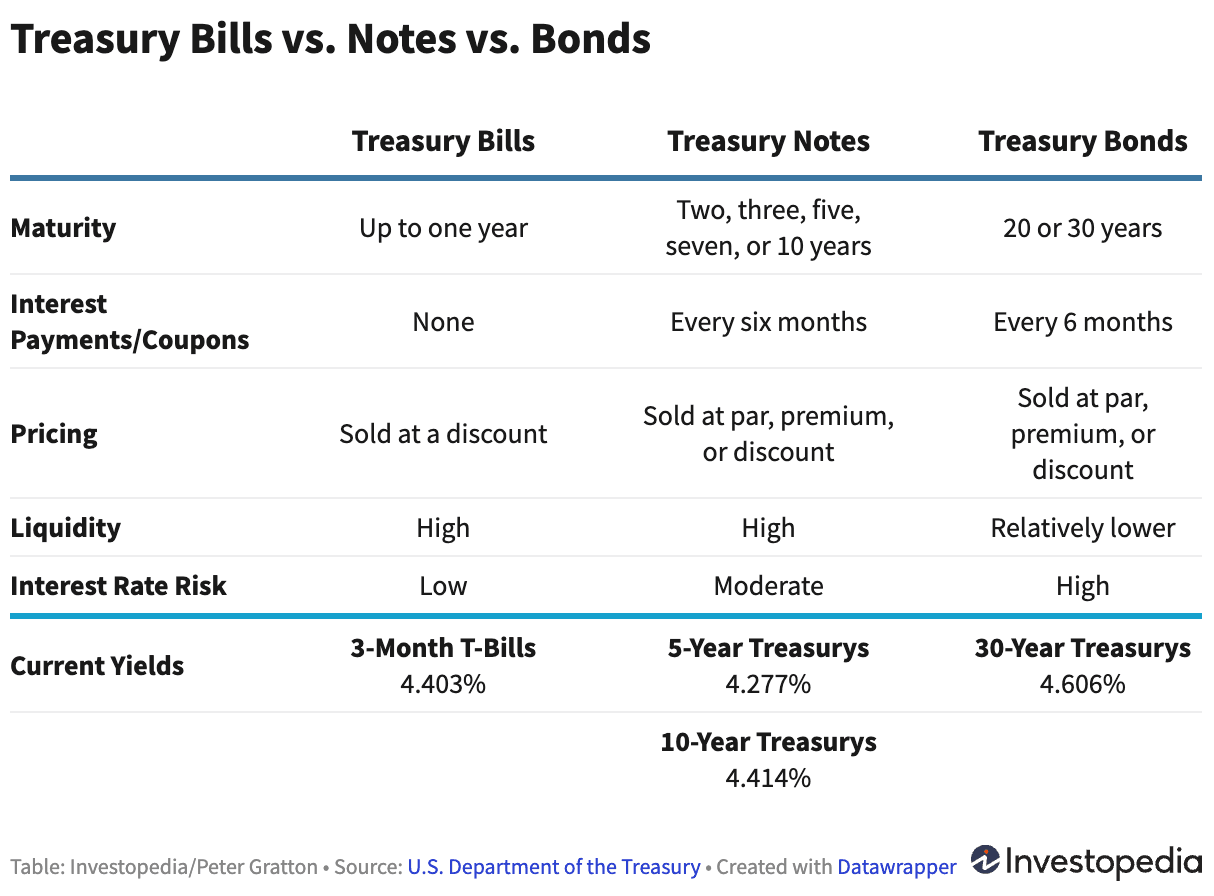
Posted by Meher QazilbashAug 24Treasury bonds, notes, and bills are critical vehicles for the federal government to raise money for public expenses and manage the national debt.Show 3 more findings ZoomTreasury Bonds vs. Treasury Notes vs. Treasury Bills: What's the Difference?Investopediahttps://www.investopedia.com/ask/answers/033115/what-are-differences-between-treasury-bond-and-treasury-note-and-treasury-bill-tbill.asp
Posted by Phoebe BainJun 10To avoid a total collapse of the housing market, the US government took control of the two leading mortgage companies, Fannie Mae and Freddie Mac.Show 2 more findings ZoomSelf-Fulfilling Prophecy: The Bailout Of Fannie And FreddieNPRhttps://www.npr.org/sections/money/2011/04/21/134863767/self-fulfilling-prophecy-the-bailout-of-fannie-and-freddie
Posted by August MoonJan 2, 2025Nearly 70% of the US government’s debt is domesticThis includes intragovernmental holdings like the Social Security Trust Fund and investments from US citizens, banks, and mutual funds. About 30% is foreign-held, with countries like Japan and China as major creditors, investing in US Treasury securities due to their perceived safety. 1:02Whom Does the US Owe Money To?1440 Originalshttps://youtube.com/shorts/N-twsjquKBE
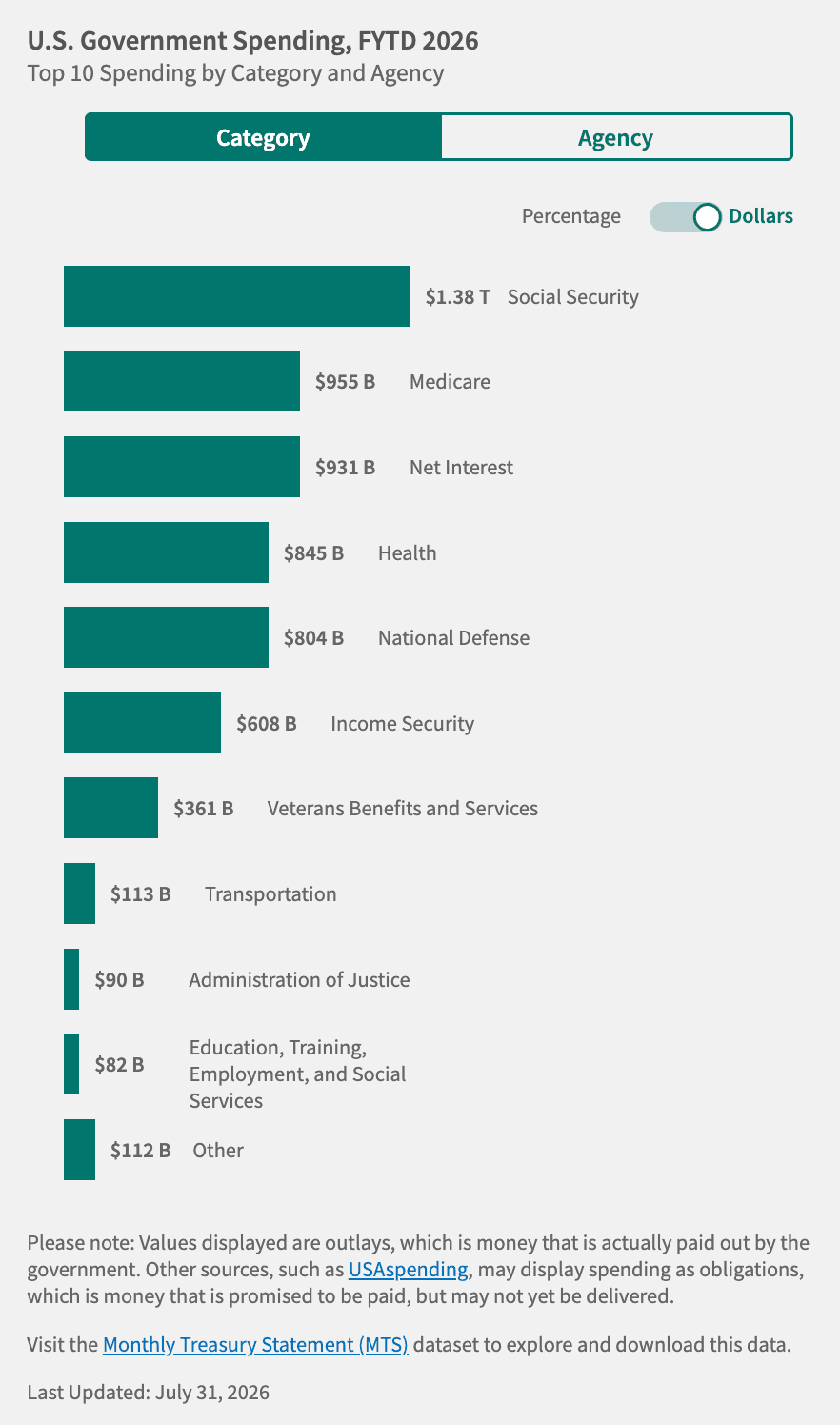
Posted by Meher QazilbashApr 1, 2025The federal government has spent more money annually than it has collected every year since 2022.Show 2 more findings ZoomFederal Spending | U.S. Treasury Fiscal DataTreasury.govhttps://fiscaldata.treasury.gov/americas-finance-guide/federal-spending/
Posted by Teddy BurkhardtJun 5, 2024During COVID-19, the Fed made drastic moves in attempts to shore up the US economy called quantitative easingThe Fed took an aggressive approach to help the US economy during COVID-19 beyond standard monetary levers, including broad purchases of mortgage-backed securities, Treasury securities, and more. ZoomWhat did the Fed do in response to the COVID-19 crisis? | BrookingsThe Brookings Institutionhttps://www.brookings.edu/articles/fed-response-to-covid19/
Posted by Meher QazilbashAug 24Explore a database that shows how the US national debt changes over a 24-hour period. Show 2 more findings ZoomDebt to the Penny | U.S. Treasury Fiscal DataTreasury.govhttps://fiscaldata.treasury.gov/datasets/debt-to-the-penny/debt-to-the-penny
Posted by Phoebe BainFeb 20The Great Depression is one of history's most notable periods of deflationThe stock market crash of 1929 helped trigger a period of deflation in the United States by creating a drastic decrease in the total money supply. Because of the United States' central role in the world economy, virtually every single country was impacted by the recession. 12:01https://www.youtube.com/watch?v=qF3ekm9Gx_E
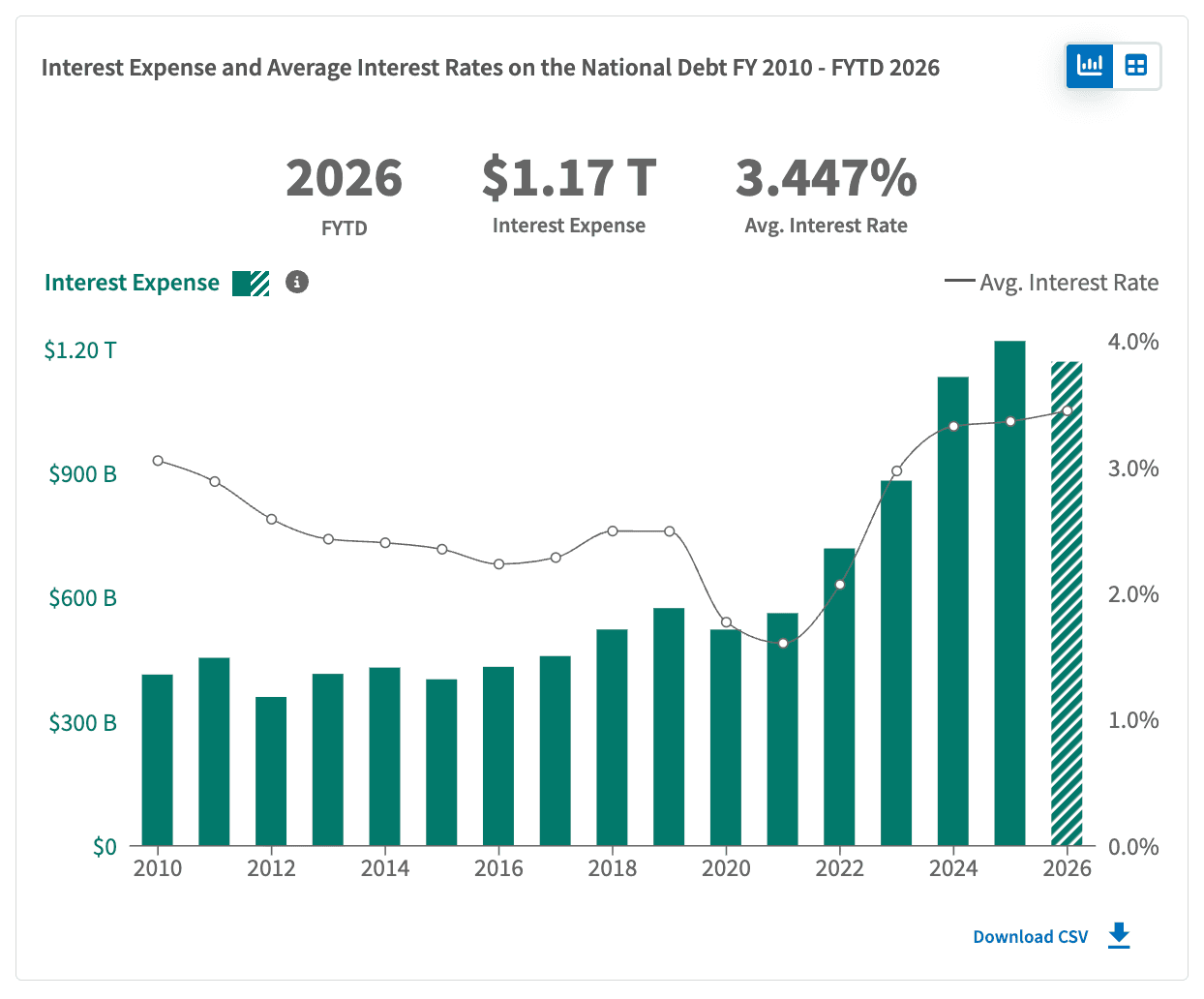
Posted by Teddy BurkhardtAug 25See a chart showing how much the US federal government pays in interest on its debt.Show 3 more findings ZoomTreasury.govhttps://fiscaldata.treasury.gov/interest-expense-avg-interest-rates/
Posted by Meher QazilbashAug 14, 2025Roughly $5T of stimulus money flooded the economy during the pandemicRecessions can last anywhere from months to years. To encourage economic growth, governments use policy levers such as lowering interest rates or introducing a stimulus. Economists credit massive stimulus funds for helping the economy quickly recover from a recession during the COVID-19 pandemic. ZoomWhere $5 Trillion in Pandemic Stimulus Money Went (Published 2022)The New York Timeshttps://www.nytimes.com/interactive/2022/03/11/us/how-covid-stimulus-money-was-spent.html
Posted by Phoebe BainAug 11BlackRock played an integral role in the Federal Reserve's response to the Great Recession, managing about $30B of hard-to-sell Bear Stearns assets on behalf of the New York Fed.Show 4 more findingsReutershttps://www.reuters.com/article/world/blackrock-big-funds-seen-winning-us-bailout-job-idUSTRE4958KE/
Posted by Phoebe BainAug 18Passed in 2010 in the fallout of the Great Recession, the Dodd-Frank Wall Street Reform and Consumer Protection Act was the most significant financial reform since the Great Depression.Show 4 more findings ZoomWhat Is the Dodd-Frank Act? | Council on Foreign RelationsCouncil on Foreign Relationshttps://www.cfr.org/backgrounders/what-dodd-frank-act
Posted by Teddy BurkhardtSep 21, 2023A history of every US government shutdownThere have been 21 shutdowns of the federal government in US history, a result of Congress's failure to pass appropriations bills in time. While the cause of most of the shutdowns stems from issues around the national debt and budget, a few originated in fights over unrelated policies. Dive into the history of each one with this comprehensive list. ZoomA look back at every government shutdown in US historyhttps://www.foxnews.com/politics/a-look-back-at-every-government-shutdown-in-us-history
Posted by Jeremy CronigApr 13The Bretton Woods economic order was built on Keynesian principlesKeynesian economics suggests that governments should actively manage economies to prevent downturns, promote employment, and regulate markets. The Bretton Woods institutions were created based on this belief that coordinated public intervention could prevent the economic crises of the 1930s. 5:16https://www.youtube.com/watch?v=xKGtmzLP8gw
Posted by Meher QazilbashJan 22, 2025The Federal Reserve follows the health of the US economy by tracking the money supplyThat includes all of the physical and electronic money in circulation. It tracks not only US coins and bills, but also the money that moves through bank deposits. The Fed uses metrics called trackers to follow different types of transactions through the money supply. ZoomMoney Supply Definition: Types and How It Affects the EconomyInvestopediahttps://www.investopedia.com/terms/m/moneysupply.asp#toc-the-money-supply-numbers-m1-m2-and-beyond
Posted by Meher QazilbashAug 14, 2025Markets have always recovered and hit new highs following crashesThe crash that preceded the Great Depression was the most severe the US has ever experienced. It was 28 times worse than the downturn that followed the Cuban Missile Crisis. ZoomWhat We’ve Learned From 150 Years of Stock Market Crasheshttps://www.morningstar.com/economy/what-weve-learned-150-years-stock-market-crashes
Posted by Phoebe BainJan 27The US government is legally allowed to borrow money from the Social Security Trust Fund surpluses as long as it issues Treasury bonds to the Trust Fund in return and repays those bonds with interest when Social Security needs the money to pay benefits.Show 3 more findings ZoomUnderstanding the Social Security Trust FundsCenter on Budget and Policy Prioritieshttps://www.cbpp.org/research/social-security/understanding-the-social-security-trust-funds-0
Posted by Meher QazilbashAug 26The Smoot-Hawley Tariff Act—which was passed during the Great Depression with the goal of reviving domestic industry—is among the most famous pieces of economic legislation in US history.Show 3 more findings 2:53The Legacy of the Smoot-Hawley Tariff ActThe Cato Institutehttps://www.youtube.com/watch?v=R3zvJe3Koyw&t=27s
Posted by Meher QazilbashFeb 17The US government has shut down 22 times since 1976This resource breaks down every federal shutdown since 1976, showing how long each lasted and the budget disputes that caused them—revealing how routine funding failures have become in modern US politics. ZoomHere Are All 21 Government Shutdowns in U.S. History Since 1976ThoughtCohttps://www.thoughtco.com/government-shutdown-history-3368274
Posted by Jeremy CronigMay 1The federal government pumped $70 billion into transit amidst reduced ridership during the COVID pandemicWhen ridership collapsed by 75% in the spring of 2020, Congress sent transit agencies nearly $70B to help them survive. But that money has largely run out, and ridership remains 14-28% below prepandemic levels, leaving many transit systems with large budget deficits. 6:17PBShttps://www.youtube.com/watch?v=fdum-5rMu1k
Posted by Meher QazilbashMar 27Tax policy can have a direct impact on the national debt, with past presidents' changes to tax codes inflating the deficit. Show 3 more findingsTen Myths About the U.S. Tax System - FreakonomicsFreakonomicshttps://open.spotify.com/episode/0ZrwYZgLtcrjq0DnRuRVkK
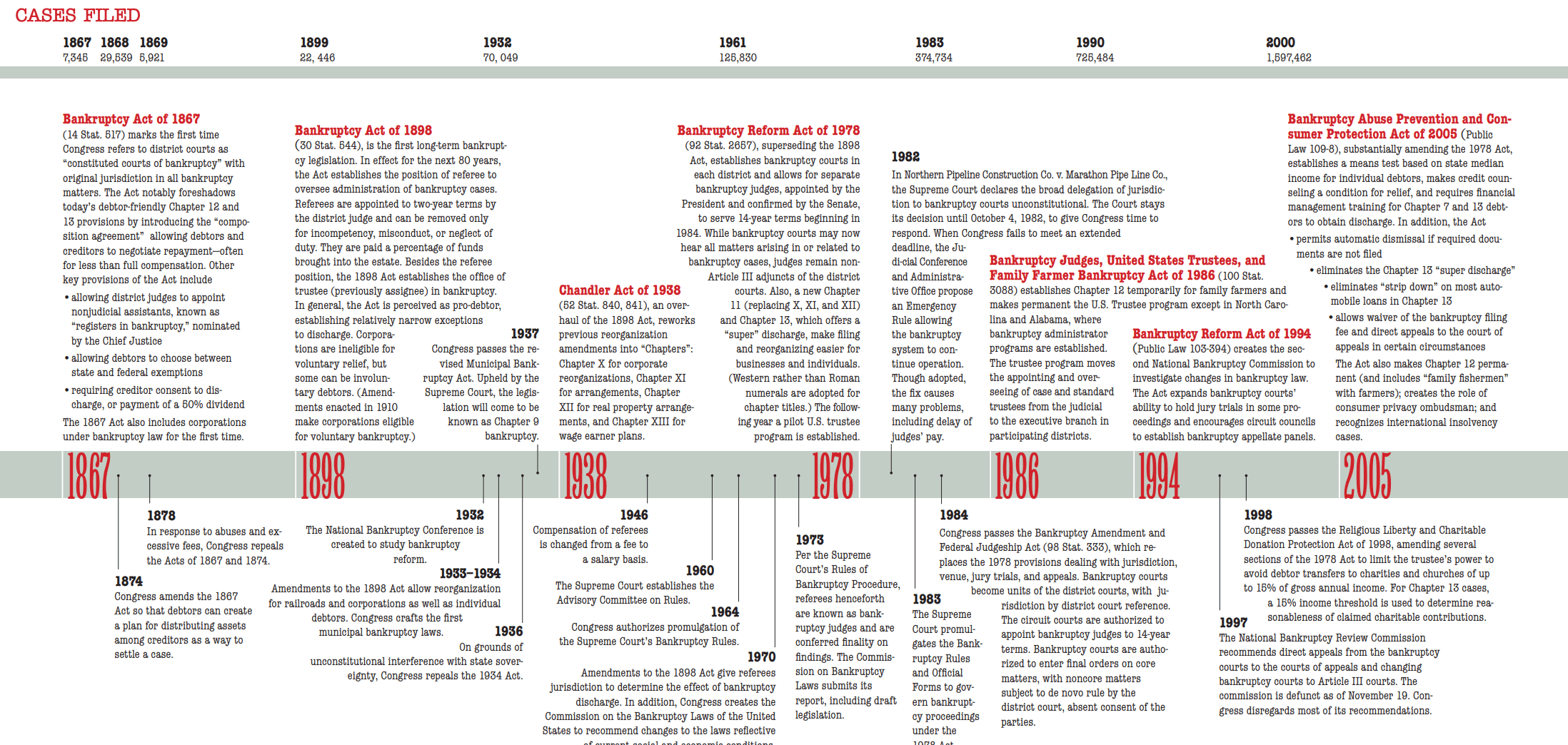
Posted by Phoebe BainOct 30, 2024The history of bankruptcy in the US dates back to the signing of the ConstitutionIn 1787, this founding document gave Congress the right to establish nationwide bankruptcy laws. Legislators took advantage of that power in 1800 when they passed the Bankruptcy Act of 1800, the first comprehensive bankruptcy law at the federal level. ZoomThe Evolution of U.S.Bankruptcy Law: a time linehttps://www.rib.uscourts.gov/newhome/docs/the_evelution_of_bankruptcy_law.pdf
Posted by Phoebe BainAug 15, 2025The Social Security System was created to protect Americans from economic disasters like the Great DepressionPresident Franklin Delano Roosevelt’s New Deal created new government agencies and programs in the wake of the Great Depression. Great Depression Facts - FDR Presidential Library & Museumhttps://www.fdrlibrary.org/great-depression-facts
Posted by Phoebe BainApr 8Why Americans are drowning in credit card debtAmericans owe more than $1T to credit card companies. And with rising interest rates that prevent cardholders from paying down debt (not to mention the rising cost of living), that number is likely to keep growing. A podcast episode explains how the US got here, and what policymakers and individuals can do about it. Show 3 more findingsWe’re drowning in credit card debtVoxhttps://open.spotify.com/episode/7cnbsTpL6qJNwWUjOPGNat
Posted by Teddy BurkhardtSep 21, 2023Government shutdowns, 101Roughly a quarter of the US federal government's spending must be approved annually through a set of 12 appropriations bills in Congress. When they aren't, a government shutdown ensues, where federal agencies are legally barred from spending any further money on nonessentials. This explainer covers the basics of government shutdowns and their impact on the broader culture. ZoomWhat is a government shutdown? And why are we likely to have another one? | BrookingsThe Brookings Institutionhttps://www.brookings.edu/articles/what-is-a-government-shutdown-and-why-are-we-likely-to-have-another-one/
Posted by Phoebe BainApr 10Ray Dalio considers betting against the US debt load in 1982 among his biggest failuresIn the early days of his hedge fund, Bridgewater Associates, Ray Dalio calculated that the US had accumulated more debt than it was possible to repay. He took short positions in the market that backfired when the Federal Reserve cut interest rates and avoided a global economic collapse. Dalio lost everything and even had to borrow $4K from his dad—but often describes this experience as one of the most pivotal moments in his career. 4:57Bloomberghttps://www.youtube.com/watch?v=Sf7oHcQ9z64
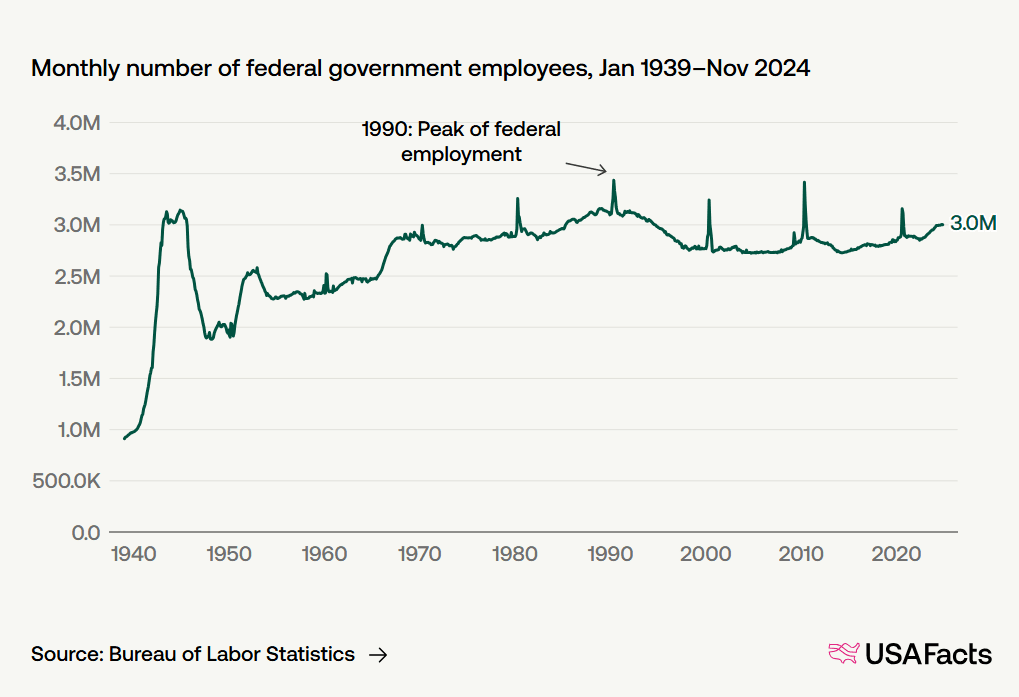
Posted by Teddy BurkhardtNov 12, 2025The US federal government employs roughly 3 million peopleTracking began in 1939, when the federal workforce consisted of about 1 million people. The total peaked in 1990 at 3.4 million, and hit a recent low in 2014 at 2.7 million. ZoomHow many people work for the federal government? | USAFactsUSAFactshttps://usafacts.org/articles/how-many-people-work-for-the-federal-government/